
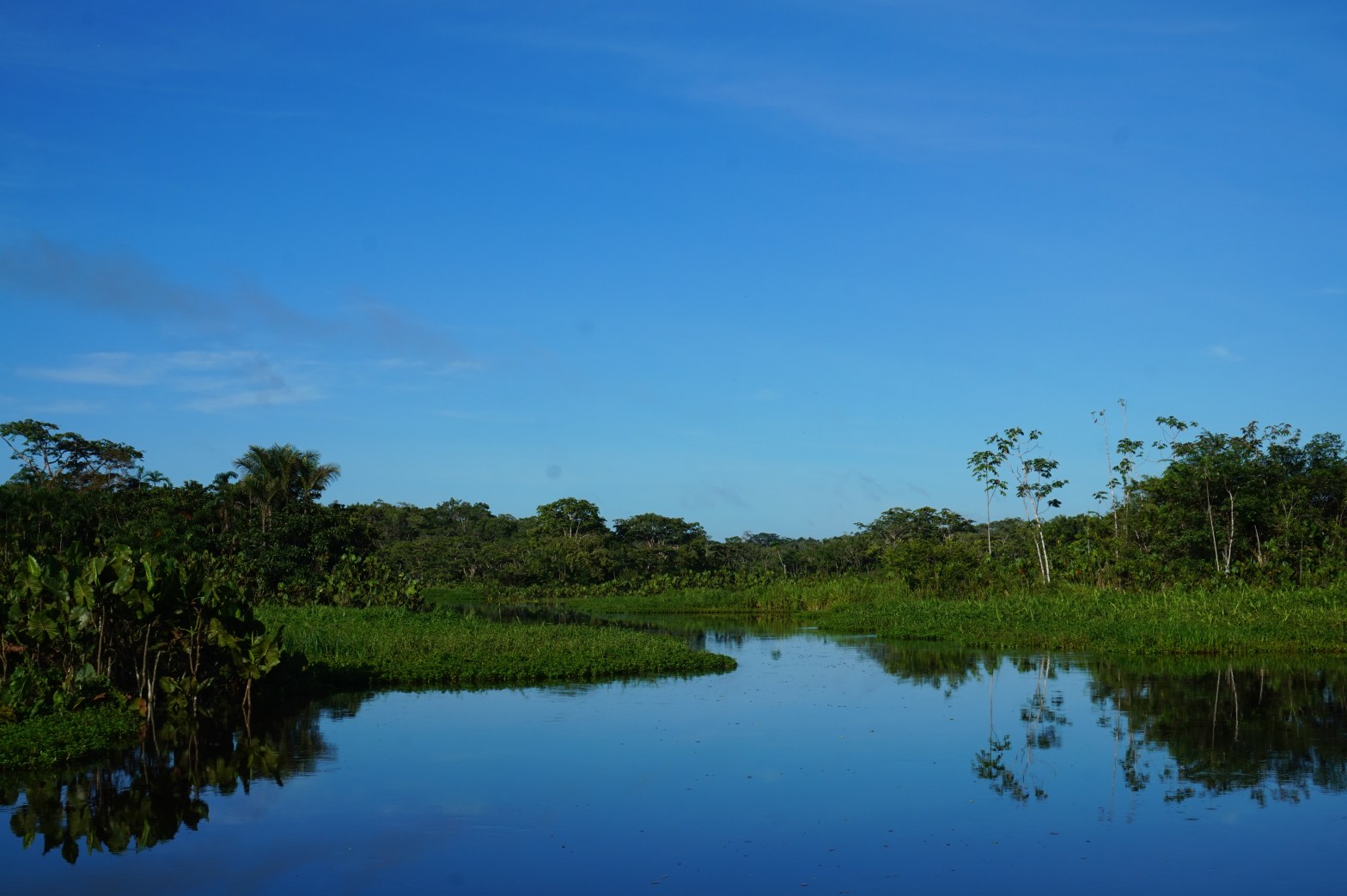
I woke up on the morning, one day before I needed to leave Colombia, relaxed and ready to go. Colombia had been amazing and had captured my attention as a place I could quite easily live and enjoy without any effort. But traveling is about traveling and not staying put, so after a year in total it was finally time to move on to Ecuador. I must admit that I knew nothing about Ecuador, I hadn’t heard too much about it in detail from other backpackers whose paths I had crossed and I didn’t really have the time to research it. All I had heard was that it was a bit more expensive than Colombia, had beautiful places and I found out on the border that I had a 90 day visa. I actually had 88 days because I entered and left the next day to renew my Colombian visa and if I wanted to renew my Ecuador visa, it would cost $125. So 88 days it is for now.
I left Orito and took the camioneta (pick-up truck with seats in the back) to La Hormiga where I changed camioneta to take me to the border. I went to the San Miguel border rather than the Rumichaca border because it is less accessible and hopefully therefore it would be quieter. I have heard horror stories of long delays at the Rumichaca border mainly because of the numerous Venezuelans trying to cross it which causes long queues. The last time I went to the San Miguel border I had to wait a little bit but nothing like I had heard of at the other one. This time there was absolutely no one, and I mean no one at the migration office. The only delay I had was the exit door was broken so I had to leave via the entrance and walk an extra 20 metres around the building.
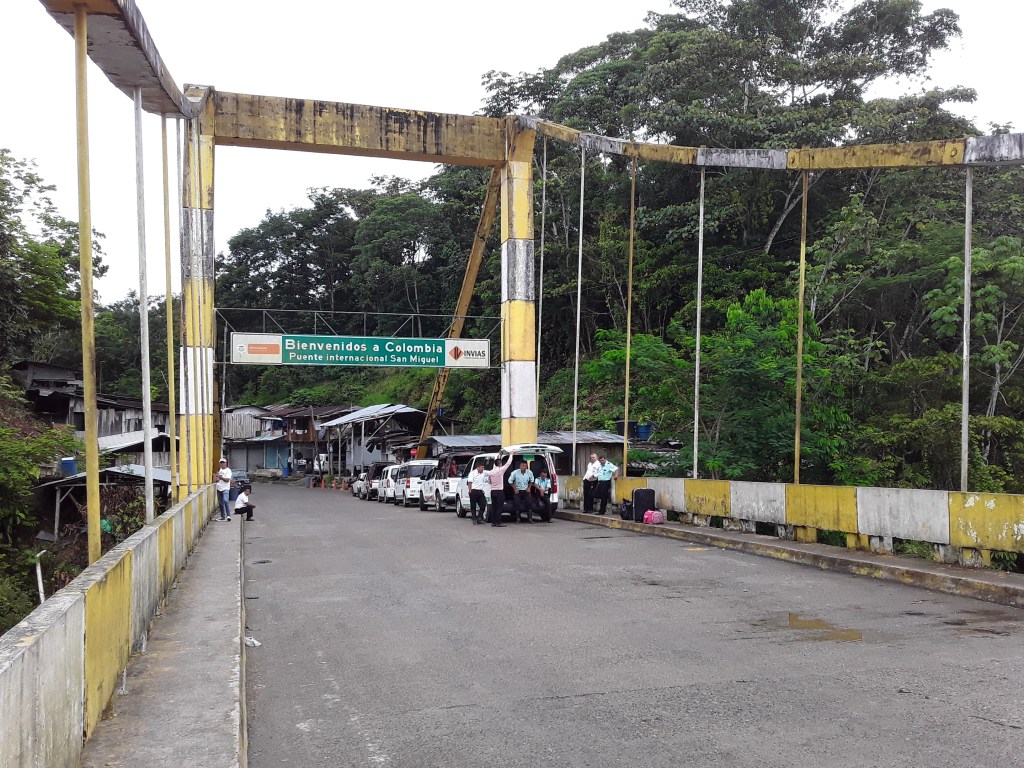
The border here is very relaxed and the onus is on you to get your passport stamped should you need it. The border is a bridge that crosses the San Miguel River and on the other side there are buses waiting. You need to tell the bus to stop at migration 3 km down the road otherwise you will miss it. Once done, you get another bus on the other side of the migration police checks once the buses have passed through. It’s from here that I got the bus to Lago Agrio, or Nueva Loja as it is called on google. Many places have changed their names due to oil businesses and their money coming in and expanding the small towns into much bigger places. I needed to changed buses at Lago Agrio as I wanted to head to El Coca (or Fransisco de Orellana depending on where you look), the gateway to Yasuni National Park.
The bus change in Lago Agrio was a little difficult as the drop off was not at a terminal but just in the centre. After a few questions and a little walking, I saw a bus called Coca so I flagged it down, ran across a busy junction and jumped on before it left me behind. This took me to the terminal in El Coca where I could catch a local bus to the centre and find somewhere to stay. Whilst on this local bus, a man got on with a portable speaker. He started playing some music then he rapped his way up and down the bus free-styling about the people who were on it. He wasn’t very good but this was my first taste of the busking that goes on in Ecuador.
The plan was to get to El Coca and maybe find a way of visiting Cuyabeno National Park. Tours were in the price range of $250 and up for 3 days which included transport, guides and all that you need. The pricing wasn’t too bad but the experience didn’t look like what I was after and I didn’t have that money to spend. So my first mistake was that I was in the wrong place to find a trip to Cuyabeno, El Coca was the port to the Yasuni National Park. I asked around in a couple of tour guide places to get an idea of the prices for Yasuni but they were the same if not more than Cuyabeno. I asked in the Tourist office and the lady was no help, she was like an automated voice message. I asked her about Yasuni and she told me about El Coca, I asked her about something for free and she told about a tour costing $100.
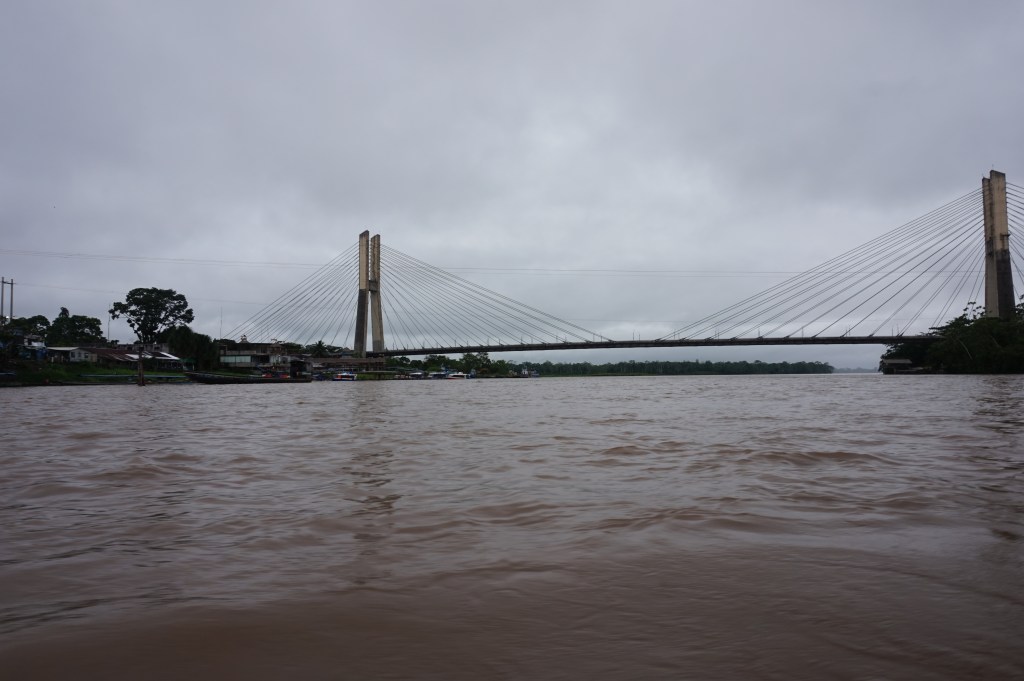
At the dock I found a map of the river with the spots along the way. The River Napo is huge and is one of the main tributaries of the River Amazon. It runs about 250km from El Coca all the way until it crosses the Peruvian border where it continues to join the Amazon before entering the Atlantic Ocean in Brazil. And there isn’t much human life along that journey. There were 2 canoes that could take me along this Amazonian artery to Nuevo Rocafuerte, the last civilised village before Peru. For $30 I could arrive in 4 hours and for $19 I could arrive in 8-9 hours. I went for the slower boat thinking it would be more relaxing and I could take in the scenery along the way. Once I arrived at Rocafuerte, I would find a guide or a way to explore the jungles.
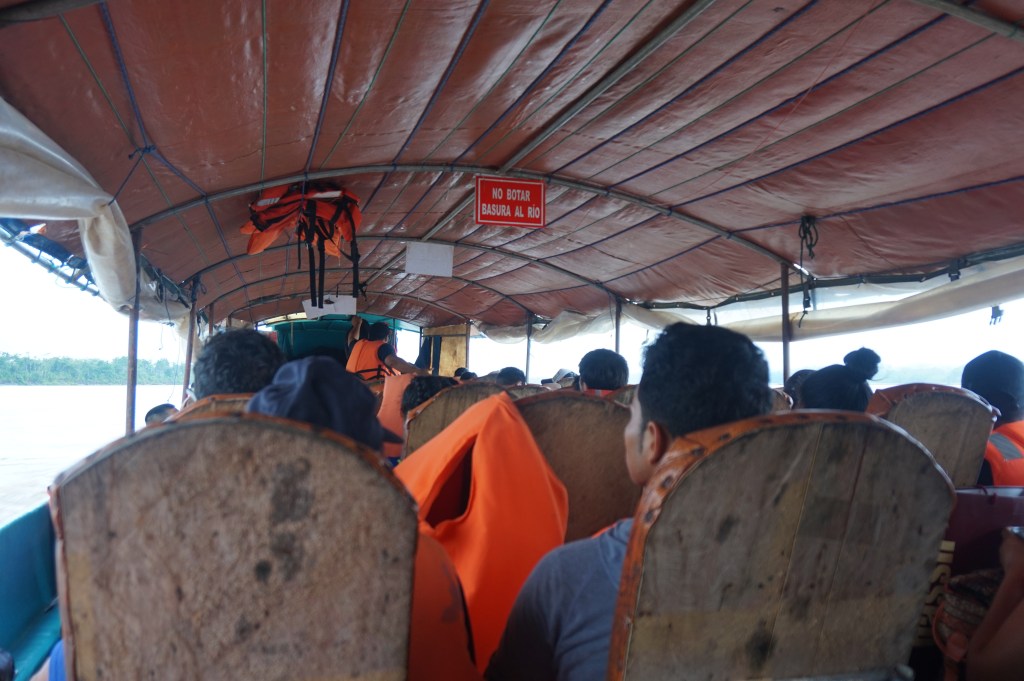
So the next morning I got myself to the dock with enough time to buy a ticket and get the 7 am slow canoe down the River Napo. The canoe held 60 people and had a couple of hefty engines on it so don’t be fooled it was a small canoe with paddle. The problem was the seating as it had been designed for the indigenous people who regularly used it and not for tourists who had much longer legs. Once my butt and legs started to ache and I wanted to move, I had to become and expert contortionist to navigate into a different position around my bags and my seating buddy. The discomfort was a small price to pay for the incredible views of pure jungle that past by on the 217 km journey.
When it rained we had to lower the plastic sheeting to keep ourselves dry but 75% of the journey, if not more, was spent with the wind blowing through the boat, removing the smell of ammonia coming from the on-board toilet. Dotted through the jungle, along the banks of the river, are various communities and farms. There were a few but not many in the significance of the distance travelled. Some were only a couple of huts and the largest had around 500 people living there. This one was called Pañacocha and this was where we stopped for lunch. Expecting to be extorted as it was our only stop, this was not the case. For $2.50 we got a plate full of rice with a reasonable portion of Bagre (catfish), seasoned curry style, some patacones and the accompanying chicken broth soup.
We were making good time along the river until we arrived at Tiputini, a community 20 km short of the final destination. Upon arrival to the port – a muddy slope on the side of the river – the captain got it a bit wrong. There were a few boats already docked there and we managed to come in at completely the wrong place and angle and made a significant enough contact with one of the parked canoes. With the rocking motion caused by the impact, a large generator on top of the parked up canoe, slid from side to side, toppled over, and splosh! It was in the water. Everyone on the boat saw it happen and so did the 30 odd people, including the military, who were stood watching from the shore.
With this incident, we had to wait for over 30 minutes, maybe an hour, whilst the captain went off for a chat with the people on shore. It was a nice opportunity to stretch the legs for a bit and watch the locals try to hoist the generator from the bottom of the river. Fortunately, it was incredibly heavy so it sank on the spot where it entered the river and didn’t move too much with the current. Unfortunately it was incredibly heavy so it took a lot of effort to raise it up from the bottom. One man had to dive down to attach the chains to the generator whilst another 4 men operated the mechanical hoist trying not to capsize the canoe they were operating from. In the end, the captain returned having agreed to pay any maintenance costs needed to repair the generator.
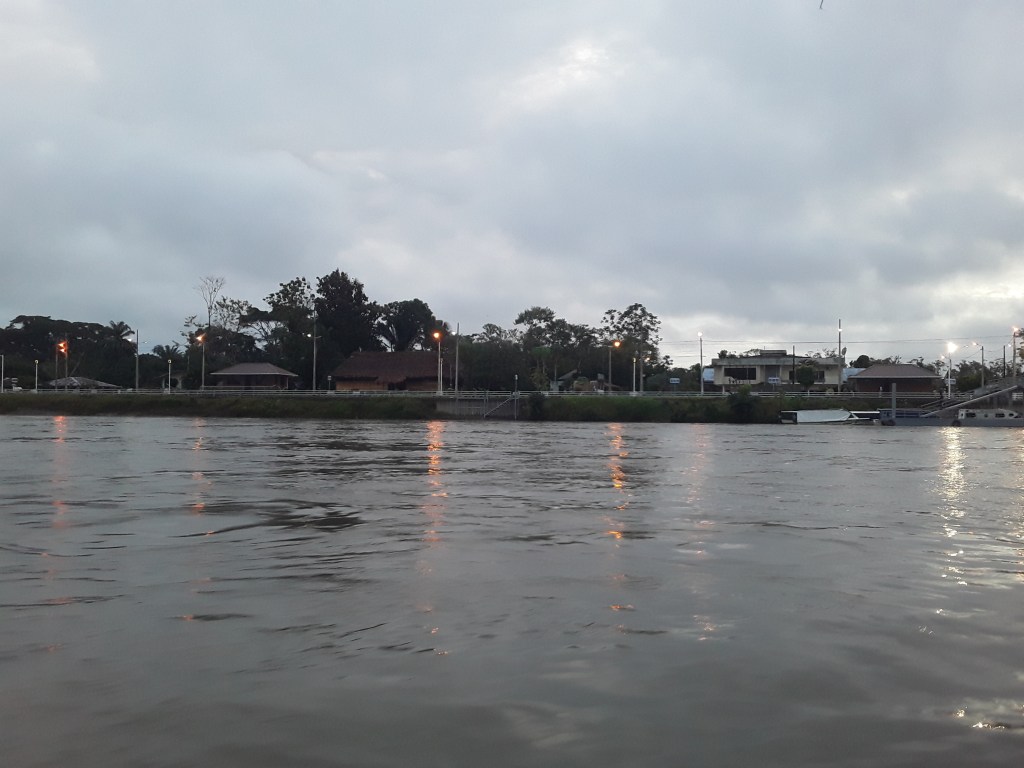
Finally we arrived in Nuevo Rocafuerte and having been without internet, I needed to find somewhere to stay the night. I had heard about a cheap place to stay but when I arrived I found out it didn’t exist. I asked the local armada and boat conductor where the cheapest beds were and they pointed me towards the hospital. Not joking, they said that I could find some monks there and that they could let me stay in the monastery for free. Not being religious but being respectful, I didn’t want to take advantage of their generosity because I am a cheapskate. The next best option was a hostel which was actually a basic hotel that had a bed for $10 per night.
There was also a French bloke staying there who I had met on the canoe journey here but he didn’t speak much English or Spanish so a conversation was ridiculously painful. He had told me he had a guide for which he was paying $180 so I thought I would have a chat with his guide. It turned out that he was paying $180 a day for 3 days!! The trip was well planned with a schedule every day of things to do and animals to spot. It involved camping in the jungle in tents beneath a larger roof made from a plastic tarpaulin on an island on the lake in the national park. He offered me to join them but I would have to pay $70 a day if I wanted to. We discussed more and more as this was out of my price range and he said he would let me know later that night by WhatsApp.
The text conversation ended with me offering him $100 and a present for his wife for the 3 day trip to which he said he would let me know the next morning at 9am. Fernando the guide arrived typically late at around 10am ready to take the French guy on his organised trip. We chatted again and he informed me that he had discussed it with everyone and that it was in no way possible for me to go for that price. He would have to refund money to the French guy as clients share the cost of the guide and not pay individually. But Fernando had an idea that he thought would suit me perfectly. He would take me free of charge to the Environmental Ministry that was based at the entrance to the park and I could probably stay there for a minimal fee and explore the surrounding park myself and maybe go with the staff when they went into the park to work.
As if by chance, the boss of the Environmental Ministry happened to be walking towards us at this moment. Within one question she said that it was ok. I was shocked. I kept asking what I would need to pay expecting to find some hidden charge or cost to me. All I had to do was contribute to the fuel costs and bring enough food to eat. Nothing else. I was obviously very grateful and accepted their generous offer. I got my things, bought enough food for 4 people for 3 days and went to their office to await the boat. I had to wait a while but this was not a problem. Whilst waiting in the office, I saw they had a Red-bellied Macaw in a cardboard box that had a broken wing. It had been hit by a boy with a catapult just for fun and needed to go to the vets in the El Coca. Sad to see, this beautiful bird would never fly again for sure.
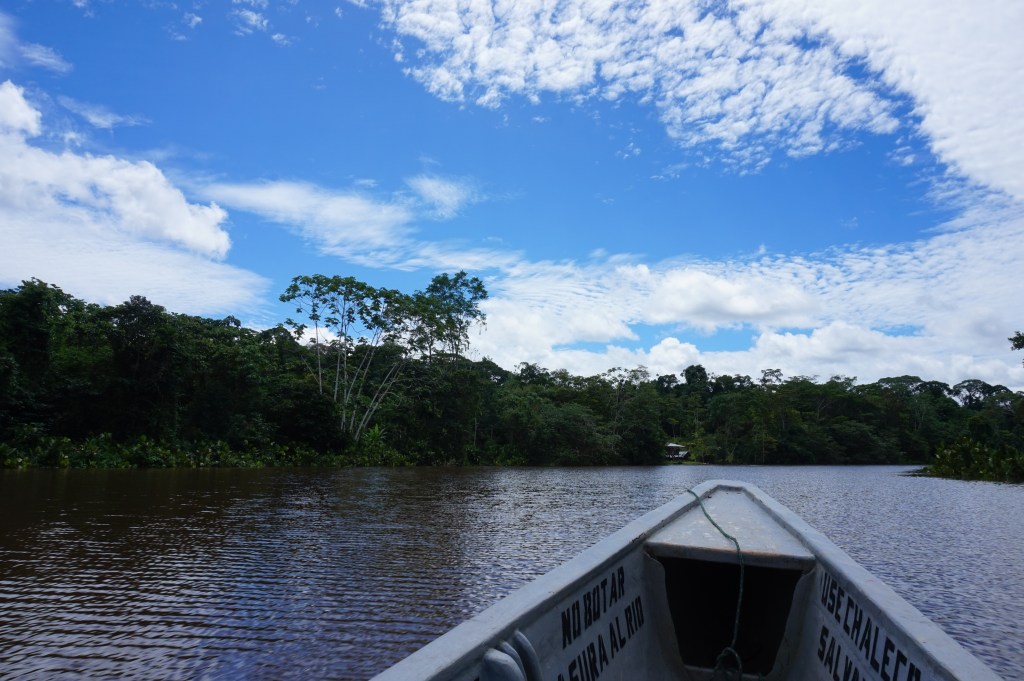
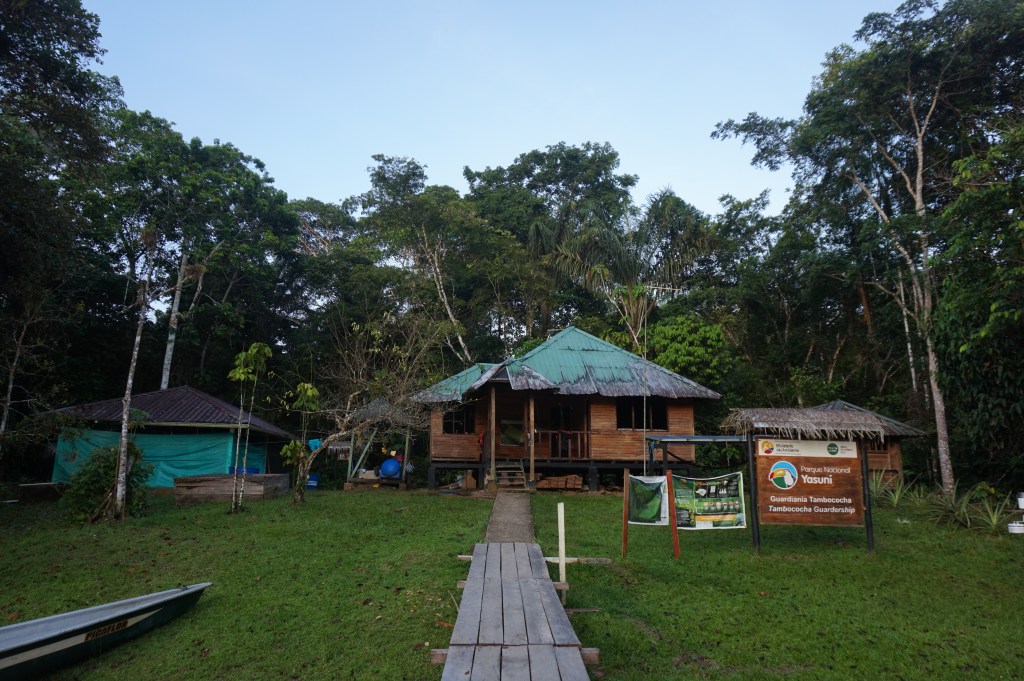
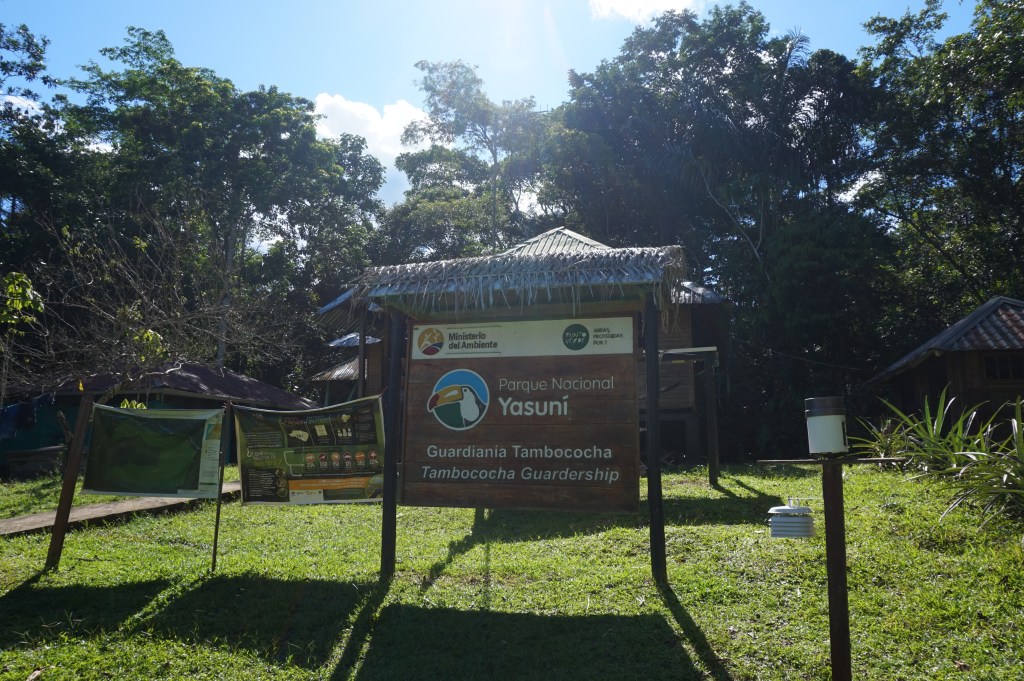
Mayra the boss was a really nice lady but it turned out she wasn’t going to the Park with me, her colleague Roman was. Roman was the guy in the office, along with the 2 military personal, who had ignored me and looked at me funny whilst I was waiting. As we were leaving it was just the 4 of us going, Roman, Daniel and Cristian (the 2 military guys), and myself. We headed further down the River Napo before hanging a right up the River Yasuni. After a few miles we arrived at a camp with a wooden house and a few other buildings. This was going to be our base and it also mainly served as a checkpoint for anyone who wanted to enter the Yasuni National Park.
The wooden house was empty apart from a few holes in the floor, scattered tables and cupboards and a couple of mattresses. I was told that I could take a mattress and sleep on the floor of the house. The other 3 had a very basic dormitory in the other building which also had an office/kitchen/dining area. I saw they had mosquito nets on their beds so ask if there were many mosquitoes here. ¨Loads¨ they all replied. I thought it would be fine for 2 nights, I could just get under a bed sheet and hide from them. Oh wait, there were no bed sheets available for me. The mattresses were fairly rank looking and were what you would expect for something that had been hanging around a humid house without glass in the windows in the jungle. I had a sleeping bag but I knew it would be far too hot sleep inside of that. A small price to pay for where I was living I suppose, let’s just hope I still had blood left inside of me by the end of the trip.
Having had a few chats with the guys, they were less reclusive and were really nice guys. Well Christian spent the whole time playing a game on his phone and didn’t talk much but the other guys were fun to be around. Roman was just as keen to learn about England as I was about his home and culture. He was Kichwa, which is an indigenous tribe that lives in these parts of the jungle. I learned that the Kichwa traditionally don’t eat deer because their culture says that it is the horse of the devil. I said that I thought that this was stupid. Surely if you eat all the deer, then the devil won’t have any transport. I also found out that in the Kichwa language, Cocha translates as laguna or lake. That means that when I went to Laguna de la Cocha near Pasto in Colombia, I actually went to Lake of the Lake.
Anyway, back to the Yasuni National Park. Not knowing what was install for me in the next few days, I thought about starting off with a walk through the jungle. There was a path of 3 hours to Lake Jatuncocha and another of about an hour that did a loop back to the lodge. Roman wanted to take me so we headed off. He was very keen to share his knowledge of the jungle, be it about the plants, the birds, the trees or the animals. I think he liked the fact that I was passionate and had a little bit of knowledge about many things in the jungle. He knew an incredible amount of things and although he really wanted to pass that knowledge on to me, he was also keen to draw comparisons with the Panamanian jungle where I gained a lot of what I knew. There were many similarities but also many differences, including the size of things here with the Amazon being much greater in age I think.
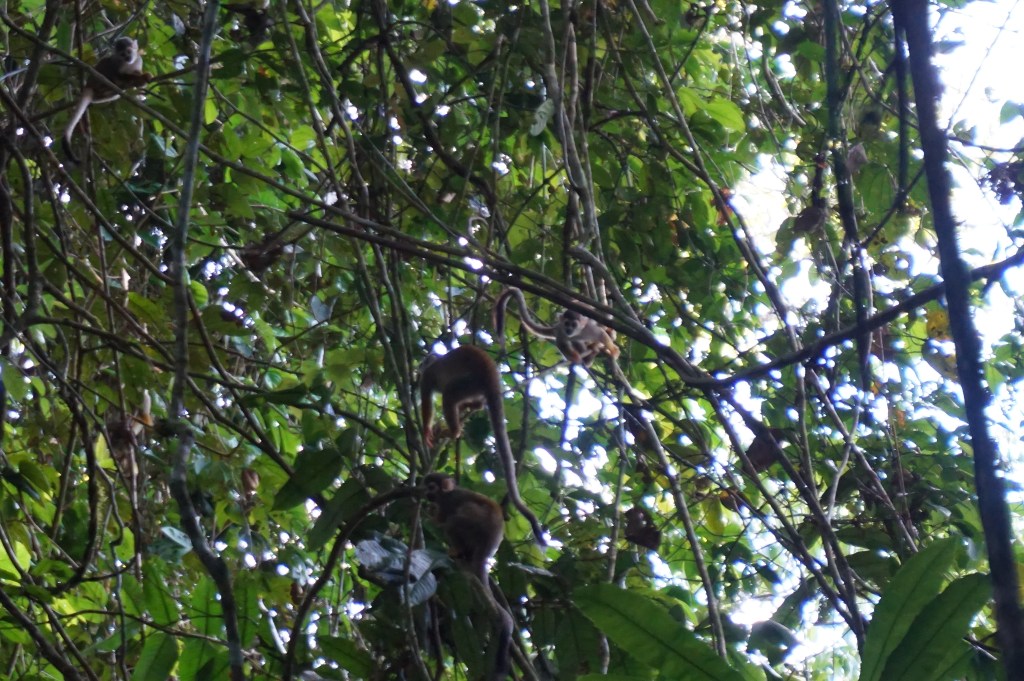
The walk took about 2-3 hours to complete but I was smiling from ear to ear and thoroughly happy with how this had panned out. One of the main pleasures from the walk involved a troop of Common Squirrel Monkeys passing by and over the path. It sounded like they were passing through the water before climbing the tree next to me and passing through the canopy above our heads. Fairly inquisitive, especially the babies, they stopped to look before continuing on their way. One of the small babies seemed to get left behind as he looked like he was scared to make a jump. Rather than jump, he went a different route and was still lingering around as the others continued off in the distance. I’m sure the infant was being closely monitored by a parent nearby and made it back to his troop in the near future.
Another interesting moment was when we heard some rustling in the bushes way up ahead. It was some pigs, or more specifically Pecari’s rummaging in the undergrowth. We entered stealth mode and encroached slowly and carefully hoping not to disturb them and make them flee. There were maybe 2 or 3 of them and we were getting much closer. Through the gaps in thick undergrowth I could clearly see a Pecari very close and another one a little further away. A couple of times they bolted away but not very far allowing us to close in again. If we were hunters we would have had a feast that night but fortunately, hunting is prohibited here to protect the ecosystem. It was then that one decided to run into the path maybe 10m away. He stopped and I could see he wanted to charge, he was thinking about it and I could see the worry in Roman’s eyes. I wasn’t worried, I was loving it and kind of half wanted him to charge to see if I could escape. Luckily the Pecari realised what he was up against and decided to run into the bush instead. If he had charged and hit one of us, it probably would have been messy. They are tough, strong animals with a couple of tusks that can cause some damage if they wanted to.
We headed back to the lodge as the day was coming to a close and the light in the dense jungle was starting to fade. It was time to start making dinner so I made a lentil curry for everyone seeing as like most rural living Latin Americans, they had never heard of a curry. The four of us all eat together and take it in turns to prepare the food or help each other out if need be. Whilst making dinner and chatting to the guys, the conversation stumbled across the fact that Daniel actually had a tent with him. He thought that I might be too long for it, but it didn’t matter, it was the much needed protection I need to prevent me from being a bug’s buffet for the next couple of nights. Bed time was fairly early around here and with not a lot to do, people got into bed at about 8pm.
I thought about going for a night hike to see what I could find but wasn’t confident in my ability to return safely as the path wasn’t the easiest to follow during the day. Also sleeping had been at a premium in the last few days so I decided to call it an early night too. This began a run of 5am wake ups which in the jungle is the best time to wake up. There is a lot of action starting at this time of the day and a lot of chitter-chatter from the jungles inhabitants. The previous night Roman said that he had to head out early to do a bird survey to monitor and record the bird species that were around the Yasuni River and National Park. He wanted to leave at 7am but with me already being up early, we probably left a bit earlier than that.
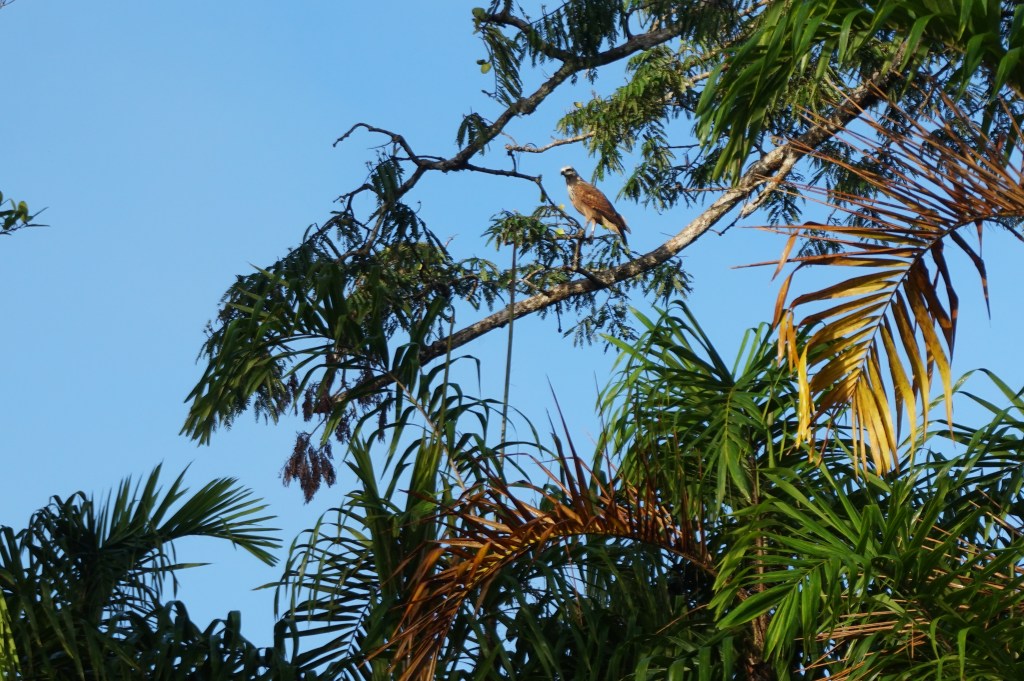
We headed downstream a little bit before heading up the Salado River and 15km into the national park. Roman said this was the best place to spot birds and even though we saw loads, he didn’t seem to be marking them down or doing anything official. I think he just wanted to go out in the morning because he enjoys it and he wanted to share it with me. On route we came across some howler monkeys feeding in the canopy but unlike Panama, these had a reddish tint to their fur. Of the same family, these guys were a little bit bigger in size and I was told that there groups were a tad smaller in numbers.
Birds were the main sight to see on this canoe trip and there was an abundance of them. There were many species that I knew from previous jungles as well as a few that I had never seen before. For example, we saw a group of about 4 Horned Screamers (the scientists weren’t very creative with this name) from a distance. They are really big birds that have a spaghetti-like horn sticking out of their head and they have a loud screaming call. We also saw an abundance of Hoatzins that are medium sized and just as noisy. These are 2 funny looking birds that I had never seen or even heard of them before. These were accompanied by many herons, hawks, doves (or clean pigeons), kingfishers and numerous other species of our flying feathered friends.
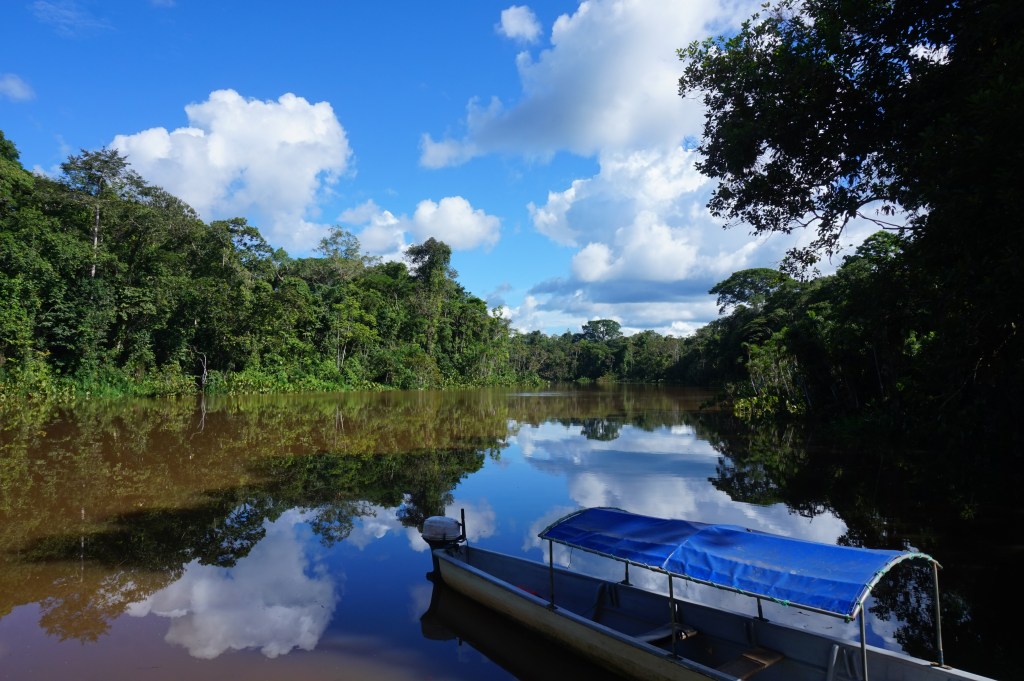
Upon arrival at the lodge, breakfast was ready and prepared by one of the guys. Roman went out to check the net we left out the previous night and we had a couple of fish to go with it. Food here was always rice with something to accompany it. This was pretty much always fish, if it was available, and potatoes or pasta with some sort of liquidy flavour. Basic, easy, quick and tasty was the way food was done. With us living in a national park, there was no hunting allowed and no killing, whether it be animals, trees or plants. That meant food had to be bought in from Rocafuerte and stored in plastic tubs to protect it from the bugs. The place ran on solar power so the option of a fridge was not available due to the amount of power they consume.
After breakfast Roman asked if I wanted to go and find Agami Herons to which I bit his hand off and said yes. They have a plethora of vibrant colours adorning their plumage and I had seen 1 in Panama, from a distance and very quickly. Being very hard to spot and not in many open areas, this was an opportunity I had to take. We headed out in the canoe again but this time we went up the River Yasuni and continued approximately 40km into the national park and deep uninhabited jungle. Daniel also came with us this time and like Roman, he had a good eye for spotting things which was lucky seeing as my eyes are not the best at times.
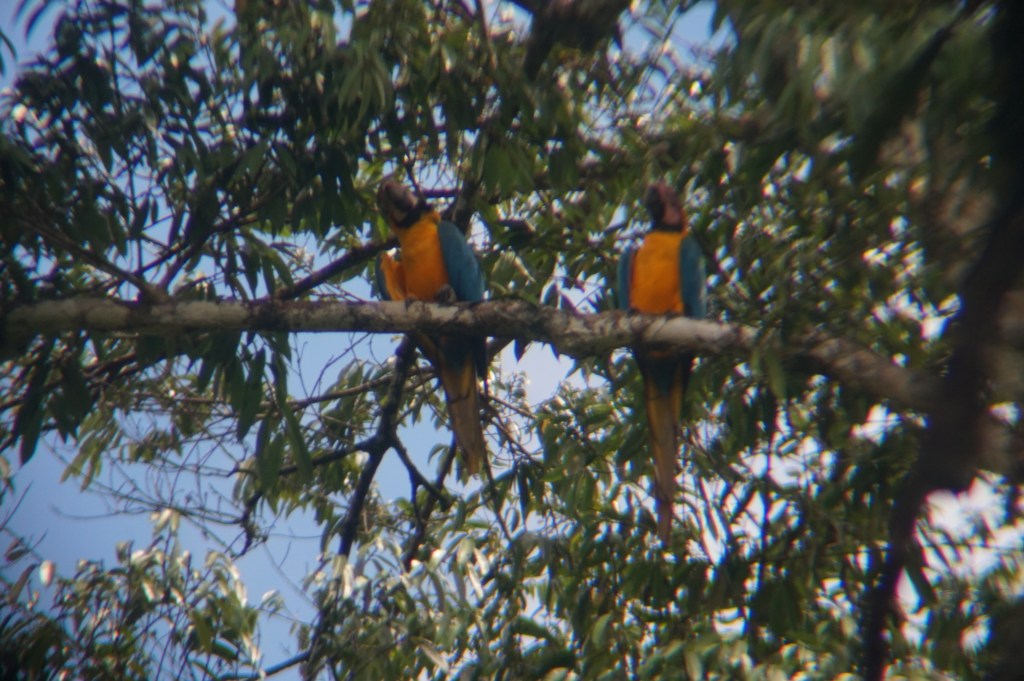
The majority of the things we saw were birds, and there were many to be seen. We saw many Macaws of varying colours and sizes but the most impressive were the Blue and Yellow Macaws and the Scarlet Macaws, both measuring in at just under a metre in size. I could run a list off of around 50 species of birds that I could identify and many more that past by too quickly or that I didn’t know and Roman didn’t see. We even left the boat a few times to get a better angle to see some birds that Roman spotted and was unable to point out to me.
There were moments of calm and moments of chaos and it was during one of the serene moments that I spotted something in the water ahead. I looked at Roman and said “dolphins?” He calmly nodded and cut the engine. I swear I saw them swimming past the boat under the water but I can’t be certain. They then appeared behind us but rarely breached the water and only did so for a brief moment in time. They were incredibly hard to catch a glimpse of and it seemed as if they knew where you were looking so they could pop up on the other side of you.
We continued up the river until we turned off into the trees and navigated through the trees along a narrow path. How Roman could spot the entrance after 40km, I do not know. It was clearly a route that wasn’t used often and probably only by the rangers who worked here. Even with Roman navigating the path very well, there were times that he needed our help. Daniel and I were at the front of the boat chopping through trees and vegetation with machetes to allow the canoe to continue. This was a slower part of the trip but also much more fun as we winded a couple of kilometres through flooded jungle.
We eventually arrived at an opening and a dead end and as we cruised up to a tree I heard a noise I recognised. This tree was the spot where the Agami Herons nested but this wasn’t the noise that I heard. We had disturbed the birds living there as maybe 20 Boat-billed Heron – that are nocturnal – fled their roost whilst making an almighty racket. There were also maybe a dozen Cocoi Herons, close to a metre in stature flying off in the commotion we had caused. Unfortunately there wasn’t an Agami Heron in sight and our journey had been wasted. I’m only kidding, I saw enough things and amazing sights to be more than thrilled with the trip we had made. We tried a bit of piranha fishing but without a bite in 10 minutes, it was obvious there was no lunch awaiting us beneath the water. There was also a Caiman that we disturbed in the reeds that might have kept them away.

With the journey being very long and lunch having been well and truly missed, it was time to head back to the lodge. We headed back much quicker than on the way out there but we still managed to see more monkeys including a funny looking species called a Monk Saki. We arrived back at the lodge at about 3-4pm ish, lunch was eaten and then Roman said it was time he did some work. I helped him strip the old net off the fishing rope before he started to attach a new one. This was a one man job so I thought I would try a spot of fishing of the dock. It turns out that the fish don’t like sweet corn one bit so I had to find a new bait. I found a large cricket and gave it a go. The fish loved the cricket and were smart enough to eat its body first and then come back for its head and wings, both times they avoided getting caught on the hook. They managed this twice and that was when I gave up fishing and went to chat with Roman.
Whilst chatting to Roman, out of the corner of my eye, I saw a large log floating upstream. Wait that’s not possible, things don’t float upstream. It was a Caiman and a big one. It was about 4 metres long, which is bigger than any Caiman I saw in Panama. He was a Black Caiman and these are also much more aggressive than their Panamanian relatives. Minding his own business he casually swam up the river sticking to the other side near the plants and reeds. When a boat went past, he ducked beneath the water before re-emerging 5 minutes later in front of the lodge. This was where he stayed before he submerged never to be seen again. Unfortunately it was time to take a shower and with there being no showers here, that involved bathing in the river. Obviously I let the other guys test the waters first and didn’t hang around too long in there.
I spent the rest of the night chatting with Roman as he continued with the net before we had dinner and went to bed. The next morning I woke up at the same time, made some coffee and tried my hand at fishing again. That was when I heard some noises in the trees. This was the start of a crazy morning full of action. The new noise was made by Dusky Titi Monkeys, a small monkey that was feeding on a tree very low down. I had time to take a few photos before they headed off into the canopy. As I headed back to resume fishing I saw the Pink Dolphins again. I could see Roman was busy weaving his net so I didn’t want to disturb him. The Dolphins were making noises this time but there was a louder different noise as well. Roman said that there were Giant Otters out there too and that’s when I saw them. They were playing or hunting together, the two different species.
That’s when I asked Roman if I could take the boat and follow them and he agreed without much deliberation. So I followed the Dolphins and Otters upstream and cut the engine and followed them back downstream, with the paddle. I must have been around the both for well over 30 minutes watching them play and interact with each other. The dolphins were still being very difficult to spot, turning up in exactly the location you weren’t looking, whereas the otters were being very loud and therefore much easier to spot. With all this happening in the water, there was also the noise of White-breasted Toucans coming from the canopies. We also had the permanent sound of the Oropendola and Cacique birds that was a constant rhythm of the jungle.
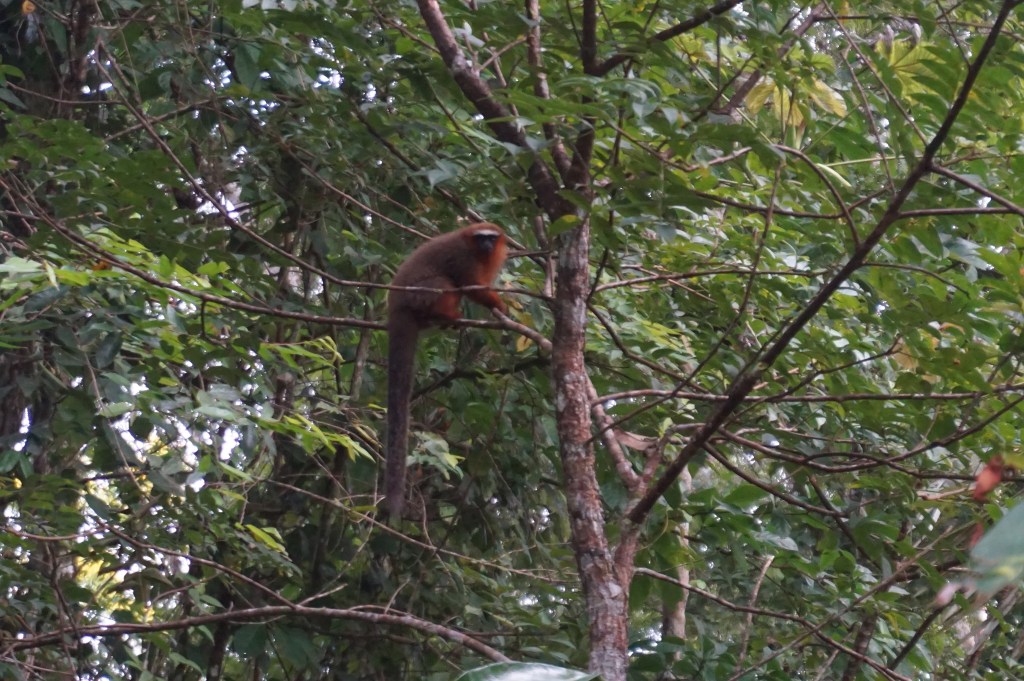
But it was when I heard donkey noises coming from the trees that I was confused. It obviously wasn’t a group of donkeys in the trees – although in Morocco there are goats in trees – but I didn’t know what it was. It wasn’t until I got back to the lodge that Roman explained that it was a different troop of the same monkey that I saw before. I don’t know how such a small thing can make such a loud noise but fair play to them. The whole morning had felt chaotic with no chance to take a breath and it wasn’t even 9 o´clock yet. I continued to help Roman which involved mostly chatting before we came closer to lunch time. But before we made it to lunch, there was a telephone call for Roman. He told me that the President was coming to check out the national park.
This was when it started to rain and it reminded why the amazon is called a rain-forest. It came down hard and fast and put our plans on delay. Normally tourists, locals and in fact anyone who enters the park has to register with Roman on the way past. Señor Presidente needed to do no such thing. In the pouring rain, 4 boats including a protection crew, a Ecuadorian Armada and 2 more passed by at a good rate of knots. The military dudes I was with put their official uniforms on and just watch him go by, waving in the process. I can’t believe he didn’t pop in for a spot of lunch, it was all ready and prepared for him (albeit there was barely enough for us). The president returned and left the park as quick as he had arrived with barely enough time to take in the beauty that was here.
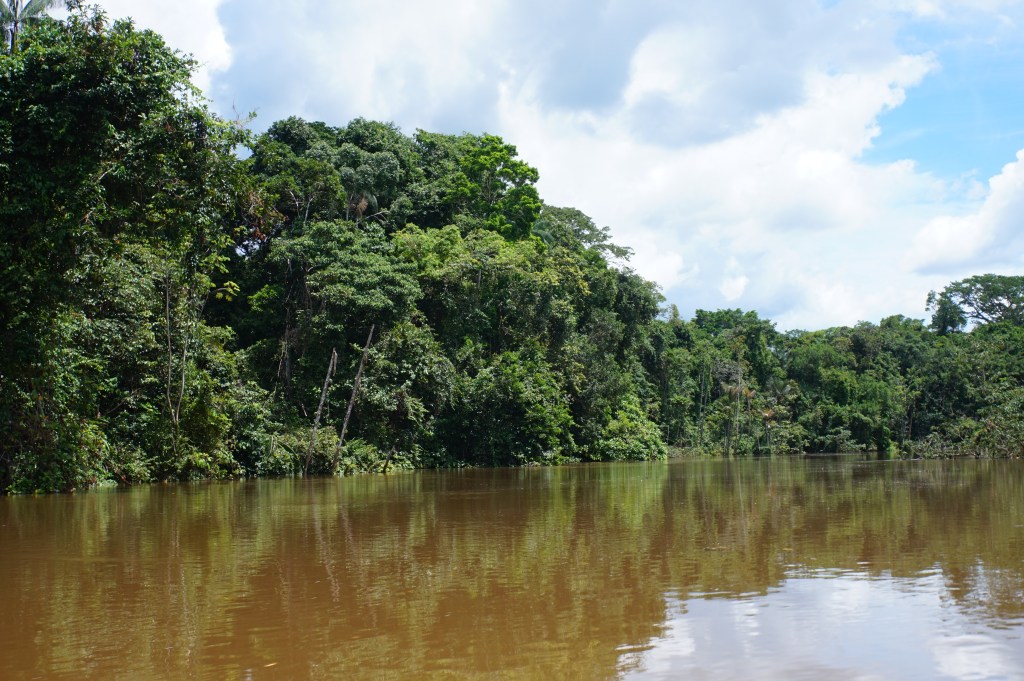
With the rain continuing into the afternoon, Roman and I decided to get wet and go and check out the lake that was nearby. Laguna Jatuncocha translates from the indigenous language as Big Lake and is home to many Caimans, herons and other types of birds. There is a camp with a tarpaulin roof for tourists who come to visit with guides on an island in the lake. The lake itself is about 4 km long and not very wide, maybe a few hundred metres maximum. It was very beautiful and I am sure it is even more so when the sun is shining. This was the last thing that I was going to be shown as the boat was heading back to Rocafuerte very shortly.
Very sad to leave, we headed out leaving Cristian behind to hold the fort. As we approached the junction where the Yasuni meets the River Napo, the Pink Dolphins were playing around again. This time there was a pod of 4 or 5 of them but true to form, they only showed themselves whilst I was looking the other way. A nice end to the trip, seeing the dolphins had been a highlight of the last 3 days. This was especially as I remember seeing an episode of the BBC documentary The Blue Planet when they struggled to find these guys. They should have just come here as you can see them on a daily basis here.
Arriving in Rocafuerte, I went to collect my bags from the hostel where I had left them. I asked if they had a room available and the owner laughed. The whole town was fully booked out as people had come to see the President who was opening the new promenade that had been built. This could have been a problem had it not been for the amazing Roman who said I could sleep in the Environmental Ministry’s office. There was a mattress and a mosquito net I could use and there would be nobody else there. I accepted his hospitality and asked how much he wanted for the generosity I had been given over the last 3 days. He said I could give what I wanted and when I asked again, he finally told me that I had used $20 in petrol. I tried to give him money personally to thank him for all the knowledge he had passed on and the time he had taken to show me a good time but he didn’t want it. I eventually forced him to take it but I don’t know if he kept the money for himself or he passed it to the ministry.
I prepared myself for the boat that I wanted to catch at 6 am the following morning knowing that I had to wake up at 5:30 am latest. I went out for some food and when I returned, I realised that I was staying next to a nightclub. This wasn’t ideal seeing as I was tired and the nightclub wasn’t even close to being sound proofed. The music eventually ended at 2 am as the rain began to chuck it down. One noise was exchanged for another but being used to the sound of rain, it allowed me to get a little bit of sleep before the early rise the next morning. Seeing as I was well prepared, waking up was easy and after tidying up, I was out and at the boat with time to spare. The boat this time was much more comfortable with benches lining both sides rather than being in rows. This meant you could stretch out and even lie along the benches when there were less people and more space.
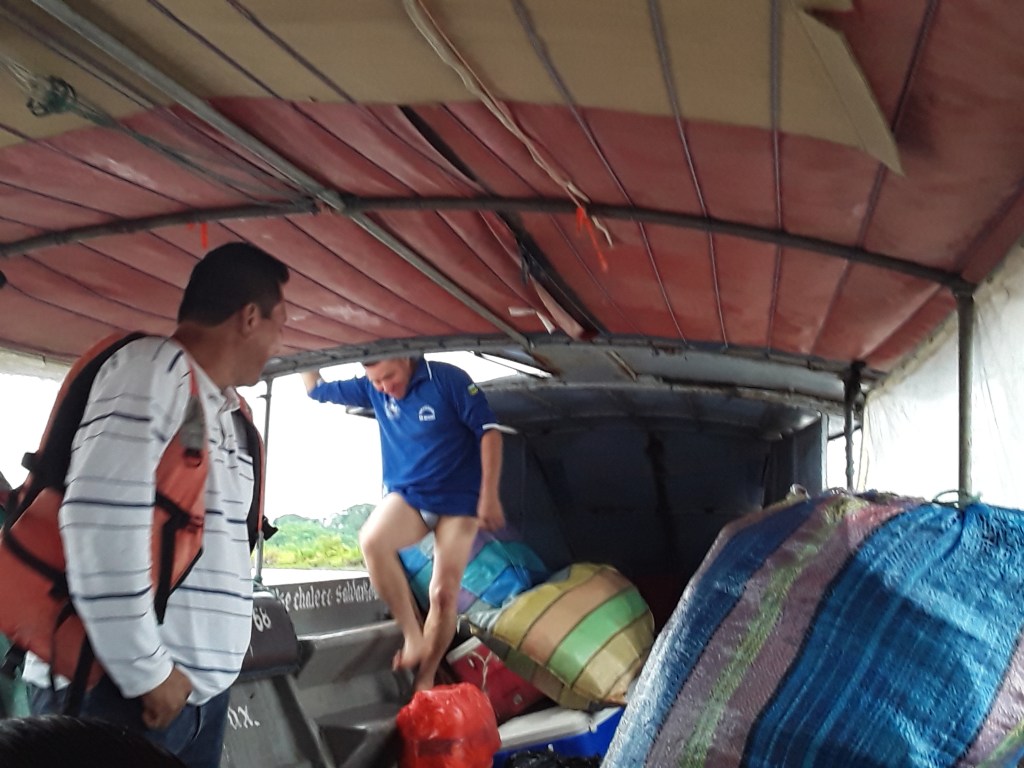
Even heading upstream, the boat journey took the same amount of time as the one downstream. Even the boat captain seemed to be of the same capability with this one managing to get us stranded on a sand bar in the middle of the river. After a lot of manoeuvring and shuffling back and forth, the boat was still lodged on the sand. The passengers tried to help but it wasn’t working and therefore we only had one option. I watched the boat conductor take off his trousers and enter the water to help give us a push in the right direction. Eventually he managed to get us moving as he jumped on before the boat left him behind. He didn’t look the happiest person in the world but he could see the funny side of it as he re-entered the boat to a ripple of applause. Fortunately, the rest of the journey back to El Coca went by smoothly and uneventful.
Two things that I have learnt about the Yasuni and the Kichwa people that I find interesting and were both told to me by Roman. Firstly, swimming in this area is very ill advised. Having swam in croc and caiman infested waters in Panama on a daily basis, I had lost the fear of jumping in first and was able to relax. Here I had that fear again, especially when I was told that two tourist were eaten by the same caiman here at the same time. It is very tragic to hear but also a stark reminder of the type of animal that they are. They are wild animals that are very successful hunters and when they are hungry, they are not fussy as to what they eat.
The second thing I had learnt was that further into the national park, there are indigenous tribes still living there. They aren’t very welcoming or friendly people and with good reason. Westerners had visited before and even our basic illnesses, like the common cold, can wreak havoc here because their bodies don’t know how to fight it. With no natural immunity in their unaccustomed bodies, a basic cold can kill many members of an indigenous tribe. Roman told me that people who had tried to reach out to the tribe, didn’t make it out of the jungle alive. Even when they arrived naked without any western influences with them, they were not greeted with open arms. That is how serious they are about protecting their people and their culture, and understandably so.
This pretty much brings me up to date with my travels for now, maybe a month shy of the current date. I probably won’t write anything for the next month or at least until the new year. With that said, I hope you all have a superb festive period, full of joy, happiness, great food and the odd drink or two. Merry Christmas and a Happy New Year, and loads of love to you all.
 Going Feral
What beautiful photos Matt and some more interesting tales. Your negotiating skills are certainly proving very useful! Christmas in Ecuador will bring further new experiences – just in case Wi-fi is poor, have a very merry Christmas and a happy, healthy and safe 2020. Lots of love from us all xxx
LikeLike
Hi Matt,
I so enjoy reading your posts which draw a picture in my mind so clearly. The pics are beautiful too.
Happy Christmas and maybe a Merry New Year to you too. Keep safe!
Love Colleen xx
Sent from my iPad
LikeLike
Thanks Colleen, love to the family over the festive period xxx
LikeLike
What beautiful photos Matt and some more interesting tales. Your negotiating skills are certainly proving very useful! Christmas in Ecuador will bring further new experiences – just in case Wi-fi is poor, have a very merry Christmas and a happy, healthy and safe 2020. Lots of love from us all xxx
LikeLike
I think the WiFi should be decent enough for a chat (hopefully). Speak to you soon xxx
LikeLike