
Having overcome Giardia, the quick weight loss diet otherwise known as a parasite, I was ready to head to the Pacific coast of Colombia. In the past when I have headed to the Pacific coast it has been with the excitement of the opportunity to surf and relax on the beach. Ironically, I am on a bus heading to the coast for exactly that reason now but that’s 3 months in the future from what I am telling you about. Now I am heading to the coast to try and see some whales. It is that time of year when the whales, mainly humpbacks, journey to the safer and warmer waters to make it easier on their new-born calves.
A good area to spot them in Colombia is off the coast from Buenaventura, a few hours from Cali. Buenaventura is the largest port city on the Pacific coast of Colombia and used to be owned by the Cali cartel (and probably still is) enabling them to move tonnes and tonnes of cocaine into North America. It’s a city with not a lot of money, employment or tourism and I was regularly warned about how dangerous it was and that I shouldn’t walk around alone day or night. This was a little bit exaggerated but so are many stories about the dangers in Colombia. But to see the whales it was best to get a boat from Buenaventura, heading up the coast to somewhere else and go from there.
I had a friend who had been and seen whales of this coastline with great success. She stayed at a hostel near Juanchaco – the first real beach from Buenaventura – and said that it was amazing and that I should go there. The problem for me was that with it being in a remote place, the costs of transport, accommodation, food, drinks and then the whale tours on top would be too much for me. So I searched the hostel and contacted them directly asking about volunteering with them for a month. This way I could save on the accommodation and food and get the opportunity to explore the coastline a bit.
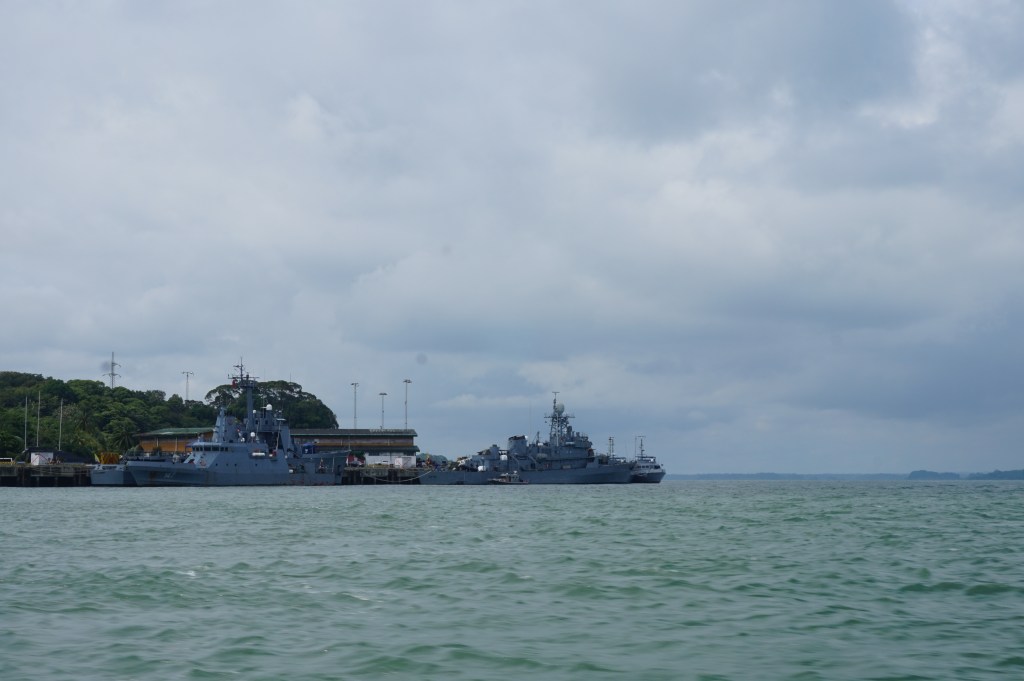
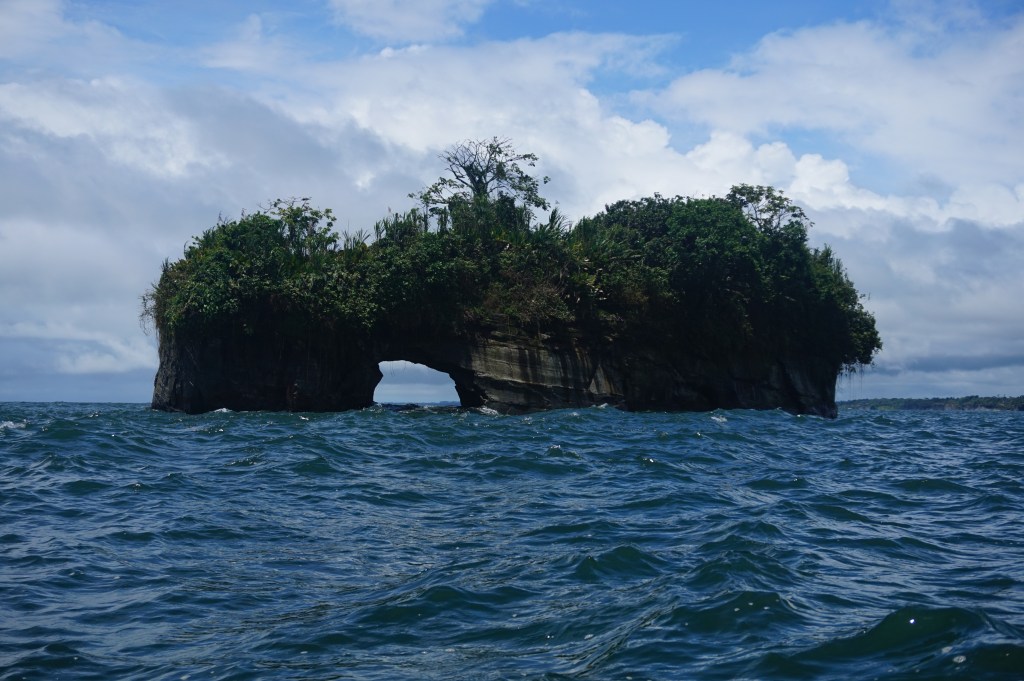
So I got the bus from Cali to Buenaventura, had some lunch and then caught the 1 hour or so boat to Pacifico Hostal, my home for the next month. The boat ride hugged the coast which quickly turned from city and concrete into rocks and trees. The pacific coast of Colombia is fairly inaccessible and therefore very underdeveloped, boasting miles and miles of pristine untouched jungle coastline. Pacifico Hostel is on piece of land that is on the corner of where one of the rivers joins the ocean and around the headland from Juanchacho beach. When the tide is out, the river is barely a stream and there is a large beach in front of the hostel. It’s a remarkable location with beauty and wildlife surrounding it. I knew I was going to enjoy it here.
I met the owner Andres upon arrival, although he was busy with check-ins, and then met Josue who I thought was the manager. It turned out he was the social media guy who spent all day posting videos and pictures on social media platforms as his job and helping out elsewhere when needed. He was kind of a manager as he knew what was happening more than the volunteers so we kept him busy. There was another volunteer there, Erline from Belgium, but she was leaving soon as I was her replacement. She more or less trained me with what I had to do which wasn’t that much. The idea was that I should be available on shift if something needed doing. Otherwise I was there to chat and have fun with guests. The bar was the responsibility of the person on shift but was only really busy on the weekends.
There were a few little tasks every shift but the work was so laid back and you generally helped each other out if you were around during the day. In return, we were rewarded with breakfast, lunch, dinner, a bed in a volunteer dorm, use of all equipment and all tours included that you wanted to do. The owner was really chilled and wanted volunteers to enjoy themselves and in turn there would be a good vibe at the place for the guests to adopt. I spent most of my shifts playing backgammon, slacklining or chatting in the garden watching the ocean view. The food was incredible, all cooked by local ladies from Buenaventura or Juanchaco. Arepas with eggs and fruit for breakfast, fresh fish or prawns cooked in a variety of ways for lunch and dinner. The portions were pretty good as well so I was able to eat all the left-overs from people who couldn’t finish their plates.
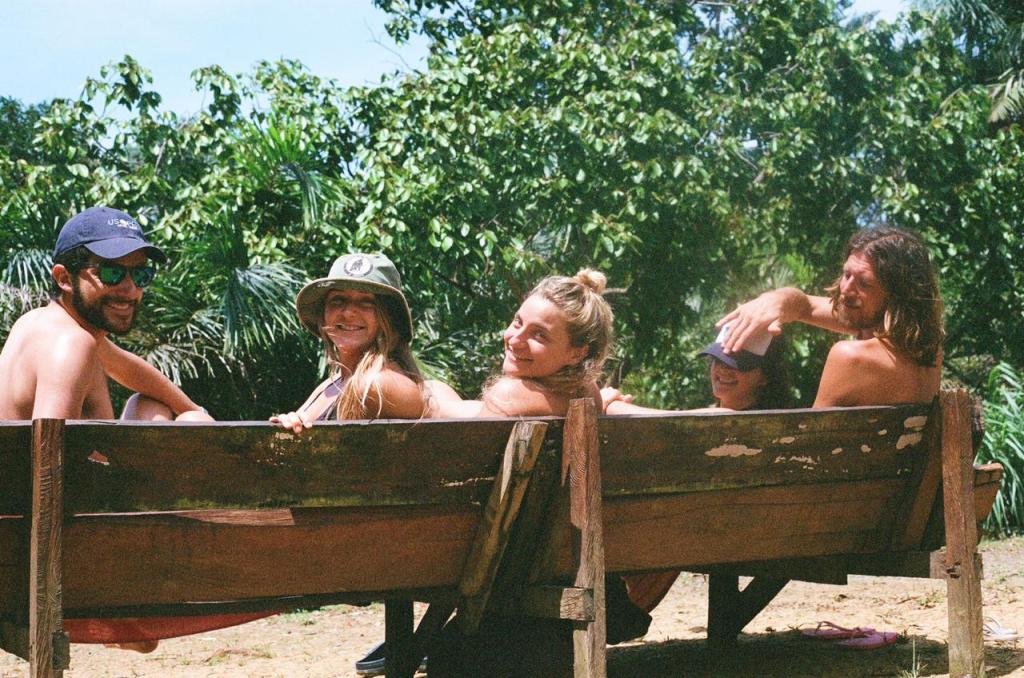
After a week a few more volunteers arrived to bring us up to being fully staffed. Dani was the first to arrive, a young South African girl full of smiles, kindness and Jesus. She was a really positive energy to be around and a really helpful person. Then Gladys and Chester, a French girl and a Spanish guy, turned up together. At first I thought they were a couple but it turned they most definitely weren’t. Gladys was a laid back surfer girl who liked to let her hair down when she could and was fun to be around. Chester was also a fun guy who I got on really well with but he was as lazy as they come. Even though there was very little to do, he somehow found a way not to do that and was never around when needed. He lasted about a week before he we asked to leave for multiple reasons.
Chester was replaced by Matt, and English conspiracy theorist with a strong connection to Christ. He was really interesting and a great guy but in my opinion he spoke a lot of nonsense sometimes. Gladys left before us and was replaced by Matteo from Italy, who also was a really nice and fun guy to be around. At one stage we had three volunteers, Matt 1, Matt 2 and Matt 3. It became a little confusing at some points. A lot of times, the place where you stay is made one hundred times better by the people you share the experience with. This was one of those occasions and I feel lucky to have shared my time with Andres, Josue, Dani, Gladys, the Matts and Diana. Diana was Andres’s sister and was there to run the place when he wasn’t, which was for 3 out of the 5 weeks that I was there. She was amazing too and cut from the same laid back cloth as everyone else there.
There were three main tours heading out of the hostel. The first and most important for me was the whale watching tour, which I ended up doing twice. We headed out to sea in a 15 man launch boat for maybe 30 mins to an hour. The sea wasn’t too bad on both occasions but the rain had started to pour down on the first trip. This wouldn’t affect the whales as they were wet already but it would make it hard to get any decent pics. We found the whales fairly easily, a mother with her baby and followed them around. Short of seeing the whales jump out of the water, I managed to see most things you were expected to see if you were lucky. The flapping of their wings up and down, hitting the water with force and the display of a huge tail buy one of the adults were spectacular sights to see.
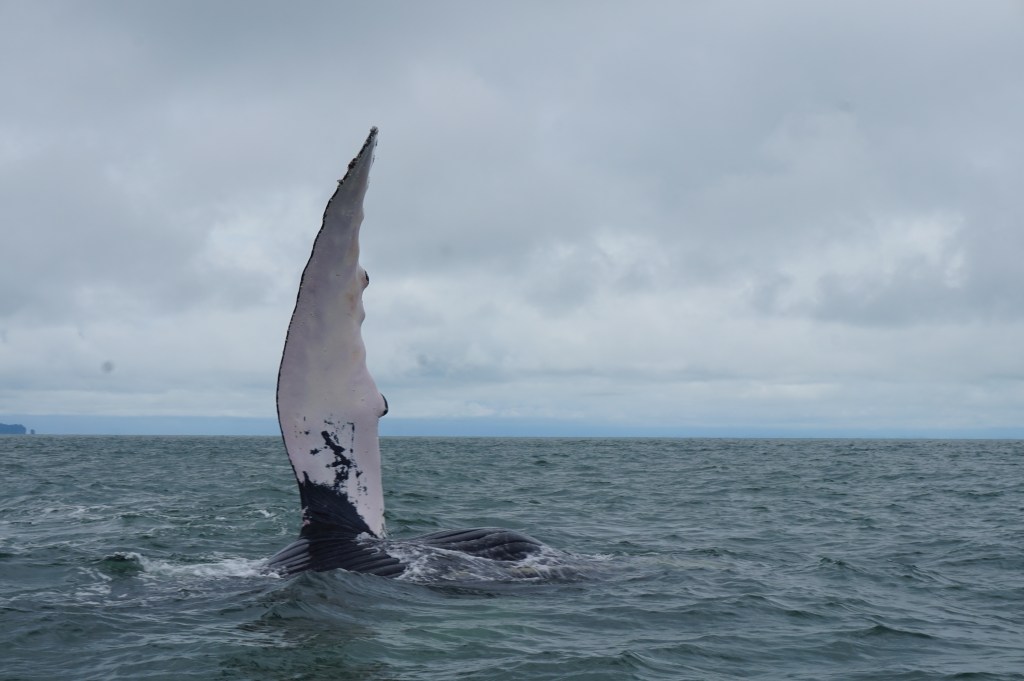
Although it was incredible and I really enjoyed seeing them, I felt a little bit bad at times. Some of the other boat drivers seemed to have little or no respect for the animals and would burn around quickly and get very close to them. It did seem at one point as if the whales were getting bothered as they turned back and forth seemingly to avoid the 10 boats that were encroaching too close. I have heard it is worse in Mexico where there can be hundreds of boats following them but to annoy them is to annoy them no matter how many boats there are. I hope I am wrong and they were just playing because sometimes it did seem like they were coming to say hello and playing with us.
On the way back we passed by an island absolutely full of birds. There were thousands of Pelicans and Frigate birds perching on the trees on the cliffs above the ocean. They were everywhere. Having passed this island we found a reasonably sheltered cove where we could take a swim in the ocean and splash around for a bit. After that, it was back to the hostel in time for lunch. Overall, the tour lasted between 2-3 hours and this depended on how easily you found the whales. Every tour that went out whilst I was there saw whales and the people were happy when they returned. Many of them saw the whales jumping including the babies on some occasions but these were the really lucky ones.
The next tour was a trip to a few waterfalls and swimming holes located hidden around the coast. It involved another boat ride for about an hour but this was through calmer, more sheltered waters. Upon arrival at the Sierpe Waterfall, you were greeted by a really tall waterfall on the left and a smaller one on the right. Depending who is telling you, the Sierpe waterfall probably measures around 20-30m high. You were able to leave the boat, clamber and fall across some slippery rocks and swim in the little pool beneath the waterfall. You could also get beneath the falling water and take a relaxing shower massage, until the water hit you and it was more like a stone shower driving you beneath the water. It wasn’t a pleasurable experience but it was still fun to try and hold on for as long as possible.
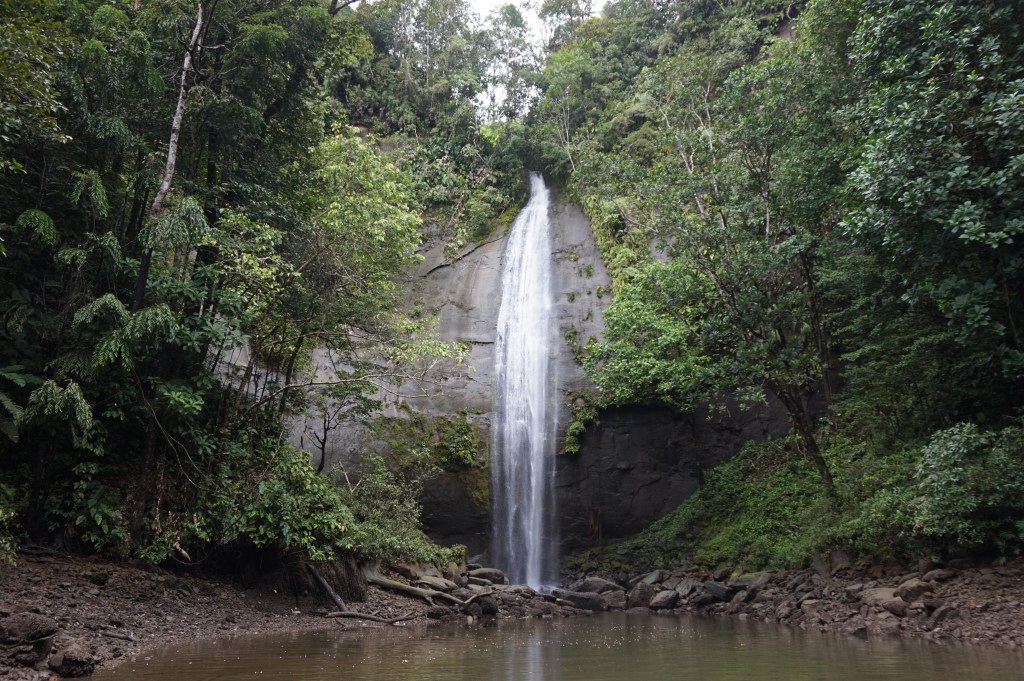
On the other side there was a much smaller waterfall with a much bigger swimming hole and a place you could climb and jump from. The jump wasn’t very high but the water looked beautiful and was worth the effort to have a little swim. From here we headed off to the Tres Marias, a cascade of swimming holes on the other side of the bay. Once you have arrived, you could walk your way up a collection of swimming pools, all of which are small and of varying shallow depths until you get to the point where no clear route higher is visible. This is where we all went to the toilet knowing how grateful the swimmers below would be for a little rise in the water temperature of the pools. I’m kidding but the thought did cross my mind.
On the way back to the hostel, I spotted what I thought were some dolphins ahead of us in the distance. I am always hesitant to say because people get excited and then follows the disappointment when you don’t see them again. Also, my eyes can sometimes see what I want to see but this time I was certain (and excited) so I pointed and shouted ¨’DOLPHINS!!!’ Then followed the silence as everyone was looking to see the dolphins that were nowhere to be seen. Then came the heavy atmosphere of the weight of disappointment in the air descending upon to whole boat when all of sudden Chester screamed and almost fell out of his seat. The Dolphins were real and they were swimming right next to the front of the boat, jumping out of the water and changing sides whenever they felt like it. The disappointed mood instantly turned into delirium as soon as the dolphins appeared beside us.
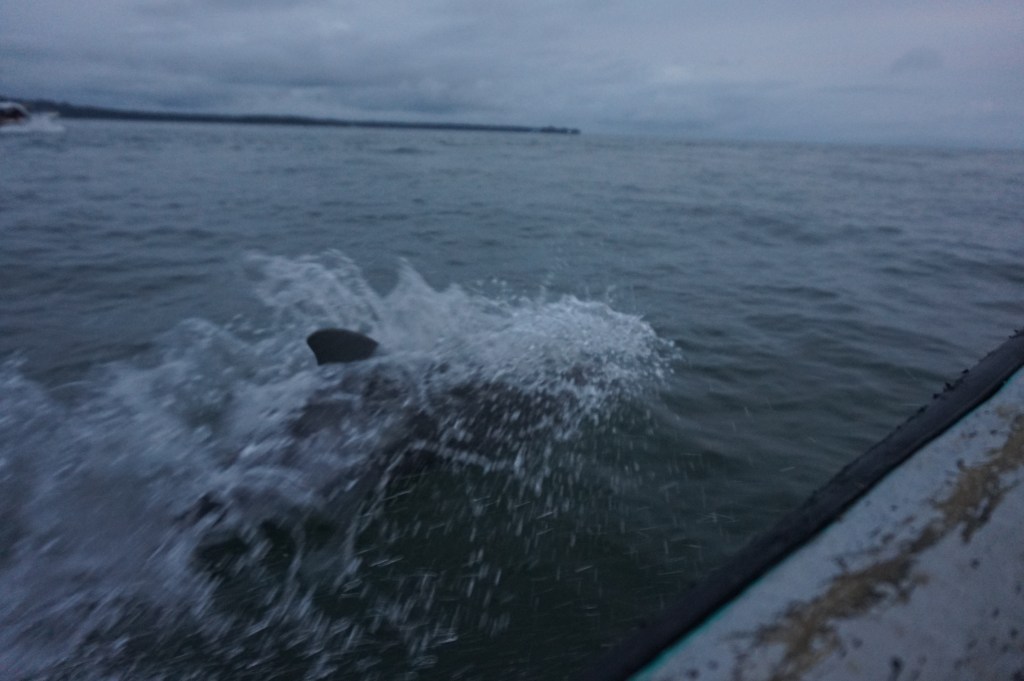
This was the first time I saw dolphins here but it wouldn’t be the last. They were regular attendees in the deeper waters in front of the hostel. We could head out in the afternoon by paddle board to try and spot them as they swam past after a days feeding. Although we saw them again, it wasn’t as close as that time and there wasn’t the same interaction that we had. You could also spot them from the garden if you were too lazy to paddle or swim. There were also numerous birds visible from the hostel including Yellow-throated Toucans which excited many travellers we had at the hostel. I would make it my responsibility to point them out to whoever cared when I could hear them talking as well as other beautiful birds that graced us with their presence.
The last of the tours was a trip into the mangroves that were on the other side of Juanchaco. The local surfer came and picked us up from the hostel and we walked out the back through the semi jungle and across the river to Juanchaco. It took about 15 minutes and this is the route we took when we went to Juanchaco to get supplies. We walked through Juanchaco and out the other side (a 10 minute walk) and continued onto Ladrilleros. Along the way, Olver was explaining a lot of information and history about the towns and the places we were passing by. We arrived at a tiny port and the entrance to the mangroves hidden away inland off the main paths. We entered a canoe and Olver paddled us slowly through the mangroves providing more information along the way.
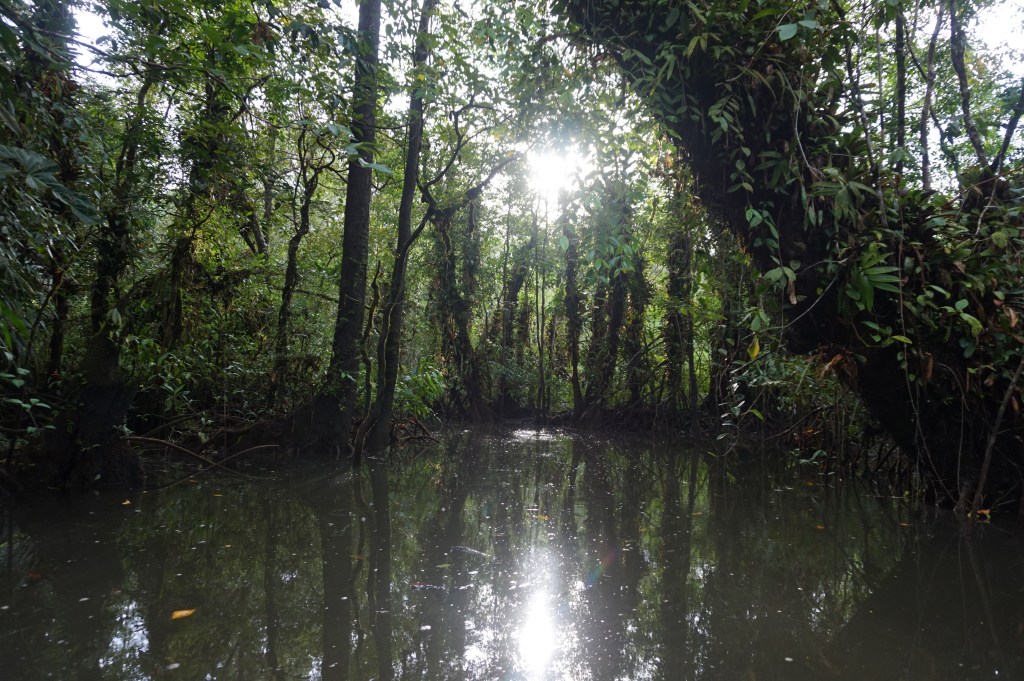
We came to a point where the water was too shallow to continue by boat so we stepped out and walked the rest. We shortly arrived at a man-made dam which was preventing the salt water from entering the fresh water pools above when it was high tide. These fresh water pools had beautifully clear water and were located remotely in the mangrove jungle. There was also a place to climb and jump, although you had to be fairly accurate with your landing here, there wasn’t much room for error. With everyone alive, we made our way back to the canoe and the mainland. Due to the variety, locations and information provided, I think this was my favourite of the three main tours available through the hostel. Olver is also a funny guy which made it better.
I had met him before as he rents out surf boards in Ladrilleros, the next beach after Juanchaco. The surf wasn’t really anything special here with 90% of the time spent fighting the waves coming from all angles or the current sweeping you towards the next beach. Olver seemed to be finding himself waves, but that comes with local knowledge and a much greater ability at surfing. He said that occasionally when it’s the right time of year and the conditions are right, there is a big wave that breaks off the point and rolls towards the beaching lasting for 400-500m. Not so much luck for us this time but it was still nice to get back in the water for the first time in over a year, and I managed to catch something.
The hostel had kayaks as well as the paddle board and these could be taken out for a spin if we wanted. For a more tranquil experience, you could take them up the river when it was high tide. Winding your way up the river, you were surrounded by nature and not a lot else. After about 20 minutes you arrived at a fallen tree that blocked you from going any further upstream. The water here was very shallow too so it was a good point to tie up the kayaks and walk. Around the next corner there was a sign stating something about a military zone and a concrete dam about 2.5m tall. There was also a concrete hut that was a little bit worse for wear these days, a little bit like the dam. I’m not certain why it was there, maybe a base for when military personal were passing up the coast and the dam supplied them with fresh water. What it did create was a beautiful swimming pool in the middle of the jungle with nothing or no one around you.
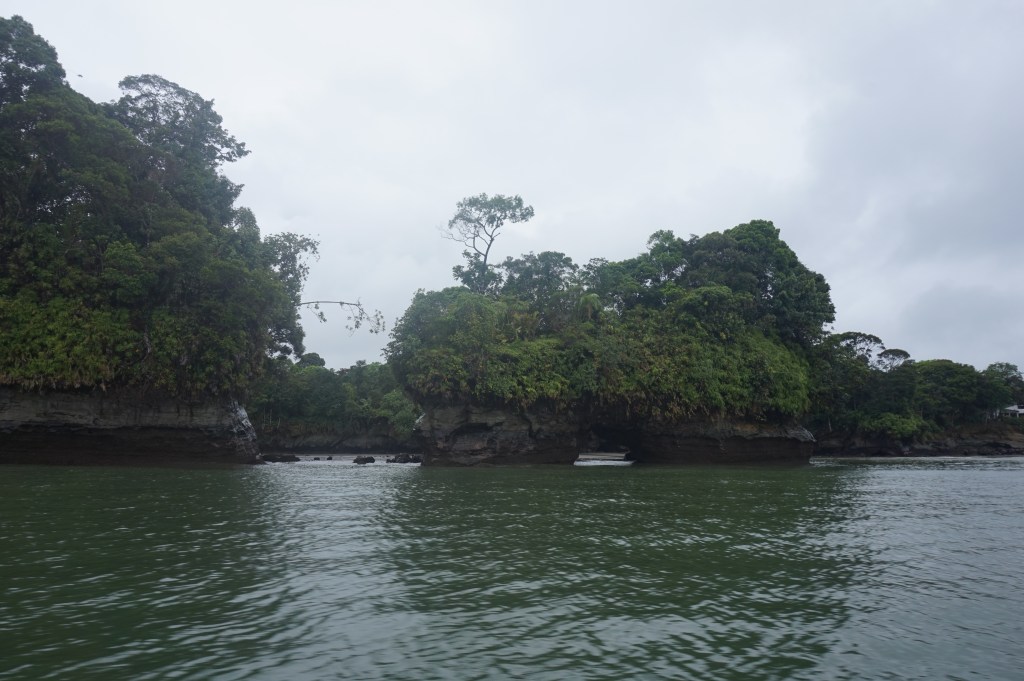
There were many more hidden treasures along the coast within walking, swimming or paddling distance. This included many caves with one particular cave that went over 100m into the darkness and was only accessible at lower tides. There were also 2 small islands in front of the hostel which although they weren’t accessible due to its 3m cliff walls, you could pass through a tunnel beneath them. This was especially impressive at night time when the water was filled with bio-luminescent plankton. This is another reason why the whales like to come here because they can eat this abundance in plankton. If you went into the tunnels at night, you could splash the walls with water and paint them with stars. It was like watching a glistening night sky that lasted a few seconds, and then you splashed the walls again. Although this wasn’t an official activity, we would take guests down and I would see mature adults turn into 8 year old children again.
That was one of the pleasures of this place. Because it’s only a small hostel, you got to know all of the guests very well and those who wanted to, could become part of the family. The guests who stayed longer than 2-3 days became honorary volunteers helping themselves to things and helping out with chores. That family vibe was present in Juanchaco too with really friendly people throughout it. Unfortunately there was an issue with plastic on the beaches and it was a never ending problem. The locals weren’t perfect but it was far from only their fault. Rubbish was washing up from Buenaventura and more of a problem was the island of plastic floating off the coast in the Pacific Ocean. I was told it was the size of France which I thought was a huge exaggeration. Although its size is hard to determine, it covers an area larger than France, albeit the plastic is not very densely compacted together. It is trash that is caught in the oceans vortex currents that means it accumulates in the middle of these currents. What it does is release the large, small and minute particles of plastic back into the ocean which eventually ends up on the beaches.
There is an organisation in Juanchacho called Eco-Pazifico and they are trying to help the problem. They clean the beaches but it keeps turning up from sea. They don’t see the plastic that turns up as rubbish but as materials to re-use again, for example, creating art instalments for the tourists that come to their town. They also teach the kids of the town this way of thinking. It is best not to litter in the first place but when the plastic keeps turning up, it is better to re-use it rather than throw it away for it to turn up here again or somewhere else as a problem. Also. the games played with the energetic children gets them to clean the beach without it seeming like a chore. Very sneaky but also very effective on both fronts.
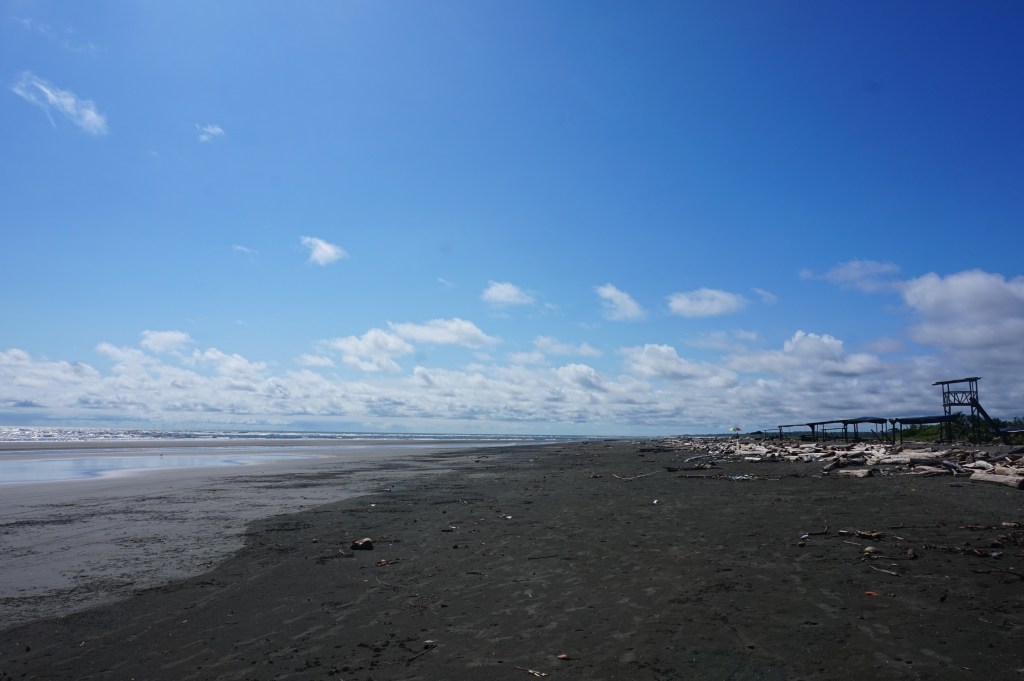
Further up the coast, past Juanchaco and Ladrilleros, there is another beach called La Barra. This is a long straight 4-5km beach with not a lot going on around it. There is also a lot less plastic on this beach and the water seems relatively clean too. Along the beach you come across a couple of huts selling food. To whom they sell I don’t know as we were the only people we saw along the whole beach apart from a couple of girls. We made a good choice in which hut to eat at with there being a 5 year old boy entertaining us, freshly born puppies and the lady cooked one of the best empanadas I had ever eaten. More specifically it was a Manta Ray empanada (possibly stingray as they have the same name here) and it was so good I ordered another one straight away. After the empanadas, some people decided to get a bike taxi back to the hostel, after all, it had been a long walk with not a lot of shelter. We on the other hand preferred to walk with it being so beautiful and such a lovely day.
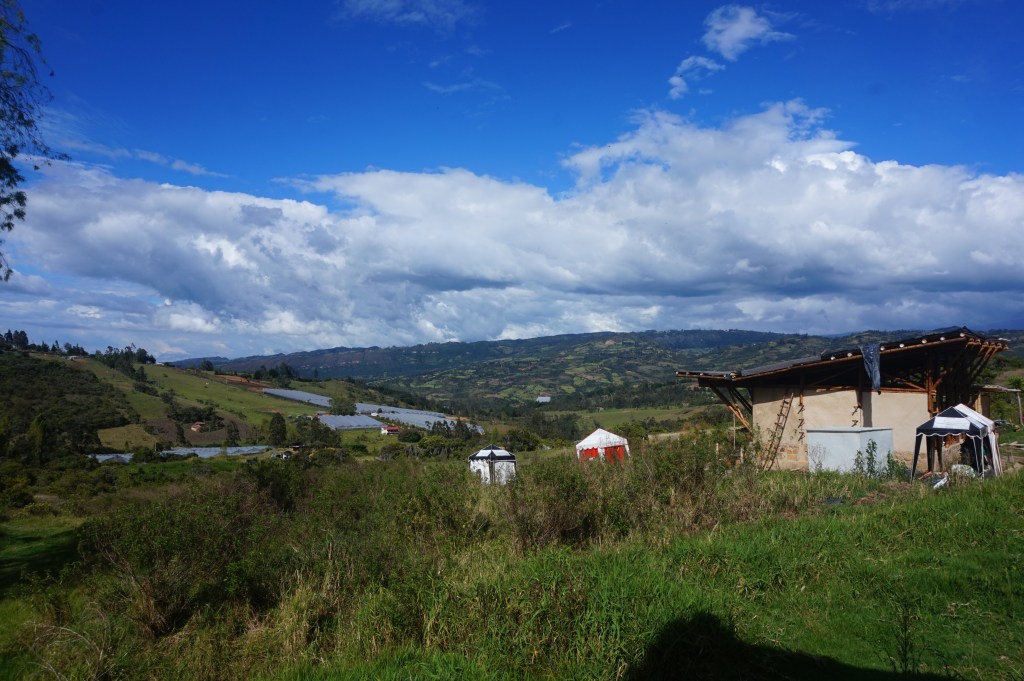
At the hostel, I ended up outstaying Gladys and Dani (and Chester) and eventually left once they had the volunteers they needed to replace us. I headed back to Cali before heading north again to Bogota to meet a friend. We headed off to Boyacá a beautiful province north of Bogota. She had family there and wanted to show me it but in the end we only had time to go to one spot, Santa Sofia just outside of the more famous Villa de Leyva. You won’t have heard of it but is well known on the backpacking route, you will have to trust me on that. We stayed on a community that was in the process of become self-sufficient but was already established with a few families living there. It was set in a beautiful area with a few streams to visit although the freezing mountain water didn’t appeal to me one bit. The birds in the day were beautiful and the stars at night were incredible.
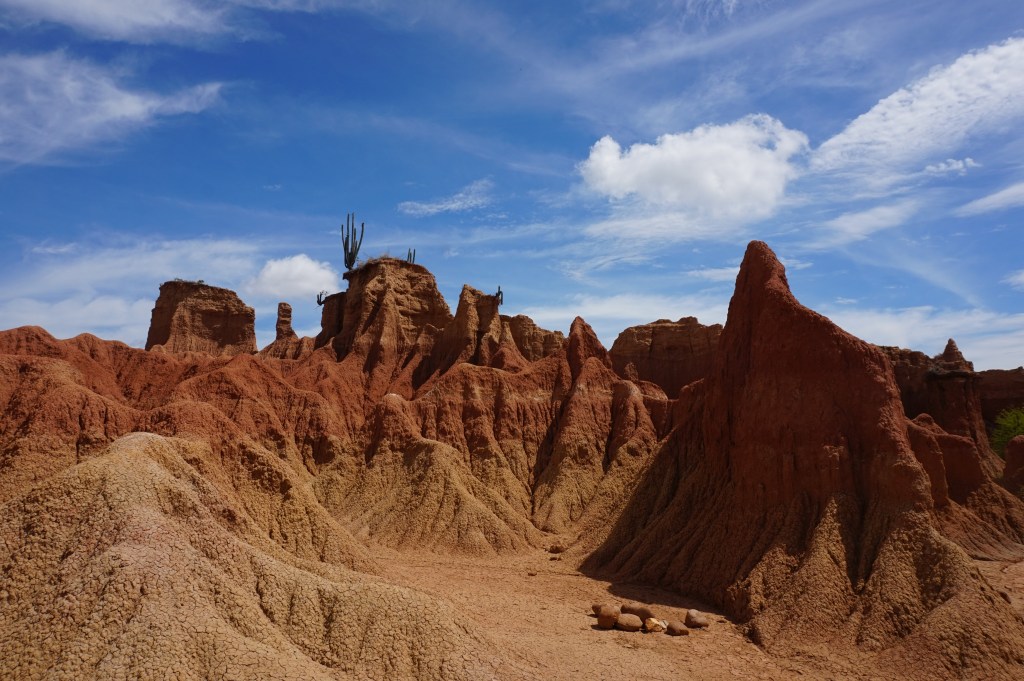
After heading back to Bogota, I left my friend behind to head to the Tatacoa Desert. It is a huge arid area comprising of two different zones, a grey area and a red, or ochre area as it is correctly known as. Visually the red zone is more breath-taking to see with red columns of clay creating vast valley labyrinths 10-20 metres deep that contrast with the clear blue skies. They grey zone is beautiful too, it just doesn’t have that Hollywood factor that the red zone possesses. As well as the stunning landscapes to see there were also a surprising amount of birds present in the desert. There were loads of birds flying around constantly with the most common three coming in yellow, blue and the last in red. It was like seeing the Colombian flag flying around you.
At night time there were a few places you could go to see the stars. Well you could look up from anywhere there wasn’t a roof but I mean there were observatories scattered around this area. The one I went to wasn’t a real observatory but more of a guy who had 2 really good telescopes. He also gave a chat on the stars explaining a lot of interesting things which I have probably forgotten 90% of already. He was funny though and we had an opportunity to see Jupiter and Saturn through his telescopes. To be honest, you couldn’t really see much other than a white dot and it could have been anything, but I believe him it was those planets. We also got a selection of photos that he had taken so any pics you see of the stars from Tatacoa were taken by him and not with my shoddy camera.
With many things being far apart, the temperatures and sun obviously being very strong in the day and the activities being fairly expensive, two days was enough there. I took a bike ride on the road that passed through the desert, and with plenty of water I managed to make it pretty far. There were a few fast downhill parts as well which although was fun, they left me with a few blisters due to the rugged terrain. The nights here are very quiet with no electricity after 9pm and with a long day in the sun I was tired fairly early. The climate here was beautiful at night which meant I could sleep in my hammock for the first time in a while. With the day I had spent in the sun, and the comfortable hammock as a bed, I slept very well indeed.
With not much else to do, I headed out of the desert and was soon heading even further north and away from Ecuador. England had made it to the Rugby World Cup final and I had only been able to watch the semi-final so far, which I did alone in a hostel. This time I wanted to watch it with someone and who better than Dani, who proudly came from South Africa. I wish I hadn’t now because she was very smug when England lost and wasn’t as nice as I thought she was. I’m sure I would have been very sympathetic had England turned up that day and won it. Anyway, I wanted to watch it with Dani so we met in Medellin where we could guarantee a place that could show it. This turns out to be very hard as Colombians have never heard of rugby and if it wasn’t for the Argentinians playing, it wouldn’t have been on the tele at all.
It turned out that Josue, Erline and a few other friends all happened to be in Medellin at the same time so that turned into a really good few days, well almost. We had spent the night in one of the busy parks, drinking beers and watching the entertainment. We also went dancing and then back into the parks before, around 3am, we started to head back to the hostel. It was a 20-30 minute walk along the main road, probably not even that. On the way, a lady of the night took a liking to me. She came out of nowhere and started touching me all over and telling me that I wanted her and her sexy body. Unfortunately for me she was short, overweight, ugly, a prostitute and also very good with her hands. It took her two attempts but when I finally fought her off, she left with my mobile phone in her hands.
My friends found it very funny to see this street creature trying to seduce me for my money, in fact I found it funny too. But she never wanted me for that and it was only when I was at the hostel that I realised what she had actually done. Everyone else seemed much more annoyed about what had happened that I did, after all it is only a mobile phone. The annoying part was that it had my English sim card in it which meant many people now didn’t have my number and I am useless at keeping in contact and sending messages. I went to the police to try and get an incident report for insurance purposes, but they were about as helpful as paper raincoat. They even refused to show me where I had to go on a map because they believed it was too far for me to walk. And as it turns out, I couldn’t claim it on insurance anyway due to the normal terms and conditions that prevent insurance from being useful.
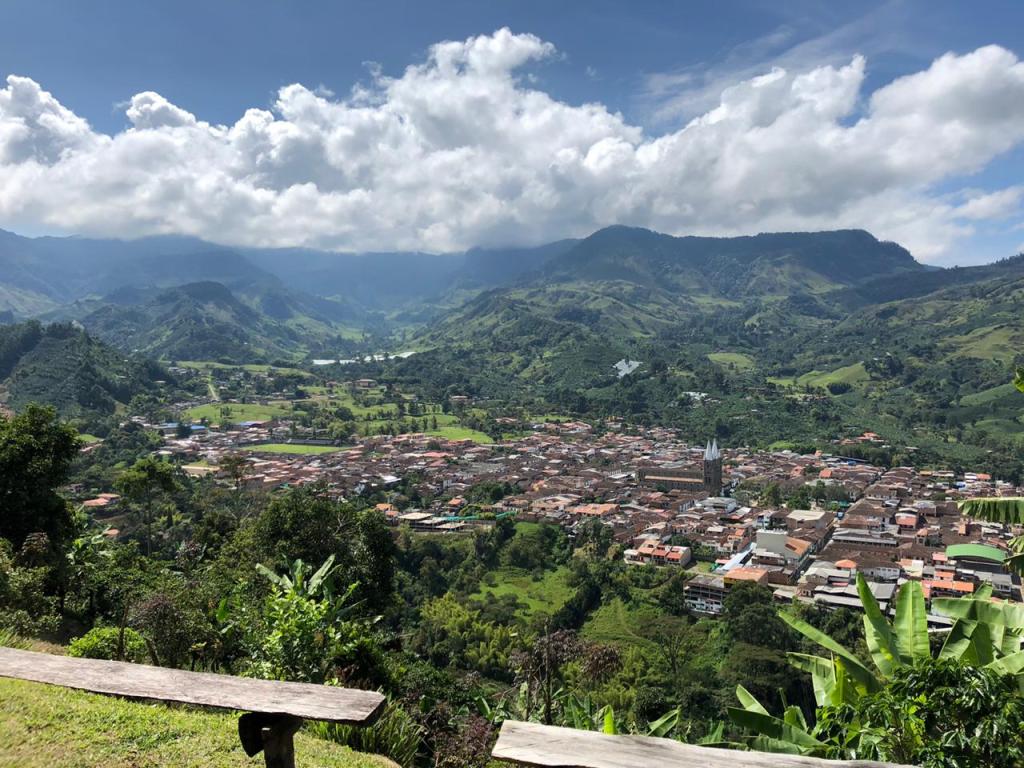
The next day Dani and I headed off to Jardin, a small place a few hours from Medellin to do some hiking and enjoy the sceneries. I think we arrived on the wrong day as everywhere was really expensive or fully booked. We did eventually find a bed each in the same place and it worked out really well. The hostel had a dorm with a couple of beds, one of which was a double bed (which I claimed), and an owner who was really nice. Jardin is a beautiful little town and that is why it is a popular getaway for the people of Medellin at the weekends. Just like the rest of Colombia, the people were all really friendly and the park in the town centre was an atmospheric place, buzzing with people all day. It was a nice place to relax especially after a full days hiking.
Dani and I hiked from the town, up the hills surrounding Jardin in search of some waterfalls. Due to Dani’s schedule, we only had the one full day there and the two nights. I’m sure there are many beautiful hikes around Jardin but we only had time to do one of the main hikes heading a little bit further than we saw others go. In total we probably spent around 6 hours walking with the majority of those being uphill. Having not eaten, my stomach was begging me to top it up so we had a snack on the hill on the way down. There was also a garden in Jardin when you could see the cock-of-the-rock bird lekking apparently. These are the weirdly beautiful orange headed birds that I saw in the Amazon before, albeit only twice and quickly.
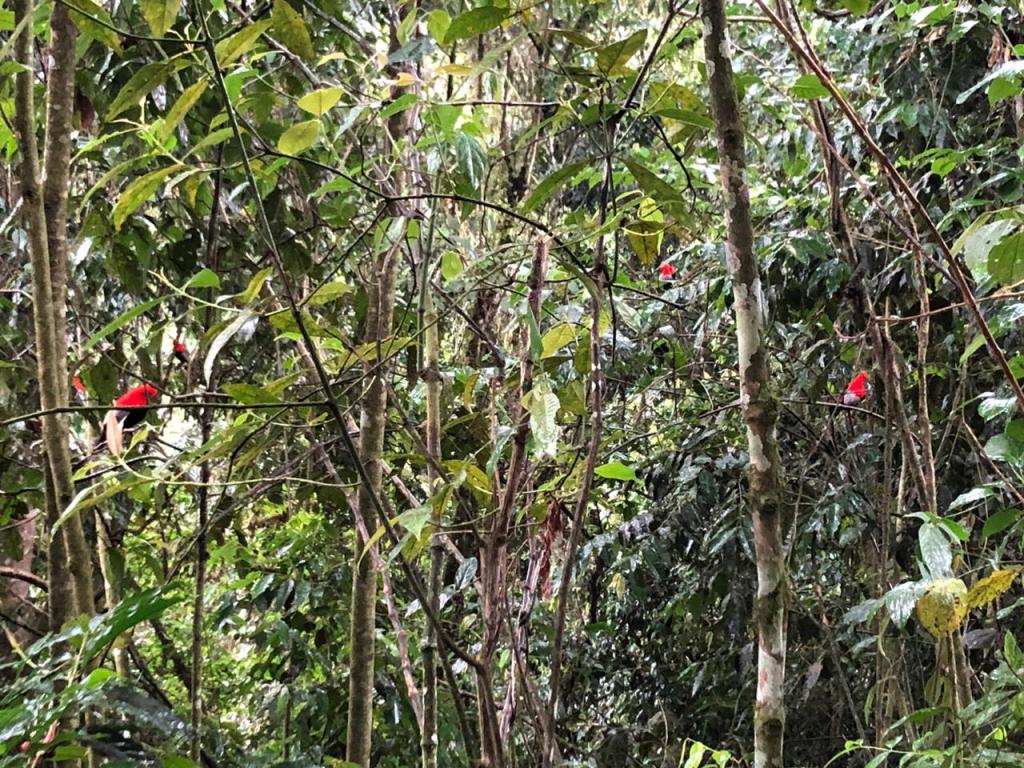
It had now started to rain and we had arrived at the ladies house earlier than it was said to be open. She let us in anyway and showed us round to the back of her beautiful house. It had a garden full of flowers and then at the back there was a steep ravine littered with trees. This was where the birds like to be and they were there in full force. The noise was everywhere and you could spot these birds all around. The lek performed by these beauties is designed to attract the female. The males will pair off and kind of have a dance off whilst singing at the same time. When the female finally arrived, they went bonkers. The volume raised significantly and they jumped around in pairs chaotically trying to get her attention. With her dull colours, I didn’t even spot the female so I can’t tell you who won if anyone.
This went on for a while and we were able to get fairly close to these often shy and withdrawn birds. There were a couple of viewing platforms built so we were able to move around to look at the different dance battles going on. There were also other birds throughout the garden too but they were drowned out by the rowdy cock-of-the rocks getting incredibly excited. As the female left, so did the party and everything died down. That was our cue to leave too and we headed back to the park to relax and watch the world go by. The next day was a bus back to Medellin where Dani would stay the night but for me it was a stopover before my night bus back to Bogota. This was the beginning of my journey back south and finally into Ecuador.
I didn’t have much time left on my visa and needed to leave Colombia soon. I took the night bus to Bogota followed by the night bus to Orito a day later. Orito was the nearest town to the Nature Reserve – La Isla Escondida, where I had volunteered before. Unfortunately I didn’t have time to go back and say hello and Esthefan was busy with customers so he couldn’t leave the reserve. But time was tight and I chose this border due to the ease of passing compared with the busier border near Pasto. So the next day I was leaving Colombia and after a year here in total, I was sure I was going to miss it. It had definitely taken a place in my heart and I will be sure to return one day. But as for now, it is time to see what Ecuador has to offer and for that, I am excited.
 Going Feral
What an amazing range of sights and experiences – the whales sound magnificent. Wonderful memories to treasure and more to come in Ecuador.
LikeLike
Wonderful to read all your latest exploits. We love the pics of animals. Stay away from those persistent women (and men)! Lots of love and happy Christmas. Hoping 2020 brings more joy to you xxxxx
LikeLike