So going back a long time now, I was trying to work out what my next move was going to be and Medellin was the plan. That soon got put on hold as I became intrigued by the Ciénaga Grande de Santa Marta, which is basically a big swamp between Barranquilla and Santa Marta. It is over 4000km2 and was formed when an artificial spit was built in the fifties, I think to hold a road to shorten the drive from Barranquilla to Santa Marta. The ciénaga is part of the delta belonging to the River Magdelena which is a massive river that flows almost 2500 miles north through Colombia.
The ciénaga intrigued me as there should be lots of wildlife there and I had heard there might be Babilla’s, which is what the Colombians call the same caimans that I was working with, in Panama. As I looked closer on the map I found a cluster of specks, bundled into a ball, in the middle of one of the smaller ciénagas. Zooming in closer and the name ‘Nueva Venecia’ popped up and I realised it was a little town. Now I knew where I wanted to go, I had to work out how to get there. Nueva Venecia wasn’t exactly close to land, let alone close to the main roads and there wasn’t much information online about it either. What I could find out was that it wasn’t anything like the Venice we all know in Italy. So I went to Barranquilla on the other side of the ciénaga, hoping to find some information from anyone.
The moment I started this journey, the problems started to happen. I needed to catch a bus 20 metres from my hostel which came past every 10 minutes. I waited more than 30 minutes and when the bus finally came, the driver had changed his mind, and the route of the bus, for no apparent reason. I managed to catch the next bus but the driver decided not to stop when I asked and he drove away from where I wanted to be for the next 20 minutes. I finally made it to the terminal and bought my ticket for Palermo, a town just short of Barranquilla that has the important junction where I needed to be.
I was expecting the bus ride along the spit to be a beautiful drive with the sea on the right-hand side and a swamp marsh on the other side. In reality, as soon as you come past the town of Ciénaga and reach Pueblo Viejo, you are hit with the sight of plastic absolutely everywhere. It was the only thing you could see no matter where you looked. You soon reach the pay stations for the toll road and once you have passed them the rubbish decreases to nothing after a while. Pueblo Viejo is a poverty-stricken area and there were supposed problems the week before with groups of locals blocking the roads and attacking buses.
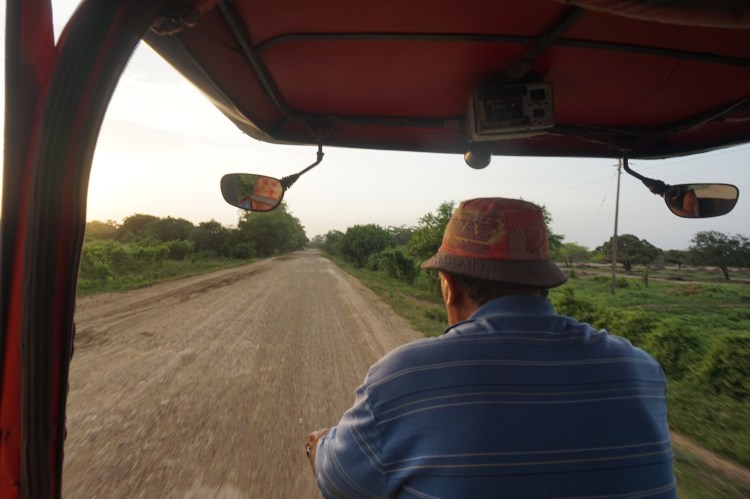
Fortunately, I made it to Palermo and jumped off the bus at the junction. There were moto-taxis waiting but with my bags, I would rather take a collectivo, or minibus, as there was one arriving soon. A little bit longer than soon and the bus arrived, but he wouldn’t let me on. He said it was full but I could see space and have seen many more people in those buses before. Anyway, I had to wait for the next bus which obviously was delaying my trip even further. Once I got on that bus, everyone started the staring game with me. Unable to compete with everyone, I said hello and took a seat, but this was going to be my experience of Sitionuevo.
Sitionuevo was the small town that should have the answers I need to get to Nueva Venecia. The first answer I got was that it wasn’t actually called ‘Nueva Venecia’, but it was actually called ‘El Morro’ or to the local people at least. This made it easier to ask questions, but the answers I wanted were hard to get. As I walked through town, the whole world and his dog were staring at me. Not many tourists make it this way obviously. So to take some shelter from all the attention, I headed for a ‘restaurant’ for some overdue food. The front door wouldn’t open so I had to enter through the side door where they were fixing a motorbike just inside the door. The food was cheap and sounded great so I placed my order and awaited the meal. With the food here you get a sort of brothy soup beforehand, called a sancocho, or maybe some soupy beans or lentils. After that, you get your main plate which is generally rice, salad, maybe beans, patacones or tajadas and a protein in the form of meat or fish. This is the cheapest option and comes with a juice as well.
Whilst waiting, I was chatting with the lady for some time but she didn’t really open her mouth whilst she was ‘speaking’. She mumbled worse than me I think and I struggled to understand anything she was pretty much trying to say. I sat down when my food arrived and the lady joined me, at the table, before she promptly left and came back with the main plate along with her daughter and sister. I now had three women staring at me whilst I was eating so I thought I would start a conversation. The ladies were very nice and tried to be helpful but weren’t very much so. With the questions and answers going in circles I gave up and started helping the daughter with her English.
After the late lunch, I found out it wasn’t going to be possible to make it there today. I started to walk out of town in the direction of Palermo, waiting for a bus to pass. As I walked the street, everyone turned to watch me walk. People even shouted and ran into their houses to get their relatives to come to see this Jesus looking fella walking past. I kept asking random people about the next bus and everyone said that it would be arriving soon. As I hit the last house in Sitionuevo, I sat and waited a long time for a bus. The guys in the last house came to say hello so I asked them what time the next bus is likely to come past. I was told tomorrow. Now this place that doesn’t much traffic coming or going at this time.
Fortunately, a taxi from Barranquilla was on its way back and I managed to get a ride to Barranquilla, where I was staying for the night. In fact, I got it for free in the end because the taxi ran out of gas. So another passenger and I had to push the taxi, originally up a small hill, and to the petrol station we could see in the distance. There were 4 or 5 gas stations in a row, and true to form, they had all run out of petrol except for the furthest and last station. Having finally got fuel, the driver ignored my directions and went the wrong way, stopped the taxi and told me to walk from here. The area we were in was not the nicest of areas so I didn’t really want to walk there at night. But he wasn’t listening so I started walking.
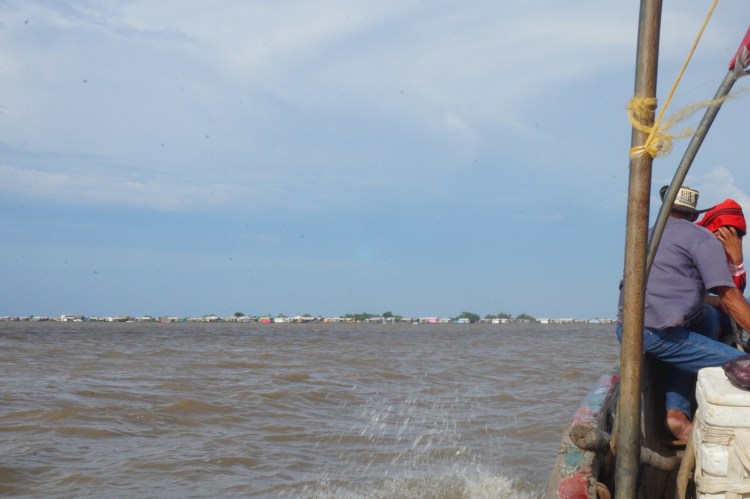
Even with all these problems I was still keen to see El Morro and returned a couple of days later. My plan was to go to El Morro and find a family that wanted or needed help, and in exchange, I could have a hammock or bed for the night. Now I had heard that there was a guy in the main square, called Pepe, who had the only transport to El Morro. I arrived at the square and easily found Pepe and he said he was leaving in about an hour. Whilst waiting and chatting, I soon found out that the people from El Morro were not interested in having any help from me or even interested in talking to me. The people waiting for the transport, who lived in Sitionuevo, were kind, friendly and very talkative. The people waiting from El Morro were very evasive and seemed afraid to even look at me.
The transport, as it always is in Latin America, was delayed and much later than expected. We took a tuk-tuk to a bridge over a branch of the River Magdalena. Under the bridge is where we found Pepe’s ‘Johnson’. A Johnson is a large wooden canoe with an engine at the back and enough seating for 20 odd people. We waited a further hour and a half for the Johnson to leave. This gave me time to speak to some people who were living in El Morro. None of them were too keen to speak to me and it took a lot of effort to get any conversation out of anyone. We finally leave the bridge and head down narrow canals that wind a path through grassy banks.
I offered one of the ladies on the boat my water bottle that can filter most freshwater making it drinkable. In theory, you could chop a log in the bog then drink the water before you flush it. Never tried it but supposedly you can. I did demonstrate it to the lady with the water in the ciénaga, which was really brown and filthy, but she just looked at me weird. I told her that she wouldn’t have to buy water for at least a year with this bottle but she refused my gesture and didn’t want it. I was really struggling to break down the barriers so I pulled out a pack of cards and started to play with them. Soon, a few people were intrigued and started to ask me questions and answer mine.
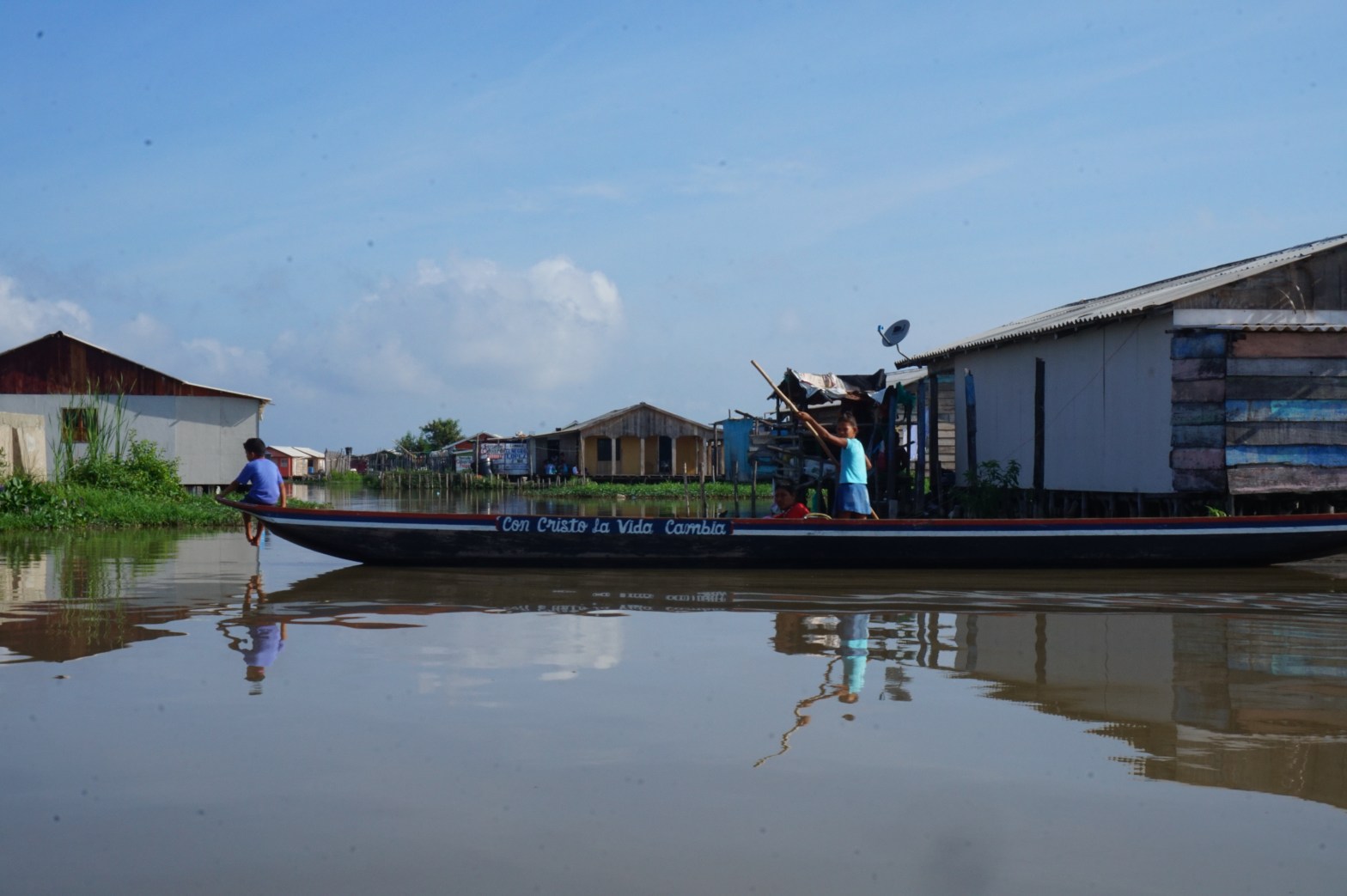
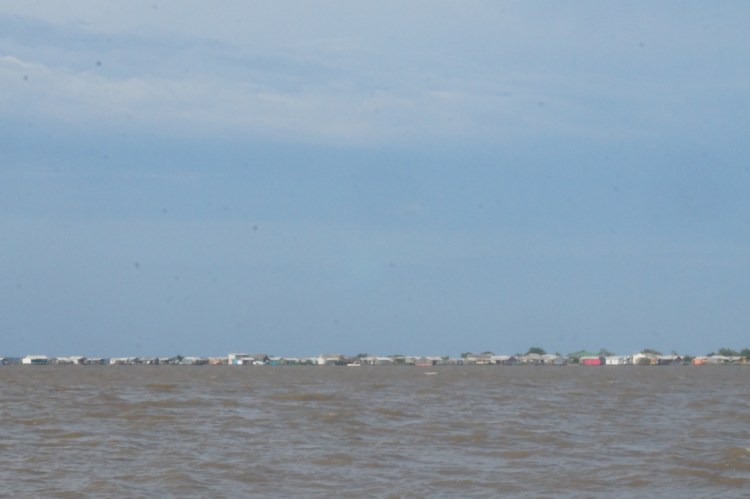
As we passed through the canals there was plenty of wildlife to see, the majority of which was birds, especially Flycatchers and Snowy Egrets. Leaving the canal we entered the ciénaga and soon El Morro came into view. I could see lots of houses made from wood and tin, on top of wooden stilts. Some of them were poorly made shacks, whilst others were beautifully crafted houses painted in bright colours. In total there are around 350-400 houses, depending on who you ask, with around 2000-2500 people inhabiting them. El Morro has been there for approximately 200 years but each house needs to replace its stilts and other parts of wood every 12 years or so. It is actually quite expensive to buy an area there to build a house. For the same price as you can by a piece of ‘land’ in El Morro, you can buy the land and build a pine house on it in Buritaca.
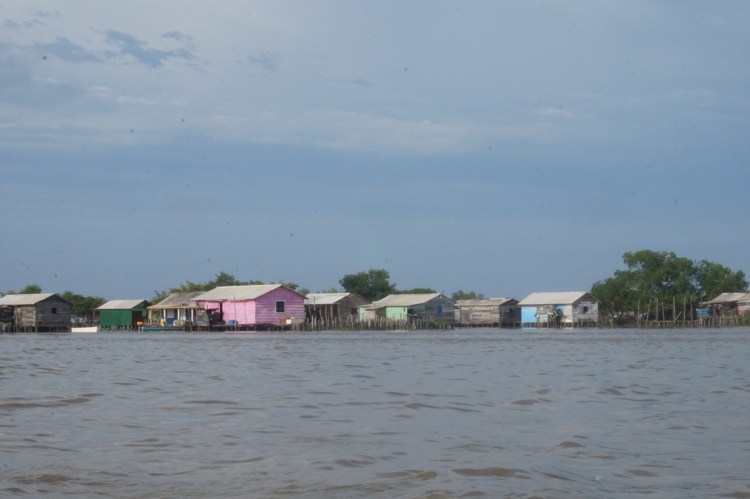
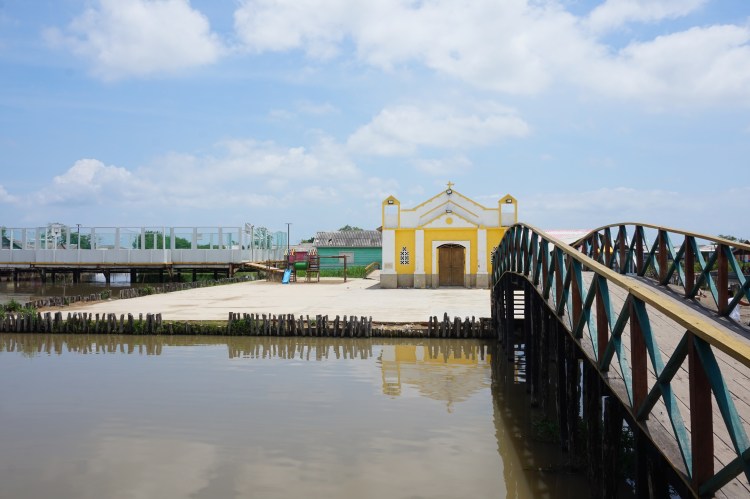
Just like every village or small town in Colombia, you have all the necessary shops, a police station, a church, school, children play areas, a couple of pool halls and football pitch. As I was dropped off at the town hall by Pepe, I was told I could sleep on the floor there. I was told there was no accommodation there so at the moment this was my best option. From the town hall, I could see people playing footy on the pitch so made my way across the bridge to the game. I started chatting with the guys who were playing and soon got myself involved. Within 5 minutes of playing I had acquired and popped a massive blister on my foot, with the similar diameter as a fat cucumber. It meant I had to sit out the rest but gave me time to meet the locals.
I chatted about El Morro a bit before the conversation turned to England and the World Cup and Harry Kane. Then they started to ask me how you say certain words in English asking first how to say cat, then they ask how to say dog. After that, one guy jumped in and asked me how to say onion. His friends and I found his choice of English word to learn a little bit weird and very funny. So they pushed him off his chair and excluded him from the rest of the conversation. Young Colombians, and older as well, are always laughing, joking, messing around with each other and generally enjoying themselves. But eventually it was dinner time and everyone started leaving back to their houses. I had nowhere to go really so one kid gave me a ride in his canoe to a shop that was supposedly a hotel too.
It was quite late in the day so that night I ate some fish, I presume was from the ciénaga relaxed in a hammock and went to bed. The next morning I felt a bit like a prisoner, unfree to choose what I wanted to. I was stuck at this house surrounded by water and unable to go to the shop to buy food or explore the location I am in. Everyone here gets around by canoe, with a 3-metre stick, and seeing as I didn’t have one I was completely stuck until a boat was leaving. This was happening at 2pm when a Johnson was heading back to the bridge with fisherman and there catches from the morning.
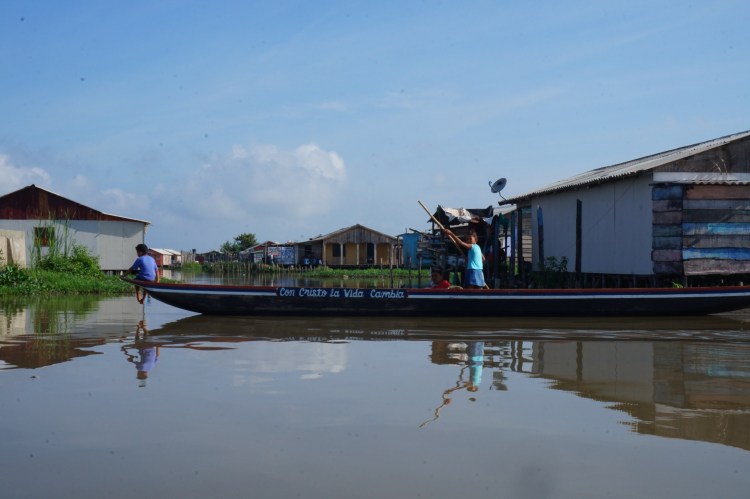
So I asked to borrow a canoe that was there and the owner laughed and said no. I asked him why not and he replied because I wouldn’t be able to use it without falling in. I laughed in his face but he was ultimately correct when I attempted to paddle away from the house. Now I didn’t fall in but if I had continued, it was a sure thing in the next minute. The technique is to stick your stick into the ground then walk from the front of the canoe to the back. Then you need to remove your stick and repeat the process. Easy hey, but the canoe I was using was old and very unstable for a first-timer. I then saw that the neighbours, and the owner’s sister, had a much better canoe so I asked to borrow that.
This was more stable so I started to cruise around town seeing what I could find. Now I was enjoying myself, finally getting to meet people and have some chats with those who have lived there their whole lives. I was still being stared at by everyone and kids were running to get their families. But this time it didn’t feel like they were staring so much at me, more like they were appreciating my entertaining canoeing skills. Going forwards is one thing but navigating the 90 degree turns around the houses was still very hard. The canoes are at least 10m long and have a mind of their own. The locals make it look easy and I even had an 8-year-old kid come out and give me a lesson after I crashed into his house. I started to get used to the control so thought it was time to take a shortcut under a low bridge, with narrow gaps between the supports. Even with the pressure of 3 young brothers laughing at me, I made it through the bridge, or at least halfway before I crashed. With the canoe half under control, I managed to pretty much do a tour of the whole of El Morro within a couple of hours.
The people there seem really friendly and although some are severely short on supplies, they seem happy being cut off from the rest of the cities around. But with this remoteness comes a lack of services that you would expect people to have in the cities. I regularly saw bits of rubbish flying out of windows and into the water. The owner of the hotel came out with a dead mouse attached to a poison trap and launched them both like a frisbee into the water. Although this was common practice here, you rarely saw anything floating in the water. Considering that all the toilets flush directly into the water, I was surprised I didn’t see something else floating past. I saw bins around so not all rubbish is chucked into the water. But the rubbish that was, might have something to do with all the plastic in Pueblo Viejo. It is very likely that a lot of the rubbish there arrived from El Morro.
Before I left that afternoon, I wanted to play some locals at billiards or pool so I paddled next door to the pool hall. I started playing one guy and once he cranked up the music, there was soon 8 of us playing on 2 tables. Whilst we were playing someone stole the canoe I was using so I couldn’t leave to catch my 2pm boat. Nobody seemed worried but I didn’t really want to be there one more night.
Its been over 2 years in Latin America and I still forget about their transport here. I arrived 30 minutes late for the Johnson and was still waiting for an hour and a half until we left. The Johnson was filled with 1m2 polystyrene cool boxes of fish and I think I counted 15 more people other than myself and Fabian, the captain. The boat was so laden with people that every slight movement felt like it would make the boat turn over.
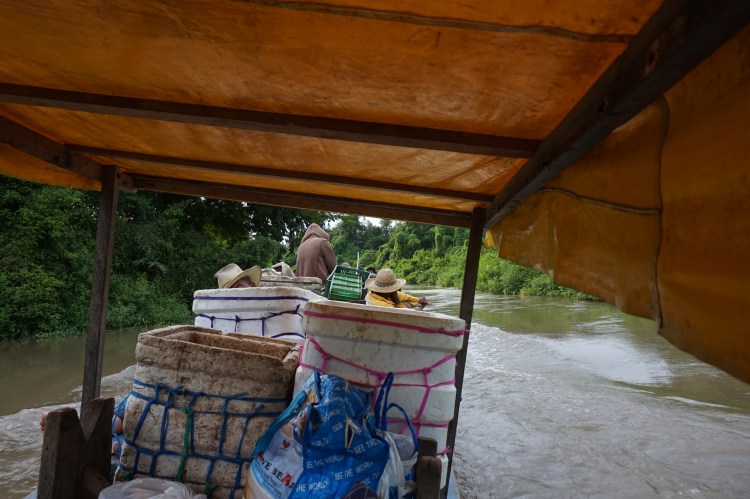
All the fisherman aboard seemed pretty relaxed, maybe tired after a hard day’s work. I saw one of the older fishermen put a small sandwich bag into the water and scoop it up. He necked it like it was water (clean water) and went back for seconds before necking that too. If that was me or you, we would be violently ill or hospitalised. Anyway, heading back to the mainland was a slow process and with the boat being so heavy we arrived back just before dark.
I knew a bus would be hard to find at this time so I tried to get the tuk-tuk to take me from the bridge to the junction in Palermo. He said no a dropped me off where he wanted to, which wasn’t very helpful but rules are rules apparently. So I walked to where transport might be achievable and managed to hitch a ride on the back of a sort of moto-pickup truck. Imagine a flatbed trailer with just enough room for 4 people (1m2 max) attached behind the driver seat of a motorbike. It was quite comfortable and I was sharing with a family really keen to chat with me. They also got a moto taxi for me, once we arrived at Palermo, as their friend happened to ride past at the perfect time.
I have just realised that I have smashed out over 3000 words on El Morro, which equates to 2 or 3 days of the last 3 months. I apologise for the long story but I had a long boring bus journey with nothing to entertain me other than this.

Anyway, next on my list of places to go was Mompox, a small village on the banks of the river Magdalena, but much further south. I wanted to arrive there only by using the river but that proved impossible without paying far too much for private boats or the use of the locals’ personal boats. So I took the required buses and arrived as soon as possible. I had recently bought the Gabriel Garcia Marquez book ‘100 years of solitude’ with the idea of improving my Spanish and grammar especially. Supposedly the book, and specifically the town of Macondo, was based on Mompox so I thought it would be a good place to chill by the river and read a book.
In practice, I haven’t completed a book, and have rarely attempted to read one, since I was forced to read at school. On top of that, the language used by Marquez is not of the basic, learning type of language that I was after. I would translate words and then I would have to look up the English word afterwards. I don’t think I have passed the first 3 pages yet but it will be something to aspire to or give to someone who wants it. But Mompox was a relaxing couple of days, one of which was spent on a day-long experience with a local who lives on the banks of the river. I would tell you about it but nothing much really happened throughout the day other than eating food.

After Mompox, I decided to head further up the river to a place called El Banco. El Banco was hosting the National Cumbia Festival whilst I was there so it was perfect timing. The festival consisted of multiple competitions for dancing, singing and songwriting all based on the music of Cumbia in Colombia. The outfits they wore were traditional for the different regions in Colombia and consist of many different colours and patterns. It was really beautiful to look at but without any knowledge about Cumbia, it was a little bit confusing. Fortunately for me, I had met a girl in Mompox who was a dance history expert and explained it all for me. It still was confusing.
On the last night, there was a concert with Totó la Momposina, the Madonna of the Cumbia world. This was a lady of about 80 years old who was making 20-year-old guys go weak at the knees. People were clambering to get a photo with her, screaming and sweating profusely in her presence. She could barely walk without some help and her dancing on stage was not what it used to be. But she was such a legend that people were trying to get on stage to say they have danced on the same stage as her. She made guys look like school girls at a Justin Beiber concert and this was interesting to watch.

Her music was good and I even knew a few of her songs that I had heard as mixes at various parties. The place was rocking whilst she was on stage and it went crazy when she finished. After the concert, the party moved to the streets with various bands playing on street corners. People gathered, danced and passed around Aguardiente, the cheap Colombian liquor. It was time to head to bed as the sun had taken its place in the sky again. The plan was to head up the river a couple of hundred kilometres by boat and arrive in Barrancabermeja. What actually happened was that I received a call from Kim saying that she had found my important documents in the hostel we were staying at before.
As we were heading in different directions, I wanted to get my stuff sooner rather than later. This meant head all the way back to North Colombia to grab my stuff. Other than going back to Minca with Kim, not a lot happened in the next few weeks. Just travelling slowly north and then back down south to Medellin. Medellin is the fun capital of Colombia, whereas Bogota is the political capital. Saying that, I was running low on cash and wasn’t too keen on partying too hard. But my time in Medellin was good and I had the chance to explore a bit.
With the cash running low and Ecuador or Peru being my next destination, I had some thinking to do. The chance of earning some dollar in these two was low and I didn’t want to miss them out to go to Chile. So I decided to head back to Jungle Land in Panama to work there for another dry season and try to earn so more cash. This was still a little bit of time into the future but I had an idea of what I wanted to do.
I spoke to Mum suggesting that rather than them come and see me in Panama again, maybe they could help me come to England. Mum jumped at the chance and said it could be a good present for Dad. It was always meant to be a surprise for Dads birthday, with the cheap flight returning home on the 7th of November. This was the moment that everything started to come together to make a very lucky return to England possible.
So with a month remaining in Latin America, I decided to try and fit as much in as possible. From Medellin, I headed east to a small place called Guatapé which is located on a man-made reservoir. The town itself is small but colourful, very colourful. Lots of the houses are adorned with Zócalos – 3D tiles skirting the lower outside walls of the house – of many different colours and patterns. Around the town, of about 5,000 inhabitants, there is plenty of hiking to be done. The main place of interest is ‘La Piedra de Peñol’, a large 200m high rock sticking out of the ground.
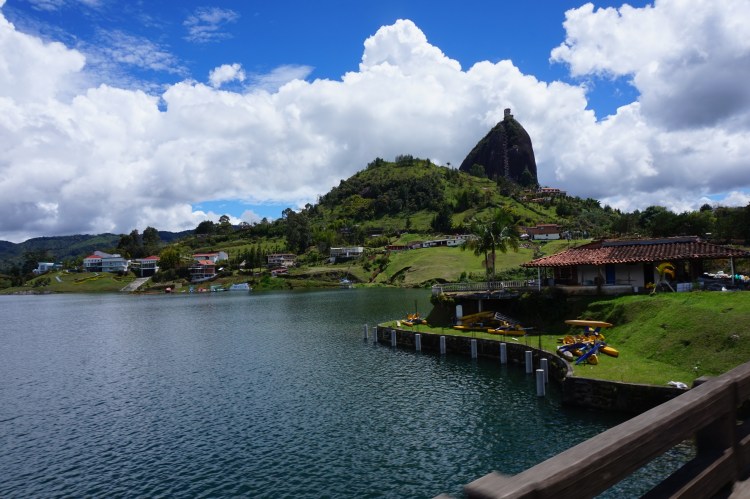
I decided to visit this big rock early to avoid the tourists and slow walkers ascending the stairs. There are 675 steps that scale the side of the rock to enable you to reach the top. But before that, I had to walk the 4.5km from the hostel. I set off early and by myself to make sure I got there first. After a short distance, I was joined by a stray dog who wanted to keep me company. This isn’t the first time stray dogs have accompanied me walking or hiking. I am starting to think that they are local guides and that I should be giving them a tip afterwards. Anyway, the company was appreciated even though it cost me half my breakfast and water.
Having made it to the big rock early, the gates were not even open yet. We had to wait around a little bit and when the time came to enter, my new friend wasn’t allowed in. So I entered solo and began my ascent of the 675 steps to reach the top. Overtaking workers along the route, I made it to the top to an empty place. I didn’t want to buy anything so it wasn’t an issue but the tranquillity was really nice. Unfortunately, due to my early ascent, the sun didn’t have time to disperse the morning clouds. This just means that I couldn’t get that perfect blue sky photo that would arrive later in the day.
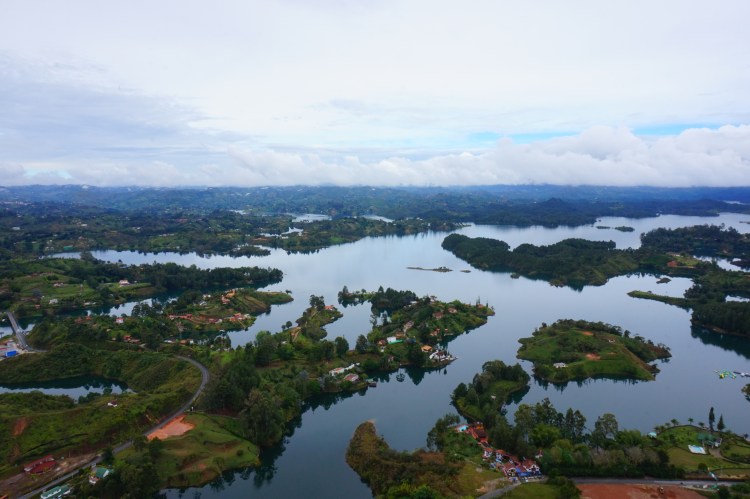
Heading back down the rock, I met my canine guide at the bottom. He had been waiting for me the whole time. On the way back, he walked off the main road, into the bushes, and then stopped and looked at me. I trusted him so I followed him into the bushes to a path hidden off the main road. This route was a much safer and a much nicer route to take, including a rickety bridge over the main road. My guide left me at roughly the same spot where he joined me and I continued back to my hostel.
I did a few more hikes in Guatapé before leaving the fairly promptly to pass by Medellin on route to Salento. In the coffee region of Colombia, Salento is a quiet rural town that has kept some of its traditions. In the mountains, Salento is not only a perfect place for hiking but also for growing coffee. The area is littered with coffee plantations and all of them offer some sort of tour experience. I decided to go to one of the more traditional coffee farms that operate without mass cultivation. Finca de las Brisas is the farm owned by Don Elias that has a significantly less amount of plants than other farms. This allows it to produce an organic coffee with a flavour that has been mastered by the taste buds of Don Elias for over 50 years.
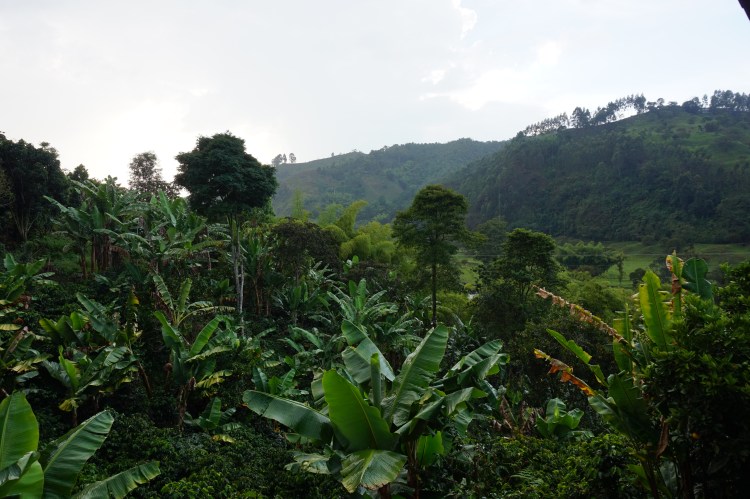
Don Elias uses plantain trees to shade the coffee plants, mandarin trees to balance the alkalinity of the soil, one avocado tree to help the water supply in the dry season and many other natural techniques to produce amazing coffee beans. The harvest is done the same 12 people every year, by hand, ensuring the best beans are picked. The process of coffee beans to a cup of coffee is also done manually allowing the perfect flavour to be met. This produces a coffee that doesn’t have that bitterness like normal coffee.
Because the coffee was so nice, I bought a bag to take back to England for Dad. I just had to be careful as apparently, the packaging is similar to that of the cocaine that is exported, just without the farms official sticker on it. Leaving the sticker on, I put it in my bag and hoped for the best.
The following morning, I got up early with two people from the hostel and we headed to Valle de Cocora, which is part of the Los Nevados National Natural Park. Once you get there you can take a hike in a big circle that lasts about 6 hours. Just like normal, hiking mapless, we took the wrong route right from the beginning. Backtracking to the other entrance we were soon on the right path and began our ascent. The route we were taking meant we would end our hike with the main attraction of this valley, the ginormous wax palms that litter the mountains and valleys.
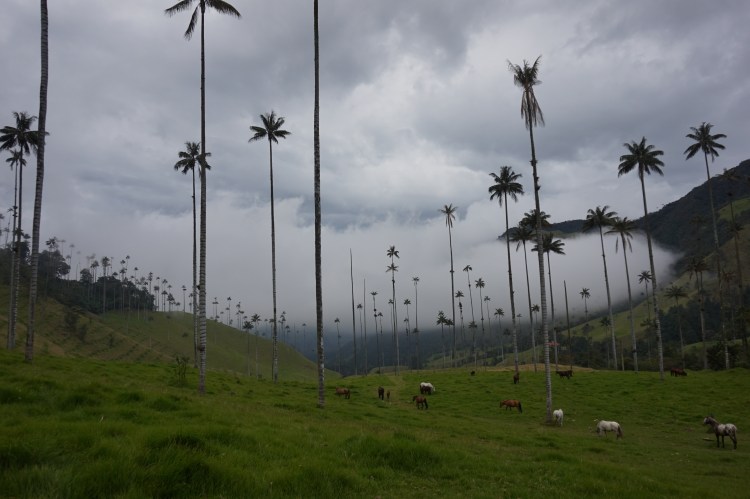
Along the way, you cross a river on crusty old bridges on about seven occasions and can go to a house that has many hummingbirds flying around it. Once we made it to the palm trees, we were completely engulfed in clouds, given an eerie feel to the area. It was only as we continued walking that we came below the level of the clouds and we could see the view in all its glory. We eventually made it back down to the bottom in one piece and made our way back to Salento.
From Salento, I headed to the capital, Bogotá, where about 8 friends from El Rio hostel were coming to a 24-hour party. The party actually last a little bit longer so the next few days were spent resting and relaxing. This was the point where I had tried to do a lot in the last month and had ended up spending all my money. The last few weeks I spent around Bogotá, mostly relaxing and also doing a little bit of bouldering or indoor rock climbing.
I had at this point given up on being a tourist and was just counting down the days to when I was on my way home. Secret plans and preparations had been made with Mum to ensure the return trip was kept a secret and the logistics were all watertight. For those of you that I saw, you will know the next part of my story, and I will try to write that up within the coming weeks. But for now, I will say goodbye and wish you all a very merry Christmas and a Happy New Year. Love to all xxx
 Going Feral
Matt, this seems to have been a fascinating, and sometimes challenging, stage in your travels, with some interesting ‘companions’ along the way! Some beautiful sights too. It was so lovely to see you albeit for a short time. With best wishes for a very Merry Christmas and a happy, healthy, exciting and safe 2019. With love from us all xxx
LikeLike