An Unexpected Holiday

So the time had come to take a 3 week vacation in my native homeland of England. Other than my Mum, who had helped me organise it, only my cousin knew because she helped book a room in the same hotel as the olds. The secret was set, and the time was upon me to pack up my stuff and leave. The only problem was that I was running late in getting back to the hostel to do so. Traffic was terrible and the taxi drivers are not knowledgeable of the quickest routes. If they even know the location, it is a slice of luck.

I still needed a taxi to get me to the airport as well but the current one didn’t want to wait for me to sort my stuff. So I ran into the hostel, packed my bag to the best of my ability and got another taxi. In fairness, I arrived at the airport with plenty of time but everything seemed like a panic beforehand. Once there, I found out that I forgot to purchase the exit taxes for Colombia and needed to do so before I boarded the plane. This involved taking money out and going to another desk and then back to check in.

Having done this I proceeded to the desk to pass my luggage over. Standard weight limit for hold luggage is 23kg, I had no idea how much mine weighed. What I did know was that my backpack weighed the equivalent of a small human, fully clothed, with shoes. As always, it is good to rest your backpack on the sides of the weigh-belt to lighten the load a little. It was lucky I did that as my bag weighed in at 23.0kg on the dot. With my bag on its way to England (hopefully), I passed through security and awaited my flight.

dsc07376

My route was Bogotá to Madrid, followed by Madrid to London with a duration of 15 hours or so. It was an afternoon flight from here so I would arrive in London, with the time difference added, just before lunch. I had planned to watch a movie, try and sleep a bit after dinner, watch another movie and fall asleep for the night. I normally watch rubbish movies as that has the effect of shutting my eyes for me automatically. What actually happened was what I had planned but without the sleeping.

Seeing as the sleep was obviously not forthcoming, I opted for the alcohol to help you sleep option. I asked for a beer and when he bought it over he left without me paying. When I went to order the next, I asked him how much it was. He told me it was included, so I ordered two instead. I couldn’t believe that I had wasted all this time drinking water when there was free booze, I was halfway through the flight already. After a bit, the cabin crew just kept bringing two beers every time they made eye contact with me.

So plan B failed as well and sleep never came, not even on the early morning flight from Madrid to London. Landing in London was a bit of a shock but it felt good. My only jumper had been stolen in the last week along with my toiletries bag, and as I am sure you all know, England is cold and wet. Passing through the airport securities was a little bit difficult. The silly machines did work with my passport so I had to go to a desk where a police officer had to take a look. He was really nice, friendly but had to take a double look due to the change in my appearance since my passport photo.

dsc07400

The whole of my journey had gone really smoothly to be fair and I was now back in London. By chance, my visit was pretty busy with things to do. Steven, Emily, Ella and Lauren were having a family party, celebrating three of their birthdays and successful exam results for the girls. This was where the surprise for Dad, with me being his present, would happen. I had arrived on Wednesday and this was Saturday night, so I had a bit of time to wait.

I had planned to meet Woody with his 6 month baby at 3pm at Paddington Station. This left me time to pop into my old workplace, The Hippodrome, to say hello to a few people. Funnily, my old boss Jo and I had swapped haircuts with her now sporting a shorter do, and myself with similar hair to how hers was before. It was really nice to say hello and give her a hug but the trip had to be quick as I was short on time. I arrived at Paddington and met Woody, Carolyn and Poppy, albeit quickly. Poppy had a monumental butt explosion on the train and she needed immediate cleaning.

That night I went for a beer and curry with Woody but started to feel sick. We returned home early and I went straight to bed, having realised that I had been awake for a very long time and travelled a fairly long way. The next day Woody had planned to see an old friend of ours in Bristol who had been in a terrible hit and run accident. He was lucky to be alive so I took this opportunity to go see him too. It was only a day trip but a couple of hours with Jon was really nice. We returned to London in the evening for a relaxing evening.

dsc07432

The following day was Friday which meant Fat Freddy’s Drop day. I had arrived back in town just in time to see a gig of one of my favourite bands. To make it better, I had a friend from Colombia who was going to see them too but she didn’t know I was in London. To make it even better, Owain was their booking agent so we all had VIP entrance and used the same bar as the band used. The gig was amazing as was the rest of the night, as we met with friends afterwards to go out for some drinks. This meant for a late night but that was alright with me.

So now we come to Saturday and the day of the secret being revealed. I got to the hotel early to prevent anyone seeing me. I left the hotel for a pub around the corner to hide, and also to watch the England v New Zealand game. Mum let me know of their arrival at the hotel and that they were sitting in the bar. I had waited for over a year to see them so I didn’t think an extra 20 minutes would matter and I decided to watch the end of the match. As I left the pub I headed towards the hotel and saw them sitting right in the window looking down on my arrival route. So I put my hood up, hid myself and strutted my way across the car park.

As I made my way into the bar area, Dean was stood at the bar and he clocked me straight away. I put my finger on my lips and he kept the silence until I turned the corner to see everyone. Dad had to take a second look before he realised who I was and Hollie though I was a waiter or something. Embarrassingly, Dean and I were wearing almost an identical t-shirt. With this surprise out of the way, Jan, Zoe, Nick and Kim arrived for round 2 followed by Dean and Hollie issuing a surprise of their own.

dsc07441

That night was spent at a Mexican joint drinking, dancing, eating and celebrating with the family. It was a really good night if not a little late and overindulgent. Following a brunch at Steven and Emily’s place, we headed back to Denmead to have one last surprise. This time it was Nanna who was the target. Upon arrival, I went through to her living room and offered her a cup of tea. She looked at me, looked away and had to take a second look, similar to Dad. After over 2 years of waiting for a hug, she remained seated for a while. She said that she thought she had fallen asleep and was dreaming.

Much time was spent with the family including shopping trips with Nanna and Mum to get me some Christmas presents to take back with me to Panama. With Dad, I played some golf, which was semi-successful for us both and we also spent some time in the spa at the golf course. I also had a visit from another friend, Tranny, who had a miniature version of him since I had left. At around 15 months old, Fred was a spitting image of his dad and was just as mischievous. They actually came round for roast dinner which turned out to be Tranny’s second of the day.

After the family time, I went back up to London to catch up with some friends again and then catch my flight out of the country. The last night was spent at a friend’s house in Slough because it was close to the airport to catch my 6am flight. In hindsight, Kyle is a bit of a bad influence on me (and vice versa), so this night was handled with caution. We went for a few beers and a game of snooker before returning back to his flat with a bit more drink. He managed to stay up until 3:30am which is when my taxi was coming.

dsc07519

Having said goodbye, I got in the cab, a tad drunk and made my way to Heathrow. The driver asked me which terminal I was going to, I didn’t know. I checked my boarding pass that I had downloaded on my phone and told him to go to terminal 4. When I arrived, it looked a little quiet but before I could stop the taxi, he had left. I double checked my boarding pass and realised that it was terminal 4 in Madrid on my change-over flight. Oops! This was not a good situation as terminal 4 in Heathrow was empty. There was no transport or taxis outside. There was no train service between the terminals and nobody could help me with a way to get there.

Fortunately, a bus for terminal 5 turned up and was a free service to get me to the right place. I arrived with time to relax a little bit but for a moment, the panic had set in. Once on the plane, I slept for the flight to Madrid, changed planes and then took full advantage of the free bar. We had a severe bit of turbulence and everyone was chundering all around me. The only discomfort I had was the wait for the next bottle of wine as the seat belt sign was staying on for long spells. Other than that, everything went smoothly and I arrived in Panama City to pretty much go straight to bed. The next day I relaxed and then played some pool with old friends I knew from the previous time here.

The following night, I went to go and see Carl, the owner of Jungleland. He invited 2 of the current volunteers round to his place as well and started to ply us with booze. He then kicked us out so we went to Casco Viejo to party and dance. Before I knew it, it was nearly 6am and I had to be back at Carls at 8am to start my first day back at Jungleland. A quick trip to bed, followed by a torturous morning helping Carl do some shopping before we made our way back to the floating lodge.

me and sloth

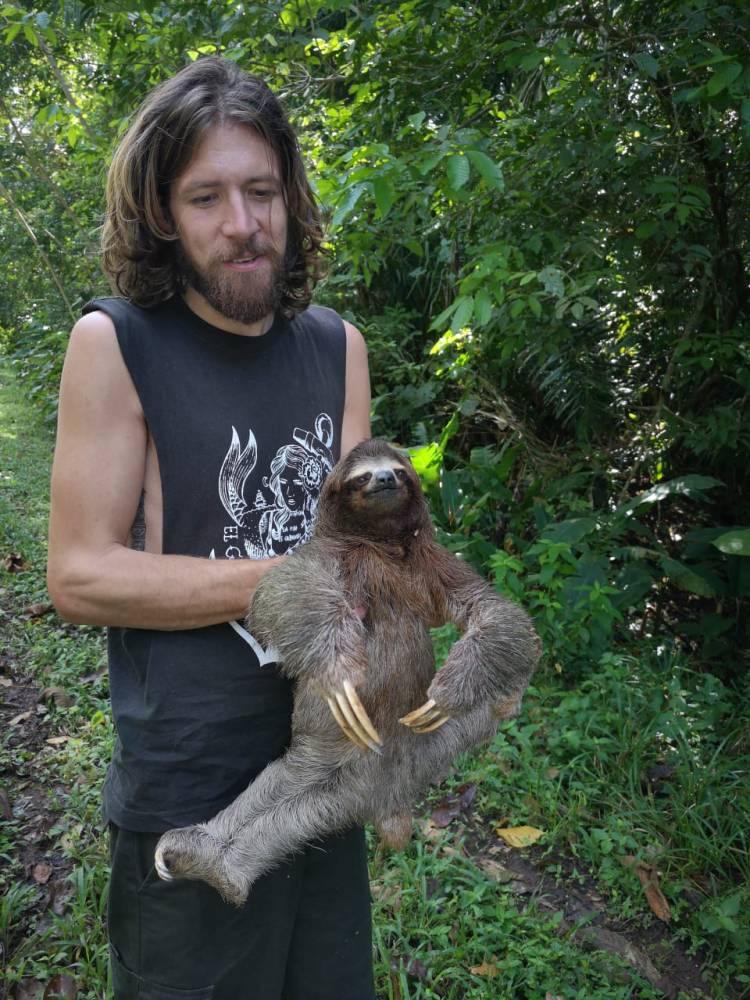
On route to the dock, Carl spotted a sloth just about to cross the road. This was a sloth with a death wish. They are incredibly slow and awkward when on the ground, literally dragging themselves by their elongated nails. With that said, we stopped the car, I jumped out and helped him get to the other side. He thanked me by posing like a karate sloth for a picture. Now back at Jungleland, I will be doing the same as last year for the next 6 months depending on whether the Canal Authority shut him down or not. This is a major problem at the moment but hopefully will sort itself out as it truly is a magical place to see wildlife and nature. It seems silly to prevent other people from seeing this place in the future.

Heading South Through Colombia

So going back a long time now, I was trying to work out what my next move was going to be and Medellin was the plan. That soon got put on hold as I became intrigued by the Ciénaga Grande de Santa Marta, which is basically a big swamp between Barranquilla and Santa Marta. It is over 4000km2 and was formed when an artificial spit was built in the fifties, I think to hold a road to shorten the drive from Barranquilla to Santa Marta. The ciénaga is part of the delta belonging to the River Magdelena which is a massive river that flows almost 2500 miles north through Colombia.

The ciénaga intrigued me as there should be lots of wildlife there and I had heard there might be Babilla’s, which is what the Colombians call the same caimans that I was working with, in Panama. As I looked closer on the map I found a cluster of specks, bundled into a ball, in the middle of one of the smaller ciénagas. Zooming in closer and the name ‘Nueva Venecia’ popped up and I realised it was a little town. Now I knew where I wanted to go, I had to work out how to get there. Nueva Venecia wasn’t exactly close to land, let alone close to the main roads and there wasn’t much information online about it either. What I could find out was that it wasn’t anything like the Venice we all know in Italy. So I went to Barranquilla on the other side of the ciénaga, hoping to find some information from anyone.

DSC06741

The moment I started this journey, the problems started to happen. I needed to catch a bus 20 metres from my hostel which came past every 10 minutes. I waited more than 30 minutes and when the bus finally came, the driver had changed his mind, and the route of the bus, for no apparent reason. I managed to catch the next bus but the driver decided not to stop when I asked and he drove away from where I wanted to be for the next 20 minutes. I finally made it to the terminal and bought my ticket for Palermo, a town just short of Barranquilla that has the important junction where I needed to be.

I was expecting the bus ride along the spit to be a beautiful drive with the sea on the right-hand side and a swamp marsh on the other side. In reality, as soon as you come past the town of Ciénaga and reach Pueblo Viejo, you are hit with the sight of plastic absolutely everywhere. It was the only thing you could see no matter where you looked. You soon reach the pay stations for the toll road and once you have passed them the rubbish decreases to nothing after a while. Pueblo Viejo is a poverty-stricken area and there were supposed problems the week before with groups of locals blocking the roads and attacking buses.

Fortunately, I made it to Palermo and jumped off the bus at the junction. There were moto-taxis waiting but with my bags, I would rather take a collectivo, or minibus, as there was one arriving soon. A little bit longer than soon and the bus arrived, but he wouldn’t let me on. He said it was full but I could see space and have seen many more people in those buses before. Anyway, I had to wait for the next bus which obviously was delaying my trip even further. Once I got on that bus, everyone started the staring game with me. Unable to compete with everyone, I said hello and took a seat, but this was going to be my experience of Sitionuevo.

DSC06828

Sitionuevo was the small town that should have the answers I need to get to Nueva Venecia. The first answer I got was that it wasn’t actually called ‘Nueva Venecia’, but it was actually called ‘El Morro’ or to the local people at least. This made it easier to ask questions, but the answers I wanted were hard to get. As I walked through town, the whole world and his dog were staring at me. Not many tourists make it this way obviously. So to take some shelter from all the attention, I headed for a ‘restaurant’ for some overdue food. The front door wouldn’t open so I had to enter through the side door where they were fixing a motorbike just inside the door. The food was cheap and sounded great so I placed my order and awaited the meal. With the food here you get a sort of brothy soup beforehand, called a sancocho, or maybe some soupy beans or lentils. After that, you get your main plate which is generally rice, salad, maybe beans, patacones or tajadas and a protein in the form of meat or fish. This is the cheapest option and comes with a juice as well.

Whilst waiting, I was chatting with the lady for some time but she didn’t really open her mouth whilst she was ‘speaking’. She mumbled worse than me I think and I struggled to understand anything she was pretty much trying to say. I sat down when my food arrived and the lady joined me, at the table, before she promptly left and came back with the main plate along with her daughter and sister. I now had three women staring at me whilst I was eating so I thought I would start a conversation. The ladies were very nice and tried to be helpful but weren’t very much so. With the questions and answers going in circles I gave up and started helping the daughter with her English.

After the late lunch, I found out it wasn’t going to be possible to make it there today. I started to walk out of town in the direction of Palermo, waiting for a bus to pass. As I walked the street, everyone turned to watch me walk. People even shouted and ran into their houses to get their relatives to come to see this Jesus looking fella walking past. I kept asking random people about the next bus and everyone said that it would be arriving soon. As I hit the last house in Sitionuevo, I sat and waited a long time for a bus. The guys in the last house came to say hello so I asked them what time the next bus is likely to come past. I was told tomorrow. Now this place that doesn’t much traffic coming or going at this time.

Fortunately, a taxi from Barranquilla was on its way back and I managed to get a ride to Barranquilla, where I was staying for the night. In fact, I got it for free in the end because the taxi ran out of gas. So another passenger and I had to push the taxi, originally up a small hill, and to the petrol station we could see in the distance. There were 4 or 5 gas stations in a row, and true to form, they had all run out of petrol except for the furthest and last station. Having finally got fuel, the driver ignored my directions and went the wrong way, stopped the taxi and told me to walk from here. The area we were in was not the nicest of areas so I didn’t really want to walk there at night. But he wasn’t listening so I started walking.

DSC06743

Even with all these problems I was still keen to see El Morro and returned a couple of days later. My plan was to go to El Morro and find a family that wanted or needed help, and in exchange, I could have a hammock or bed for the night. Now I had heard that there was a guy in the main square, called Pepe, who had the only transport to El Morro. I arrived at the square and easily found Pepe and he said he was leaving in about an hour. Whilst waiting and chatting, I soon found out that the people from El Morro were not interested in having any help from me or even interested in talking to me. The people waiting for the transport, who lived in Sitionuevo, were kind, friendly and very talkative. The people waiting from El Morro were very evasive and seemed afraid to even look at me.

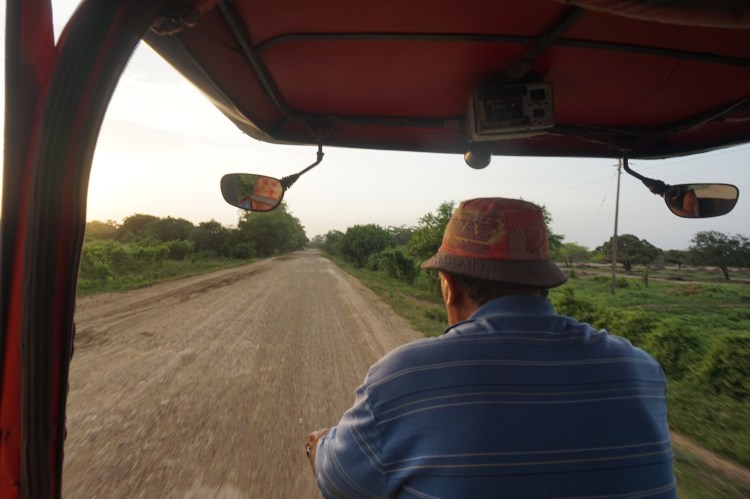
The transport, as it always is in Latin America, was delayed and much later than expected. We took a tuk-tuk to a bridge over a branch of the River Magdalena. Under the bridge is where we found Pepe’s ‘Johnson’. A Johnson is a large wooden canoe with an engine at the back and enough seating for 20 odd people. We waited a further hour and a half for the Johnson to leave. This gave me time to speak to some people who were living in El Morro. None of them were too keen to speak to me and it took a lot of effort to get any conversation out of anyone. We finally leave the bridge and head down narrow canals that wind a path through grassy banks.

I offered one of the ladies on the boat my water bottle that can filter most freshwater making it drinkable. In theory, you could chop a log in the bog then drink the water before you flush it. Never tried it but supposedly you can. I did demonstrate it to the lady with the water in the ciénaga, which was really brown and filthy, but she just looked at me weird. I told her that she wouldn’t have to buy water for at least a year with this bottle but she refused my gesture and didn’t want it. I was really struggling to break down the barriers so I pulled out a pack of cards and started to play with them. Soon, a few people were intrigued and started to ask me questions and answer mine.

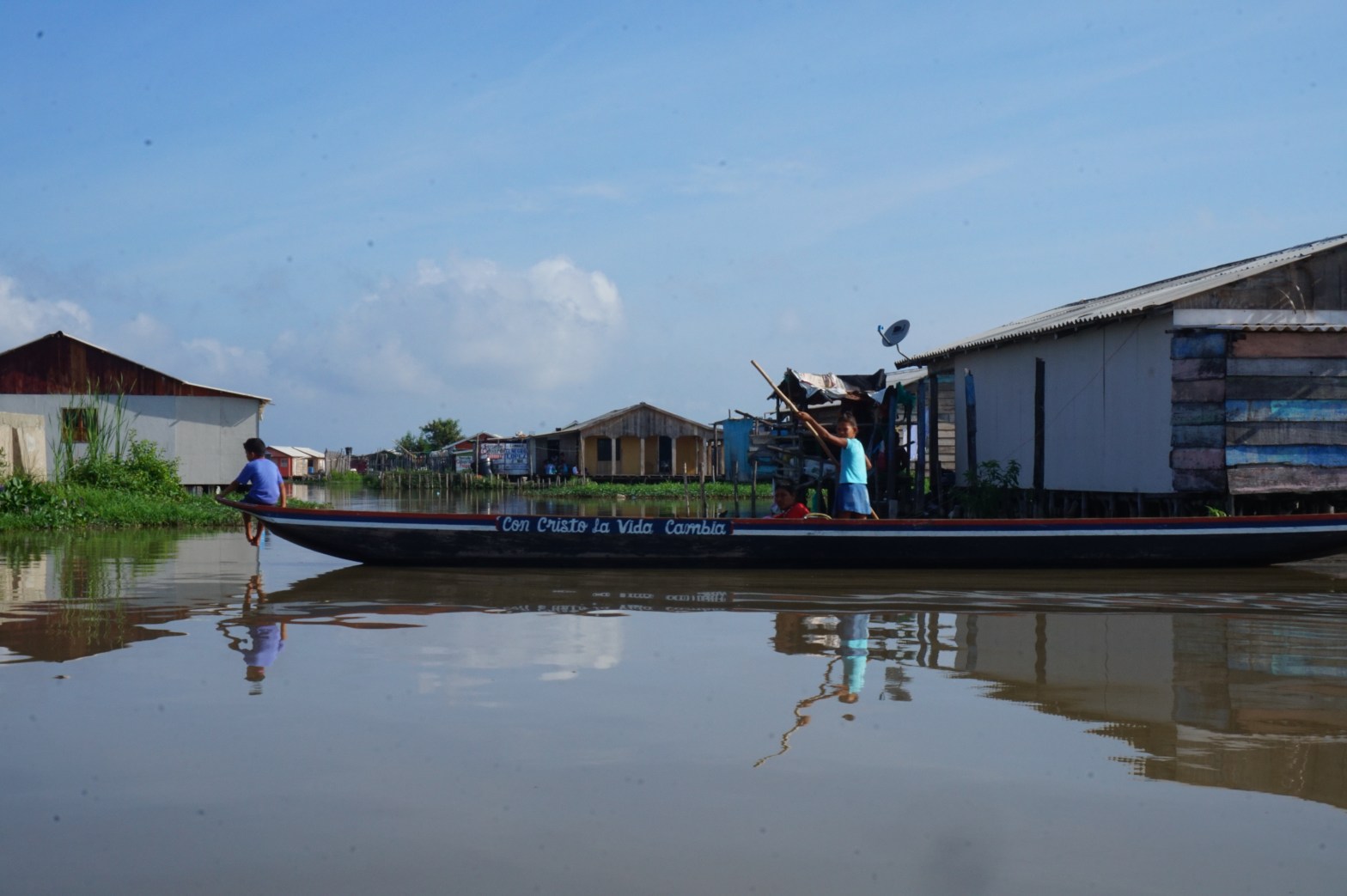
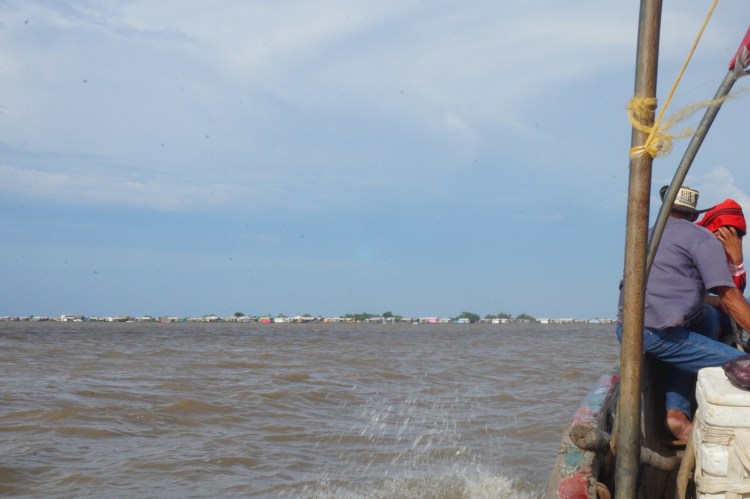
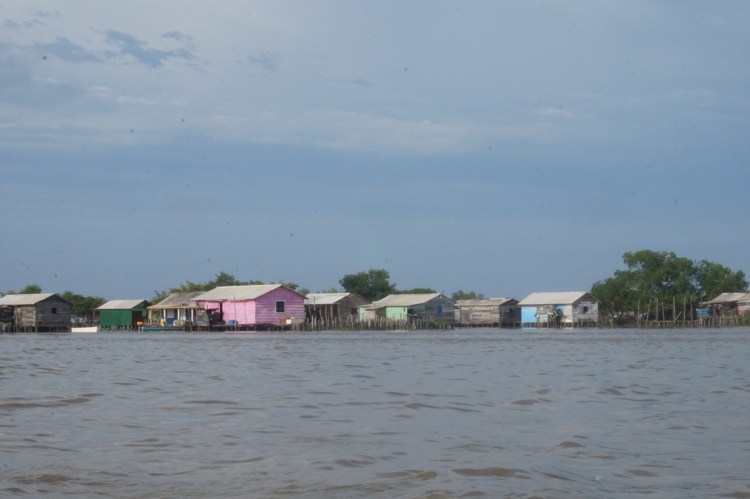
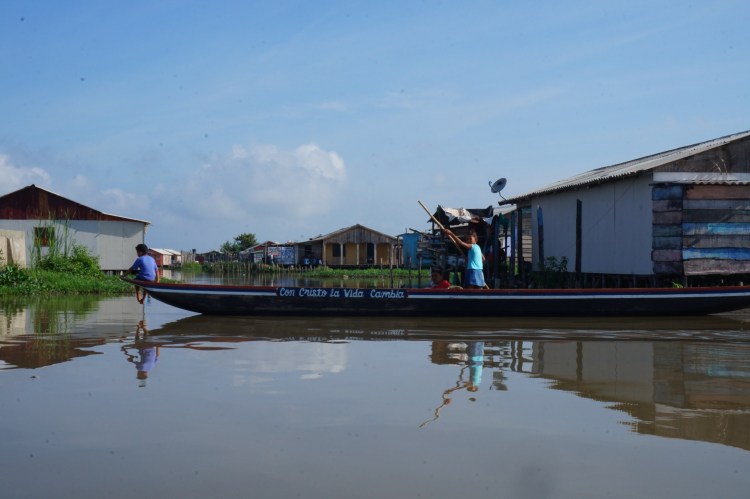
As we passed through the canals there was plenty of wildlife to see, the majority of which was birds, especially Flycatchers and Snowy Egrets. Leaving the canal we entered the ciénaga and soon El Morro came into view. I could see lots of houses made from wood and tin, on top of wooden stilts. Some of them were poorly made shacks, whilst others were beautifully crafted houses painted in bright colours. In total there are around 350-400 houses, depending on who you ask, with around 2000-2500 people inhabiting them. El Morro has been there for approximately 200 years but each house needs to replace its stilts and other parts of wood every 12 years or so. It is actually quite expensive to buy an area there to build a house. For the same price as you can by a piece of ‘land’ in El Morro, you can buy the land and build a pine house on it in Buritaca.

DSC06759

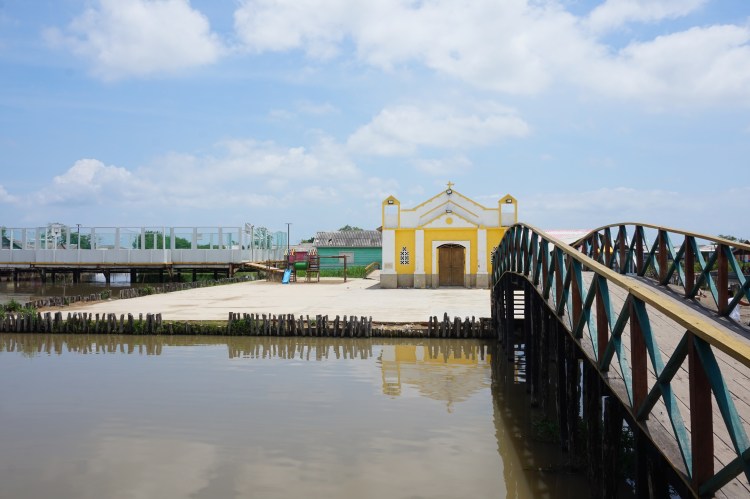
Just like every village or small town in Colombia, you have all the necessary shops, a police station, a church, school, children play areas, a couple of pool halls and football pitch. As I was dropped off at the town hall by Pepe, I was told I could sleep on the floor there. I was told there was no accommodation there so at the moment this was my best option. From the town hall, I could see people playing footy on the pitch so made my way across the bridge to the game. I started chatting with the guys who were playing and soon got myself involved. Within 5 minutes of playing I had acquired and popped a massive blister on my foot, with the similar diameter as a fat cucumber. It meant I had to sit out the rest but gave me time to meet the locals.

I chatted about El Morro a bit before the conversation turned to England and the World Cup and Harry Kane. Then they started to ask me how you say certain words in English asking first how to say cat, then they ask how to say dog. After that, one guy jumped in and asked me how to say onion. His friends and I found his choice of English word to learn a little bit weird and very funny. So they pushed him off his chair and excluded him from the rest of the conversation. Young Colombians, and older as well, are always laughing, joking, messing around with each other and generally enjoying themselves. But eventually it was dinner time and everyone started leaving back to their houses. I had nowhere to go really so one kid gave me a ride in his canoe to a shop that was supposedly a hotel too.

It was quite late in the day so that night I ate some fish, I presume was from the ciénaga relaxed in a hammock and went to bed. The next morning I felt a bit like a prisoner, unfree to choose what I wanted to. I was stuck at this house surrounded by water and unable to go to the shop to buy food or explore the location I am in. Everyone here gets around by canoe, with a 3-metre stick, and seeing as I didn’t have one I was completely stuck until a boat was leaving. This was happening at 2pm when a Johnson was heading back to the bridge with fisherman and there catches from the morning.

DSC06814

So I asked to borrow a canoe that was there and the owner laughed and said no. I asked him why not and he replied because I wouldn’t be able to use it without falling in. I laughed in his face but he was ultimately correct when I attempted to paddle away from the house. Now I didn’t fall in but if I had continued, it was a sure thing in the next minute. The technique is to stick your stick into the ground then walk from the front of the canoe to the back. Then you need to remove your stick and repeat the process. Easy hey, but the canoe I was using was old and very unstable for a first-timer. I then saw that the neighbours, and the owner’s sister, had a much better canoe so I asked to borrow that.

This was more stable so I started to cruise around town seeing what I could find. Now I was enjoying myself, finally getting to meet people and have some chats with those who have lived there their whole lives. I was still being stared at by everyone and kids were running to get their families. But this time it didn’t feel like they were staring so much at me, more like they were appreciating my entertaining canoeing skills. Going forwards is one thing but navigating the 90 degree turns around the houses was still very hard. The canoes are at least 10m long and have a mind of their own. The locals make it look easy and I even had an 8-year-old kid come out and give me a lesson after I crashed into his house. I started to get used to the control so thought it was time to take a shortcut under a low bridge, with narrow gaps between the supports. Even with the pressure of 3 young brothers laughing at me, I made it through the bridge, or at least halfway before I crashed. With the canoe half under control, I managed to pretty much do a tour of the whole of El Morro within a couple of hours.

DSC06785

The people there seem really friendly and although some are severely short on supplies, they seem happy being cut off from the rest of the cities around. But with this remoteness comes a lack of services that you would expect people to have in the cities. I regularly saw bits of rubbish flying out of windows and into the water. The owner of the hotel came out with a dead mouse attached to a poison trap and launched them both like a frisbee into the water. Although this was common practice here, you rarely saw anything floating in the water. Considering that all the toilets flush directly into the water, I was surprised I didn’t see something else floating past. I saw bins around so not all rubbish is chucked into the water. But the rubbish that was, might have something to do with all the plastic in Pueblo Viejo. It is very likely that a lot of the rubbish there arrived from El Morro.

Before I left that afternoon, I wanted to play some locals at billiards or pool so I paddled next door to the pool hall. I started playing one guy and once he cranked up the music, there was soon 8 of us playing on 2 tables. Whilst we were playing someone stole the canoe I was using so I couldn’t leave to catch my 2pm boat. Nobody seemed worried but I didn’t really want to be there one more night.

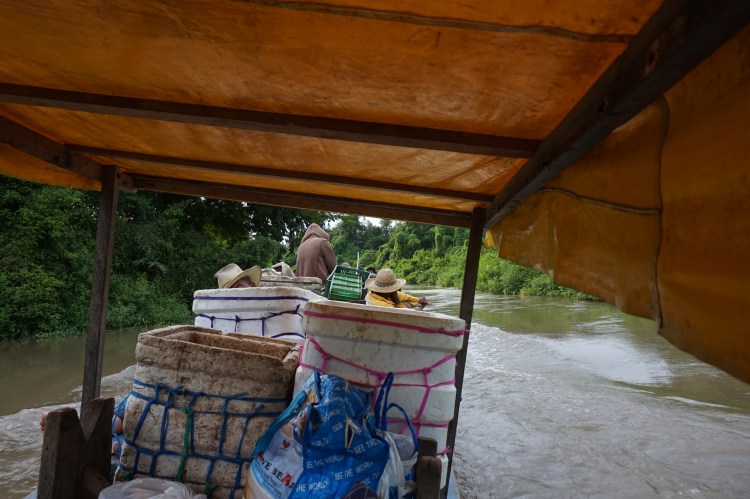
Its been over 2 years in Latin America and I still forget about their transport here. I arrived 30 minutes late for the Johnson and was still waiting for an hour and a half until we left. The Johnson was filled with 1m2  polystyrene cool boxes of fish and I think I counted 15 more people other than myself and Fabian, the captain. The boat was so laden with people that every slight movement felt like it would make the boat turn over.

DSC06823

All the fisherman aboard seemed pretty relaxed, maybe tired after a hard day’s work. I saw one of the older fishermen put a small sandwich bag into the water and scoop it up. He necked it like it was water (clean water) and went back for seconds before necking that too. If that was me or you, we would be violently ill or hospitalised. Anyway, heading back to the mainland was a slow process and with the boat being so heavy we arrived back just before dark.

I knew a bus would be hard to find at this time so I tried to get the tuk-tuk to take me from the bridge to the junction in Palermo. He said no a dropped me off where he wanted to, which wasn’t very helpful but rules are rules apparently. So I walked to where transport might be achievable and managed to hitch a ride on the back of a sort of moto-pickup truck. Imagine a flatbed trailer with just enough room for 4 people (1m2 max) attached behind the driver seat of a motorbike. It was quite comfortable and I was sharing with a family really keen to chat with me. They also got a moto taxi for me, once we arrived at Palermo, as their friend happened to ride past at the perfect time.

I have just realised that I have smashed out over 3000 words on El Morro, which equates to 2 or 3 days of the last 3 months. I apologise for the long story but I had a long boring bus journey with nothing to entertain me other than this.

DSC06917

Anyway, next on my list of places to go was Mompox, a small village on the banks of the river Magdalena, but much further south. I wanted to arrive there only by using the river but that proved impossible without paying far too much for private boats or the use of the locals’ personal boats. So I took the required buses and arrived as soon as possible. I had recently bought the Gabriel Garcia Marquez book ‘100 years of solitude’ with the idea of improving my Spanish and grammar especially. Supposedly the book, and specifically the town of Macondo, was based on Mompox so I thought it would be a good place to chill by the river and read a book.

In practice, I haven’t completed a book, and have rarely attempted to read one, since I was forced to read at school. On top of that, the language used by Marquez is not of the basic, learning type of language that I was after. I would translate words and then I would have to look up the English word afterwards. I don’t think I have passed the first 3 pages yet but it will be something to aspire to or give to someone who wants it. But Mompox was a relaxing couple of days, one of which was spent on a day-long experience with a local who lives on the banks of the river. I would tell you about it but nothing much really happened throughout the day other than eating food.

DSC06876

After Mompox, I decided to head further up the river to a place called El Banco. El Banco was hosting the National Cumbia Festival whilst I was there so it was perfect timing. The festival consisted of multiple competitions for dancing, singing and songwriting all based on the music of Cumbia in Colombia. The outfits they wore were traditional for the different regions in Colombia and consist of many different colours and patterns. It was really beautiful to look at but without any knowledge about Cumbia, it was a little bit confusing. Fortunately for me, I had met a girl in Mompox who was a dance history expert and explained it all for me. It still was confusing.

On the last night, there was a concert with Totó la Momposina, the Madonna of the Cumbia world. This was a lady of about 80 years old who was making 20-year-old guys go weak at the knees. People were clambering to get a photo with her, screaming and sweating profusely in her presence. She could barely walk without some help and her dancing on stage was not what it used to be. But she was such a legend that people were trying to get on stage to say they have danced on the same stage as her. She made guys look like school girls at a Justin Beiber concert and this was interesting to watch.

IMG_20181006_165306146

Her music was good and I even knew a few of her songs that I had heard as mixes at various parties. The place was rocking whilst she was on stage and it went crazy when she finished. After the concert, the party moved to the streets with various bands playing on street corners. People gathered, danced and passed around Aguardiente, the cheap Colombian liquor. It was time to head to bed as the sun had taken its place in the sky again. The plan was to head up the river a couple of hundred kilometres by boat and arrive in Barrancabermeja. What actually happened was that I received a call from Kim saying that she had found my important documents in the hostel we were staying at before.

As we were heading in different directions, I wanted to get my stuff sooner rather than later. This meant head all the way back to North Colombia to grab my stuff. Other than going back to Minca with Kim, not a lot happened in the next few weeks. Just travelling slowly north and then back down south to Medellin. Medellin is the fun capital of Colombia, whereas Bogota is the political capital. Saying that, I was running low on cash and wasn’t too keen on partying too hard. But my time in Medellin was good and I had the chance to explore a bit.

With the cash running low and Ecuador or Peru being my next destination, I had some thinking to do. The chance of earning some dollar in these two was low and I didn’t want to miss them out to go to Chile. So I decided to head back to Jungle Land in Panama to work there for another dry season and try to earn so more cash. This was still a little bit of time into the future but I had an idea of what I wanted to do.

I spoke to Mum suggesting that rather than them come and see me in Panama again, maybe they could help me come to England. Mum jumped at the chance and said it could be a good present for Dad. It was always meant to be a surprise for Dads birthday, with the cheap flight returning home on the 7th of November. This was the moment that everything started to come together to make a very lucky return to England possible.

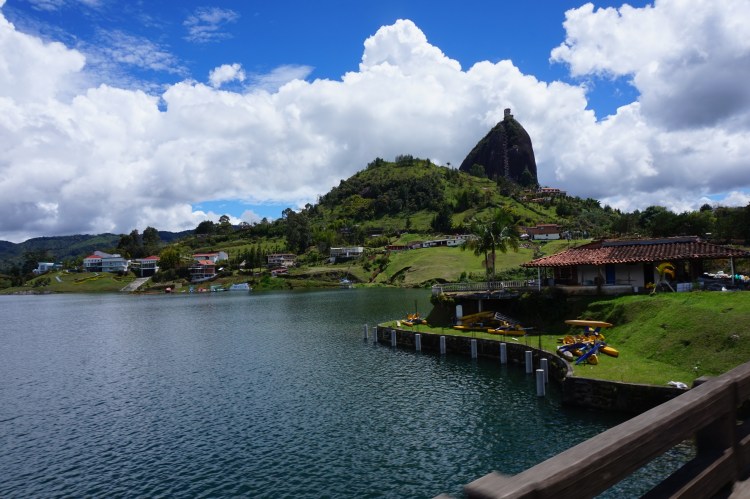
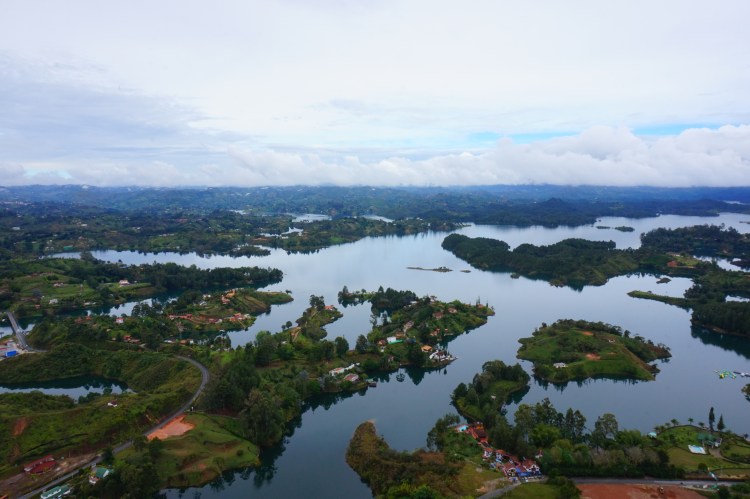
So with a month remaining in Latin America, I decided to try and fit as much in as possible. From Medellin, I headed east to a small place called Guatapé which is located on a man-made reservoir. The town itself is small but colourful, very colourful. Lots of the houses are adorned with Zócalos – 3D tiles skirting the lower outside walls of the house – of many different colours and patterns. Around the town, of about 5,000 inhabitants, there is plenty of hiking to be done. The main place of interest is ‘La Piedra de Peñol’, a large 200m high rock sticking out of the ground.

DSC06961

I decided to visit this big rock early to avoid the tourists and slow walkers ascending the stairs. There are 675 steps that scale the side of the rock to enable you to reach the top. But before that, I had to walk the 4.5km from the hostel. I set off early and by myself to make sure I got there first. After a short distance, I was joined by a stray dog who wanted to keep me company. This isn’t the first time stray dogs have accompanied me walking or hiking. I am starting to think that they are local guides and that I should be giving them a tip afterwards. Anyway, the company was appreciated even though it cost me half my breakfast and water.

Having made it to the big rock early, the gates were not even open yet. We had to wait around a little bit and when the time came to enter, my new friend wasn’t allowed in. So I entered solo and began my ascent of the 675 steps to reach the top. Overtaking workers along the route, I made it to the top to an empty place. I didn’t want to buy anything so it wasn’t an issue but the tranquillity was really nice. Unfortunately, due to my early ascent, the sun didn’t have time to disperse the morning clouds. This just means that I couldn’t get that perfect blue sky photo that would arrive later in the day.

DSC06998

Heading back down the rock, I met my canine guide at the bottom. He had been waiting for me the whole time. On the way back, he walked off the main road, into the bushes, and then stopped and looked at me. I trusted him so I followed him into the bushes to a path hidden off the main road. This route was a much safer and a much nicer route to take, including a rickety bridge over the main road. My guide left me at roughly the same spot where he joined me and I continued back to my hostel.

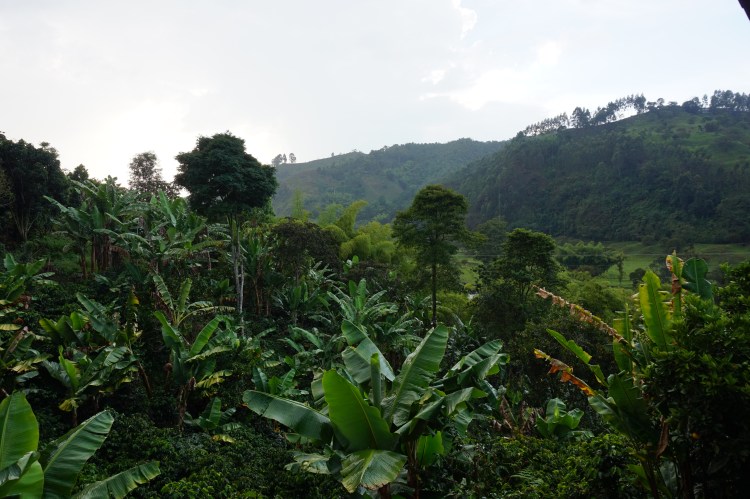
I did a few more hikes in Guatapé before leaving the fairly promptly to pass by Medellin on route to Salento. In the coffee region of Colombia, Salento is a quiet rural town that has kept some of its traditions. In the mountains, Salento is not only a perfect place for hiking but also for growing coffee. The area is littered with coffee plantations and all of them offer some sort of tour experience. I decided to go to one of the more traditional coffee farms that operate without mass cultivation. Finca de las Brisas is the farm owned by Don Elias that has a significantly less amount of plants than other farms. This allows it to produce an organic coffee with a flavour that has been mastered by the taste buds of Don Elias for over 50 years.

DSC07125

Don Elias uses plantain trees to shade the coffee plants, mandarin trees to balance the alkalinity of the soil, one avocado tree to help the water supply in the dry season and many other natural techniques to produce amazing coffee beans. The harvest is done the same 12 people every year, by hand, ensuring the best beans are picked. The process of coffee beans to a cup of coffee is also done manually allowing the perfect flavour to be met. This produces a coffee that doesn’t have that bitterness like normal coffee.

Because the coffee was so nice, I bought a bag to take back to England for Dad. I just had to be careful as apparently, the packaging is similar to that of the cocaine that is exported, just without the farms official sticker on it. Leaving the sticker on, I put it in my bag and hoped for the best.

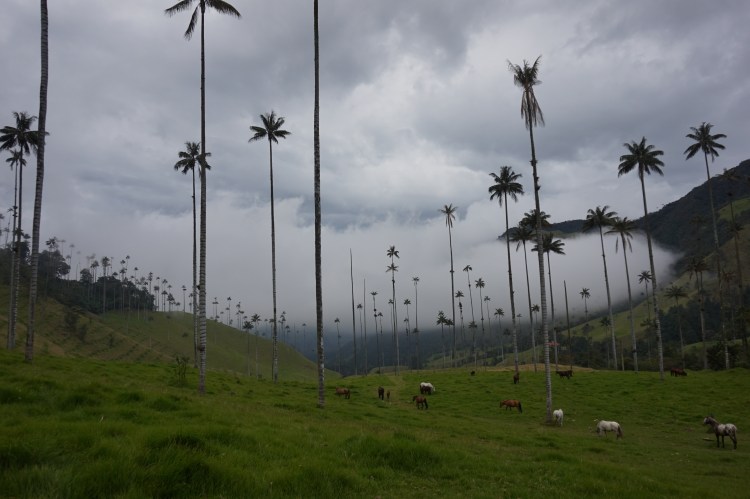
The following morning, I got up early with two people from the hostel and we headed to Valle de Cocora, which is part of the Los Nevados National Natural Park. Once you get there you can take a hike in a big circle that lasts about 6 hours. Just like normal, hiking mapless, we took the wrong route right from the beginning. Backtracking to the other entrance we were soon on the right path and began our ascent. The route we were taking meant we would end our hike with the main attraction of this valley, the ginormous wax palms that litter the mountains and valleys.

DSC07352

Along the way, you cross a river on crusty old bridges on about seven occasions and can go to a house that has many hummingbirds flying around it. Once we made it to the palm trees, we were completely engulfed in clouds, given an eerie feel to the area. It was only as we continued walking that we came below the level of the clouds and we could see the view in all its glory. We eventually made it back down to the bottom in one piece and made our way back to Salento.

From Salento, I headed to the capital, Bogotá, where about 8 friends from El Rio hostel were coming to a 24-hour party. The party actually last a little bit longer so the next few days were spent resting and relaxing. This was the point where I had tried to do a lot in the last month and had ended up spending all my money. The last few weeks I spent around Bogotá, mostly relaxing and also doing a little bit of bouldering or indoor rock climbing.

I had at this point given up on being a tourist and was just counting down the days to when I was on my way home. Secret plans and preparations had been made with Mum to ensure the return trip was kept a secret and the logistics were all watertight. For those of you that I saw, you will know the next part of my story, and I will try to write that up within the coming weeks. But for now, I will say goodbye and wish you all a very merry Christmas and a Happy New Year. Love to all xxx

Colombia´s Caribbean Coast

I have now been in Colombia for over 3 months which is the standard length of a tourist visa. However, for 96 mil pesos you can extend the visa by 3 more months with no questions asked or hassles caused. I will use the next 3 months to hopefully see the rest of Colombia away from the Northern Coastline. All of my time in Colombia has been spent between Cartagena and Punta Gallinas, the northernmost point of Colombia/South America. The majority of that time has been spent at El Rio Hostel.

I watched the rest of the world cup at El Rio whilst volunteering and was planning to leave 2 days after the final. As the time grew closer, I extended my time due to something happening in the future. This then happened a few more times down to reasons like parties, pool tables arriving, the owners returning from England or friends arriving from elsewhere. I even had some leaving drinks with other volunteers to extend my stay an hour into the night. It got to the point where there wasn’t room for me to volunteer behind the bar anymore so I moved to DIY shifts.

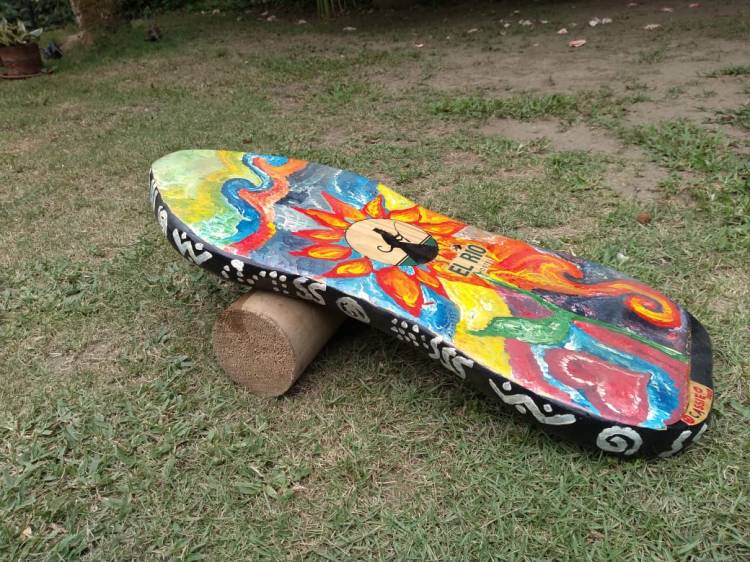
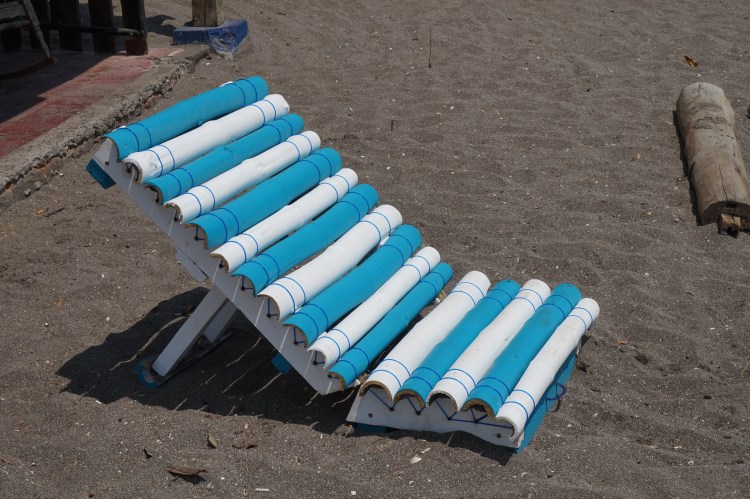
DIY meant I was fixing and building things and doing random jobs and tasks around the hostel. Some of these included taking the guests on activities or running bar activities. Basically, my life got very relaxed and unstructured and very easy at this point. I could choose my days off and do my hours around whatever was happening. I also enjoy building things with wood and there was a lot of scrap wood I could use for building things. In that time, I managed to build a balance board (like the one I made in Playa Venao, Panama), the American game Corn-Hole, a bed for a new receptionist, lots of other small things and some garden furniture from old pallets.

IMG-20180903-WA0002

The garden furniture was made with the help of Choco, the resident wizard and making everything work. In fact, I was helping Choco build these chairs. Spending time with Choco in the workshop was really good fun. He is certifiably nuts but extremely good at doing what he does, which is everything. If you need help, he will choose the biggest and most powerful tool for the smallest of precision tasks and have a result that is better than you requested or expected. It was a good learning experience working with him and because of the cultural differences, sometimes I had some English tricks that I could teach him too.

The majority of the time we spent educating each other about other countries music, listening to it too loud and just making noise with whatever tools you had in your hands. I found out that Choco can play 12 different instruments well including guitar, drums, piano, trumpet, saxophone, flute and others that slipped my mind. For the rurality of Buritaca, I was not expecting to come across someone as musically gifted as him. Choco´s dad, Edinson, worked there too and he like Choco did various maintenance jobs there too. Earlier on, Edinson had come up to me and asked me for help with building his house. He had the question written down in English with him and proceeded to ask me in English. I obviously said yes.

Fortunately, I had convinced/tricked 2 other volunteers to come and help me. The idea was to help Edinson in the morning and then play in the volleyball tournament at El Rio in the afternoon. It was lucky the other 2 guys came because we need 4 people to carry one of the walls. Edinson and Choco had built each wall and partition separately in their back garden and then stacked them in a pile. They then built the foundations and base to the house. When we arrived, we had to finish a few small jobs on the base and then transport the 20+ walls and partitions about 100 metres down the track. These walls were made from solid pine so you can imagine the weight of a 2.5m x 3m wall.

IMG_20180722_172004

Once all the pieces were at the new house site, we had lunch and then it was on to the building phase. Once 2 walls were upright on the base and connected at the corner, they stood freely. Once a third was added, the structure was stable. We pieced together all the pieces and tightly fixed them but in only a few places. It was only when the last piece was to be added that we realised that there was a 2-inch discrepancy in one of the walls. At this point, I had to leave but they managed to fix it and with the help of a temporary roof, the family slept in their new house that night.

Without our help, Edinson would not be able to complete his project of building his house and definitely not this fast. Surprisingly, the cost of the land and the cost of all the materials would have come to less than $5000. Considering the house is made from a lot of very nice pine, that’s very cheap by UK standards. Next to Edinson’s house is a bit of land ready to build his daughters house and next to that is 2 more plots of land for the 2 sons to build their houses. They said there was a bit of land for me if I want their help to build my house. I think it would be a good investment as prices will only go up here as it gets much busier and touristy.

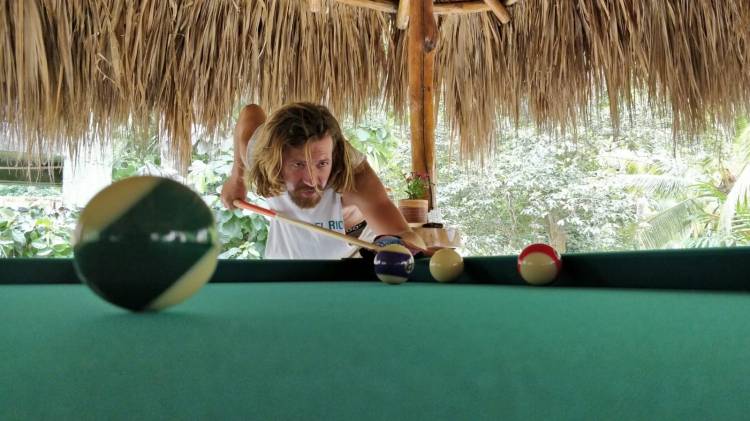
Buritaca is a nice little town with a lot of nice people throughout. A lot of them I have met through El Rio but also at the local Pool and Tejo hall. All the moto-taxi kids ride past the pool place and stop off for a game when there are no rides about. They would come to the hostel and play too because the table there was better. The local guys play a lot and there are a lot of good players here. We would play Colombian billiards and depending on the mood, it could be for fun, beer or money. By the end of the time there, I felt as though I had robbed the local guys of their hard earned cash. But in all honesty, they were trying to hustle me as I have seen them do to other gringos. Just another way for them to earn a little bit of cash on the side.

IMG-20180813-WA0005

My time at El Rio was not only spent playing pool, I also used the place as a base to explore. All of the walks around the area were explored at some point and the activities that I wanted to do, I generally got them for free. We had a free rafting trip from way up the river back to the hostel. This was a trial run for a tour that was organised by one of the local guys who provides activities and things around the area. By the time the next rafting tour had taken place, the organiser was arrested and put in jail for some reason. Everyone was showing me pictures that were circulating on the community social media but no one knew why he had been arrested. Some people say it was just a way to solve a crime, which is to blame people who don’t have the resources to defend themselves. Anyway, the rafting was good fun.

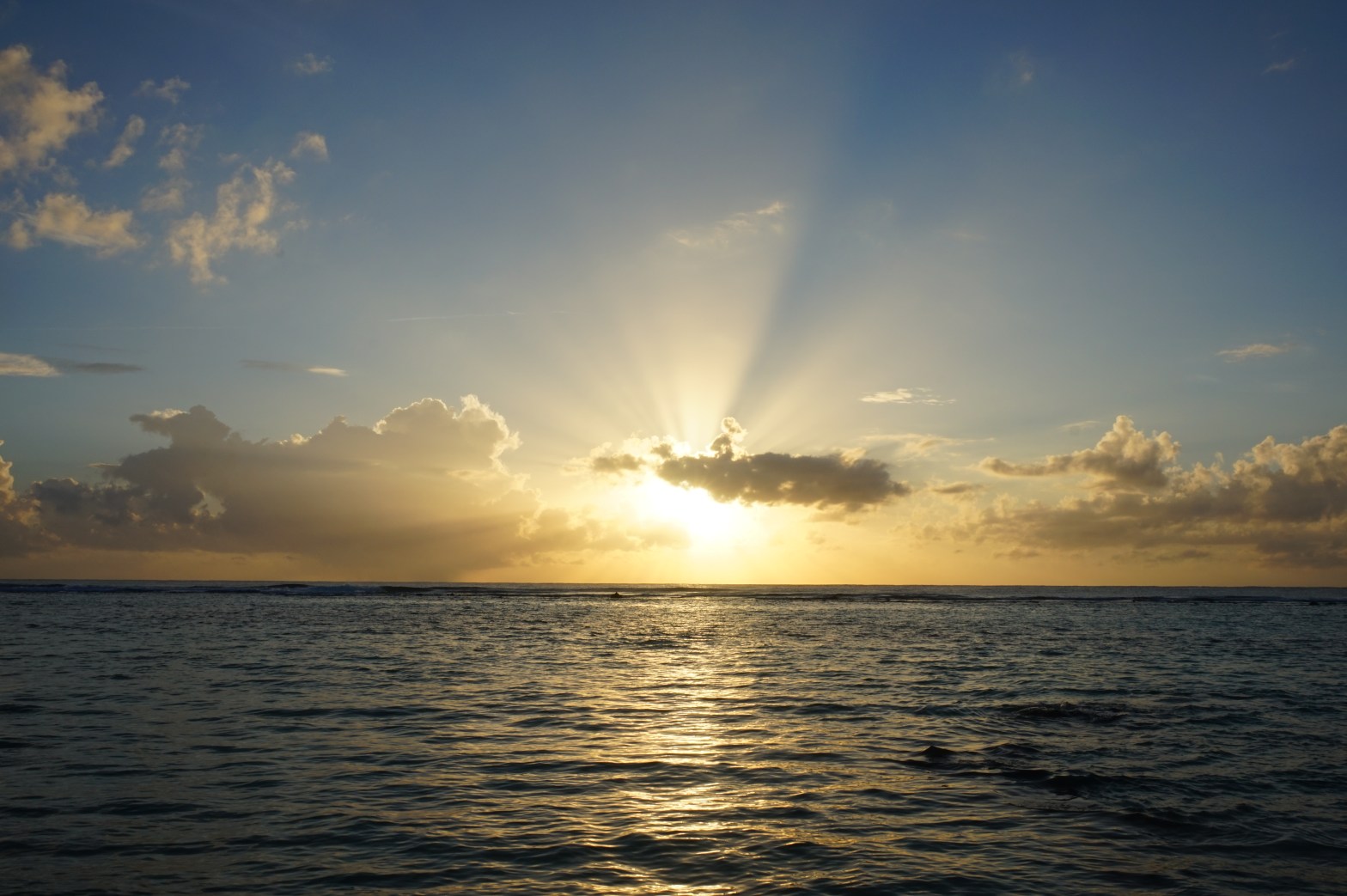
On days off, I have been to Palomino, a town 30 minutes up the coast with a local and hippie vibe going on. I also went to Costeño beach which is just down the road and has a few hostels, salsa nights and good beach parties at weekends. There are walks through banana plantations that end up on the beach where you can catch a colourful sunset. There is a good spot down the road called Country Club to the locals but Isla Bella Resort is its true name I think. It’s just the other side of Guachaca River and is an old resort that is now abandoned and I think no longer open. A friend went before and he said it was completely empty but when we went, there were people around.

It is a large area with a communal area as you enter with building for restaurants and bars and a pool hall. There is also a swimming pool which was being filled up as we were there. Then around this area there are houses and apartments and then rows of like holiday rentals. One of these rows overlooks the lake created at low tide by the river and also the sea in the near distance. It was on the balcony of one of these houses that we watched the sunset. It appeared as if you could just squat in one of the empty houses, maybe renovate it and claim it as your own. That was what was appearing to happen. The people that were here looked like they were living there as well as cleaning the place up.

DSC06586

After the resort had closed down and was left to stand, someone very important in the Colombian underworld threw a massive party there. They decorated the resort and painted the buildings and houses in various random bright colours. The party was apparently very large and with large amounts of alcohol and drugs present meant there was also a lot of money. The police raided this party, shutting it down and confiscating all of the contraband and the money. Since then it has supposedly been left as a ghost town but now it appears to be coming back to life.

Amongst other cool places to visit around the area, Parque Tayrona stands out as one to see. At around 50 mil, it is expensive to enter the national park but it is definitely worth the money, especially if someone pays for you (Cheers Fred!). There are a few ways to see Parque Tayrona depending on the type of person you are and what option suits you best. The main entrance is about an hour and a half walking to the beach which is very popular and busy. There is another entrance in Calabazo which involves a 2 and a half hour walk but when you arrive at this beach it is much quieter and more secluded. Inbetween the busy Cabo San Juan and the quiet Playa Brava is another beach called Playa Nudista. You can guess what that is by yourselves.

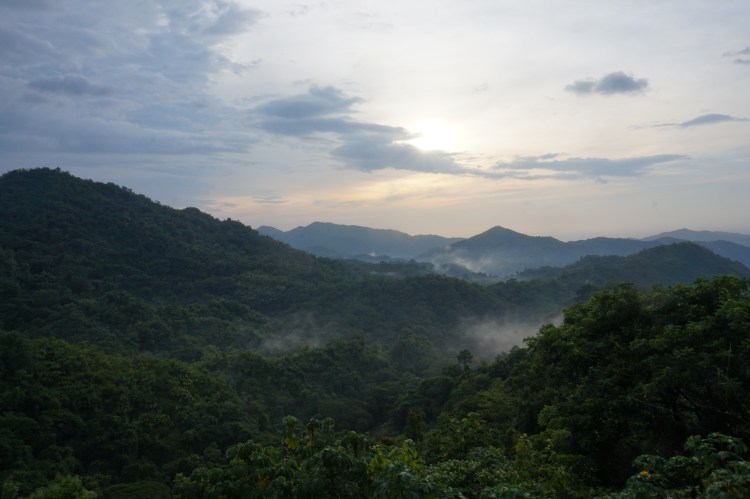
We went through the Calabazo entrance early in the morning after getting a bus from El Rio hostal. I was woken up at 8am by the guys after 3 hours sleep and apparently I was ready to go in seconds. I don’t remember this part of the morning so it’s all hearsay to me.  Once at Calabazo we started the hike which was predominantly uphill for the first 2 hours. We were only on a day trip so we didn’t have enough time to walk via the pueblito that is little village along one of the paths. The path we took was beautiful though, winding through the jungle and hills with varying degrees of path quality and steepness. Once you started to get higher up, the views began to appear through the gaps in the vegetation. Occasionally you would get epic shots of the sea and the golden beaches in the distance.

Once we arrived at the beach, it was a mad rush to get into the sea and cool off from the hike we just completed. We spent a few hours frolicking around in the sea before we had to start the hike back to make sure we caught the last bus back towards El Rio. In hindsight, it would have been beter to have stayed the night on the beach. It would have given us more time to relax and enjoy the beach and surrounding areas. They have hut and cabañas on the beaches which have hammocks and mosquito nets to sleep in. If there is a next time, I will definitely stay the night but I couldn’t on this occasion.

DSC06443

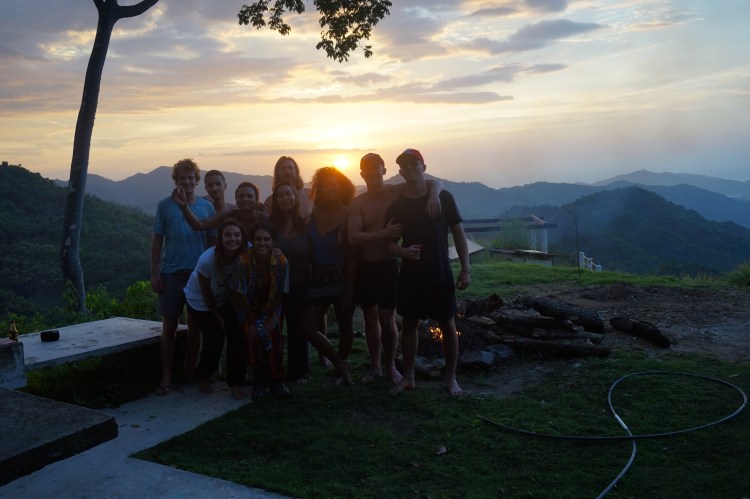
A little bit further away is Minca but it is still possible to get there and back on your days off. Towards the end when a group of volunteers were all leaving, we all headed to Minca to stay for a couple of nights and say goodbye to each other. Minca is really relaxed so you can just chill and take in the scenery or walk to a different place and take in the scenery from there. We stayed at Oscar´s Place, which is a beautiful house on the ridge of a mountain. Oscar is a Colombian dude who is happy to potter by with what he gets and doesn’t really advertise or put his property on booking sites. But his place is so peaceful and entertaining to be around. I slept under a palm roof on the edge of the mountain so when the sun rose, I awoke to the epic views to the coast.

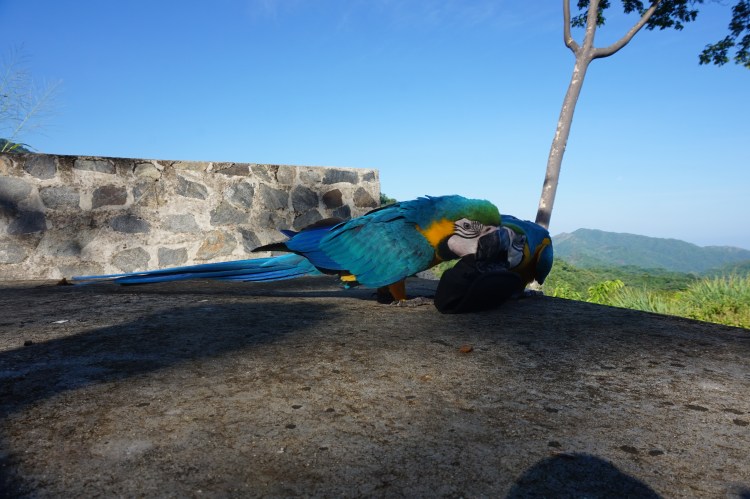
One morning, I woke up to these views then went to join a friend who was also awake. We made coffee and went back to the viewing point below. When I returned back, 2 large blue Macaws were playing with my camera, or so I thought. They had taken the camera out of the protective case and then removed the lens cover. When I saw this, it was no longer funny and I shooed them away. The Macaws had actually dissected the lens of my camera and separated it into 3 parts. What they destroyed in 5 minutes took me well over an hour to put back together due to the tricky nature of the parts. So unfortunately, the photos of the birds on my arms are a little out of focus due to pesky nature of the big blue birds and my poor fixing job. I did manage to properly fix the focus on my camera later on so no harm done, but these birds were around daily and were often causing trouble so you had to keep your wits about you.

DSC06383

There were many more little activities and excursions happening whilst at El Rio all of which lend into making my time there such a great experience. With that said, I couldn’t live there for the rest of my life so I had to move on eventually. I extended one last time and coincided my departure with the arrival of my friend and a big party that I think I instigated. I used to work with my friend Kim at the Hippodrome Casino in London. I left 2 years ago and went to Mexico and Kim left 8 months ago and went to Argentina. Our paths were crossing around this area so we decided to meet at El Rio and then we could leave after the party and head to the desert and travel around the area. As it turned out, Kim really liked the hostel and offered to volunteer there in a couple of weeks.

The big parties thrown at El Rio have a reputation and are generally House and Techno music. There are a few resident Dj´s, including the owner, and for this party they got local people from Santa Marta and also a famous English DJ who happened to be touring the area. With this said, lots of people arrived and the music played from 8pm until 9:15am the next morning. Having had a big farewell night, there was never any chance of leaving the next day. But the following day it was time to leave and Kim and I decided to go to Punta Gallinas which is the northernmost point of South America.

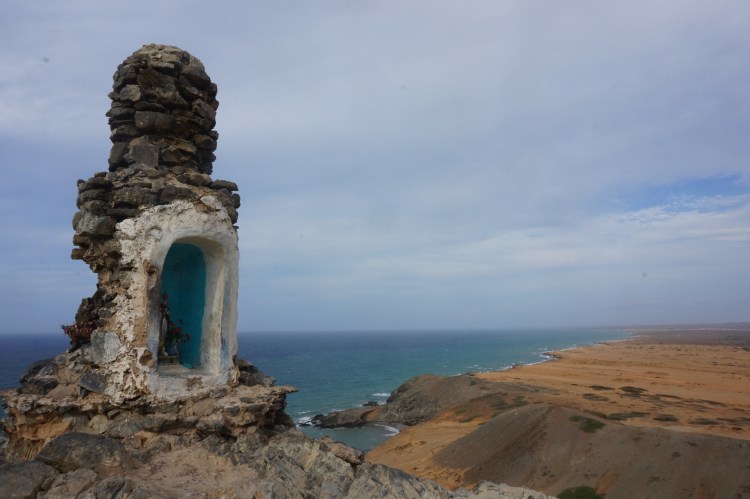
To get to Punta Gallinas you need to go 412km northeast until its only sea in front of you. This can be achieved by booking a tour from lots of places and paying 400-500 mil pesos for the experience. The same experience can be achieved for 200-300 mil pesos if you go about doing it yourself. This was obviously the option we took and it was by far the better option. People who had booked through tour companies were put together with people who were winging it so there was no difference between the experiences. The price we paid did depend on how much you get the people to lower their prices. When you include all the food, accommodation, transport and everything else, 250 mil pesos isn’t too bad a price for 3 days and 2 nights in the desert.

DSC06531

Our first night was spent in Cabo de la Vela which is a small town located on a cape in the desert. Cabo is a place with a lot of wind and a very flat sea so you find a lot of people kite surfing here. Whilst walking along the beach, I chatted with people and checked out the prices to see if it was an option. Categorically no on that front. It was ridiculously expensive and unfortunately well out of our price range. Even with the high winds, you sleep in hammocks in open structures overlooking the beach and sea. It is a very chilled little village with not too much going on. It is more of a place to kite surf or just to pass through on your way to the northern tip.

We went out for dinner having had barbequed fish and all the usual trimmings from the place we were sleeping. They have a dish around these parts which is very traditional and is called Chivu. I’m not sure if it always is but I think that it is not just goat but baby goat. I thought that it was a good idea to try it as it would be good cultural culinary research. I think they had to go outside and catch it and kill it first. We were waiting a while then someone walked in with the back legs and lower spine of a baby goat minus all the skin. A little bit later, these legs were on the plate in front of me. It might have been the place or the goat but the meat was almost inedible down to its chewiness and toughness. It had really strong flavours, it just wasn’t that enjoyable sucking on a piece of meat rather than actually eating it.

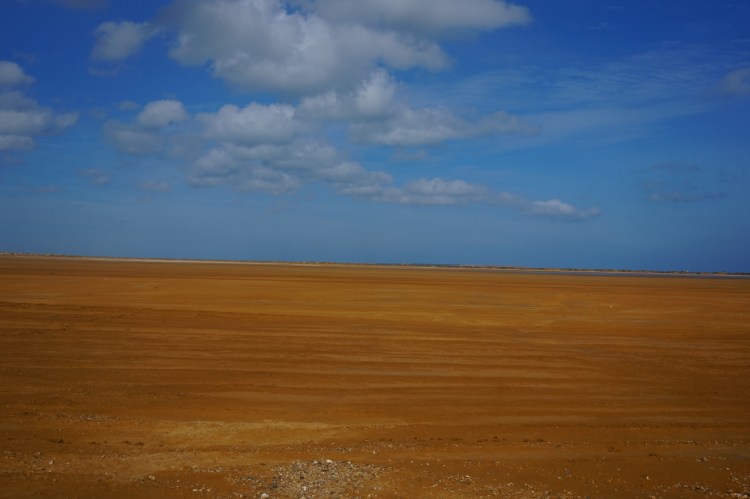
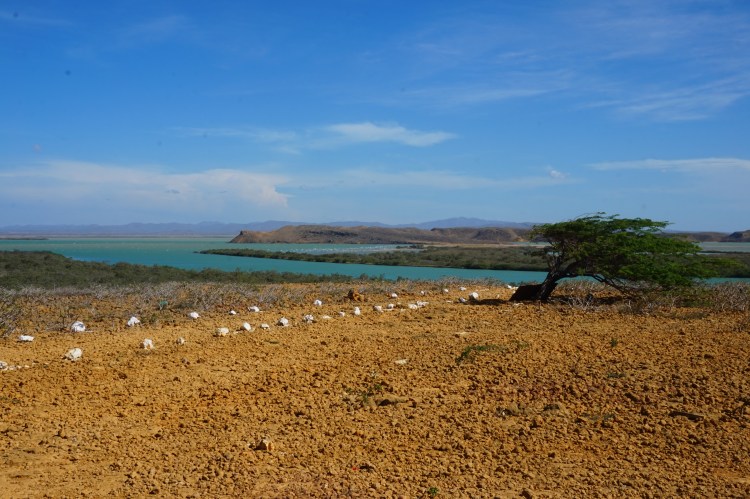
The next morning we were being picked up at 5am Colombian time (so 5:30am then) and being driven through the desert, past Uribia and towards a boat that was waiting for us at the end of the drive. It was only possible to make this journey by 4×4 as a normal car would have fallen apart before it even made it to the parts of the road it wouldn’t be able to pass. The scenery and contrast between the colours of the sand and sky was incredible to see although very hard to capture on camera. The journey was fairly long, very bumpy and there was 10 of us squeezed relatively comfortably into a 4×4.

DSC06589


As you pass through the desert, the track often bottle-necks through cacti or rocks. At this point, there will usually be a rope across the road manned by a few local children preventing you from passing. The kid’s ages can range from 4 or 5 up to 10 or 11 and sometimes there were older people selling bags they had made or other crafts. I had heard that you should take biscuits and sweets for the children but when in the shop, that didn’t seem right. I’m guessing the nearest dentist isn’t near at all so sugary things don’t really help them. Instead, I bought lots of pencils to give to them so maybe they can write or draw something but after passing through, maybe water would have been a better gift.

When we arrived at the end of the road there were some people and boats waiting for us. It appeared everyone waiting was from Hospedaje Alejandra, a hostel on the other side of the water. So without any choice, we got onto a boat and were taken to their place which was a very slow ride 10 minutes or 200m down the coast. The other side of the water was a stone throw away and we could have swum it if needed but they provided a boat to make sure we went to their hostel. There are 2 other hostels or places to stay in this area but they weren’t offered. If you wanted to go to the other places, you had to pay the boat to take you or pre-book and arrange a pickup.

Once we were there we were shown our hammocks and then had a little time to chill. We were then stuffed 12 fold into the 4x4s and taken out on the tour which involved going to 4 different spots including the lighthouse that is at the northernmost point. This took a few hours and gave us the opportunity to take a few photos and go for a swim. The beach was at the bottom of a giant sand dune that ran parallel to the coastline in this area. After the energy exerted in climbing up the giant sand dune in the scorching desert sunshine, I didn’t have the energy to walk down the dune to the sea. So I tucked my head in and roly-poly’d my way all the way down and straight into the sea. As fun and refreshing as it was, after 20 forward rolls, I was completely unable to stand up. This meant I was washed around by the waves for the next few minutes until I could regain my balance.

DSC06639

After the tour, we headed back to the hostel place for lunch which was followed by a moment to relax. When I asked, I was told about a flamingo tour in the afternoon and also a baby turtle tour at night. Neither of these was advertised publically and subsequently, none of them took place because not enough people were interested or aware. That afternoon we went to the western tip of the coast to a beach where we could catch the sunset. Once it was dark, there wasn’t really much to do other than chat or sleep. The next morning, we all headed out on the short boat ride and waited for our ride to arrive. This took us to Uribia by 4×4 where we shared a taxi to Riohacha. In Riohacha we could then get a bus back to Palomino and then El Rio where we left our big backpacks.

All in all, it was a beautiful place to go to and not too expensive as everyone makes out. But it wasn’t cheap and the tours that we supposedly went on could not really be classed as tours though. We paid for a taxi driver really and the petrol needed. The guys who took us around couldn’t answer basic questions about the area and wildlife and just gave generic or confusing answers about other things. They were just drivers taking us to spots for photos and swimming and that’s what made it a little overpriced. But I´m glad I went as it will now encourage me to head to the southern tip of the continent having been to Punta Gallinas.

After a night back at El Rio, I said my final farewells and took all my stuff to be back on the road again. Still with Kim, we headed to Minca, a village 14km up in the jungle mountains above Santa Marta and the coastline. We arrived in Minca by bus and arrived in a downpour of rain that went on for a bit. A lot of the hostels in Minca, including the one we were heading to, are further up in the mountains only accessible by dirt tracks and paths. We waited around for one extra person to make the jeep taxi roughly the same price as the moto taxi. Walking wasn’t an option as it was over 6kms up the hill and it was getting late. Nobody arrived by the time we had finished eating so we took a moto-taxi and made our way up to Casa Elementos.

DSC06421

The hostel was a long way up a road that soon turned into a rock and mud track with rivers flowing down the middle carving gorges in the road. It was good fun and worth the entrance fee if not a little bit sketchy at some points. I had been to Minca before whilst on days off so knew a little bit about the area although not explored much of it. Minca is best described as a lazy mountain cloud village with epic views through the mountains and down to the coast with the city lights of Santa Marta in view maybe. On our second night in Minca, we moved down to another hostel near the town centre. It had a better location as a base to walk to different sights to see.

Minca has quite a few visitors, especially on the weekends. We were there on a Sunday so this was something we had to deal with at the places of interests. It was bizarre to walk through the jungles on narrow tracks for hours to then come out to a wider track and come across traffic and people. There were motorbikes everywhere going in all directions as were families and large groups of people walking. We went to Pozo Azul which is a waterfall with lots of staggered pools going up the mountain. It was meant to be a much shorter walk but for some reason, I always take a longer route when hiking in jungles. When we arrived we decided to walk as high up as possible because the higher you go the more peaceful it is. Having swum there for a bit, we continued hiking further up the hill to a brewery and coffee farm. We stopped for a sandwich at the café and I tried a Minca brewed beer but then we had to head back. Due to the detours, we had not much time to make it all the way back before sunset.

We spent a few nights in Minca with the majority of the time spent relaxing, yet walking 14km around the mountains on some days. I’m sure we could have both stayed there longer but Kim had to return to El Rio to start volunteering. We both headed back to Santa Marta and I stayed there whilst Kim went back to Buritaca. It was really good to catch up with Kim and spend some time moving around with her. I never would have guessed that would have happened whilst we were working in London. I´m sure she will enjoy herself volunteering and once she has finished, maybe we will bump into each other again.

DSC06450

After a couple of days in Santa Marta, I went back to Minca to meet some friends who were there and ended up staying 3 more nights. This time we stayed in Mundo Nuevo which is 2.5km up a different hill with a slightly worse road. This time I walked the hill and arrived a sweaty mess after a couple of hours including an accidental detour again. One of my friends I was meeting didn’t actually arrive that night because she was getting a tattoo elsewhere and she missed the last bus. The next day when she arrived she chatted for a bit and then fell asleep, missed dinner and then we didn’t see her until the next day. This was when she left so it was nice to see her even if it was a brief encounter.

I left Minca a day later and headed back to Santa Marta to abuse the cities internet and try and sort out a plan of action for the next few weeks. I feel like I am heading towards Medellin now although the route I will take is still undecided. But that brings me to now, currently resting in Santa Marta and trying to figure out my next move. Where ever I end up, I´m sure it will be fun and I will let you know how I get along when I get the chance.

Finally South America

I have made it through the busy season at Jungleland and the rain and customer numbers are starting to drop. With the dry season now behind us, the customers have dropped from a potential 100 per day (during spring break) to maybe 20 people, maybe nobody. With the tourists leaving, so have Shane, James and Emily, the other volunteers. This leaves myself alone to deal with the customer’s needs from 6am to 9pm.

We had a new volunteer turn up but he lasted only a week. He was a nice guy but a vegetarian with issues about grabbing crocs and caimans. He was a lover of nature and wanted to stay, but the hours were a little long for him too. Another volunteer has arrived but with two weeks minimum needed for training, he is pretty useless at the moment. In fact, my work load has increased with the fact that I have to train and explain everything to him.

Having said all that, I am not complaining one bit. Jungleland is still a special place that amazes me every day. I am still spotting new birds, finding new animals and some of the trees are changing colours with the climate. On top of that, every time I transit the Panama Canal, I am witnessing different boats, ships and wildlife. I am definitely lucky to have found, and experienced what I have here, deep within the jungles of Lago Gatun and the Canal.

River Tunel


I have to be grateful to this experience for teaching me so much and helping me to learn many new things. On top of the knowledge I have gained about the jungle and its inhabitants, I have also improved myself and started to remedy problems holding me back in life. For example, I have never been good at speaking in front of groups of people or being the centre of attention. That’s not me and it never has been. I can trace this back to being a young child on stage at the Kings Theatre and having to sing a song. I refused because the lyrics were something I didn’t agree with (eating apples and bananas) and this was the first feeling of stage fright I can remember.

Over 25 years later, I still don’t like to eat apples and bananas, but I am on the way to conquering my fears. I have spent 5 months guiding tours to boats of 25 people and giving activity briefings to maybe 50 guests and I am finally not feeling every single eye looking at me. It is something I need to conquer should I wish to earn money on the streets with card tricks or something else, but I feel it is possible with more time and practice.

Another thing that I can be grateful to for my time here is the fact that I am saving money and saving my health. Before arriving at Jungleland I had been trying to quit smoking and had cut down significantly. But the days were hard, stressful and every thought was about what time it was, was it time for the next cigarette. But when I arrived here, courtesy of James smoking my supply of ciggies, I had nothing to smoke and nowhere to buy anything to smoke. Through keeping busy, I soon realised I didn’t want to smoke, or need to smoke, and I haven’t smoked since that day.

Other than my personal development, I have witnessed many great spectacles of the natural world. Going back over the last 5 months, there are probably too many of these to bore you with and maybe some that have slipped my mind at this moment in time. But I will share one of the highlights of my stay at Jungleland, the notorious Pablo.

pablo

That’s Pablo above, look at his ugly, angry face. Pablo is a White Throated Capuchin Monkey, a species deemed to be one of the most intelligent of monkey species. That is why you might recognise them from Hollywood or television. Pablo is a very aggressive monkey and he is notorious to the boat captains around the islands. He is, plain and simply, not allowed onto the boats as he generally misbehaves. He has many stories or myths that surround him of past mischiefs and terrors that he has caused.

I had the pleasure of Pablo on my boat one day. I was doing a personal tour of 2 people and we approached a little too close to Pablo and his island. Within a flash, he was on the boat, with his eyes fixated solely on me. I was sat behind the 2 guests but Pablo had no intention of looking at them, he wanted me for some reason. He was dancing around on his back legs, waving his arms around with fury making aggressive noises and showing his teeth. I quickly remembered that capuchins are not fans of water so, like John Wayne, I grabbed my water and started to unload it in Pablo’s face. Not a good idea. That just made him even angrier and even more erratic.

For some reason, although he did not notice the guests in front of him, he did not want to pass them and engage in combat with me. If he did, I still don’t know if I had it in me to punch a monkey, but Pablo for sure would have had no qualms in punching and biting me. But fortunately, it didn’t come to that. I begged the captain to reverse the boat and when he did, Pablo turned and jumped back to his island. A few weeks later, James had a much worse experience with Pablo on his boat for 20 minutes. In this time he punched, slapped and bit customers. On top of that, when then captain tried to reverse the boat, he bit the captain and took control of the boat taking it for a little joy ride.

But all in all, we have to have sympathy for Pablo. There are many stories and myths that follow him but the one that I choose to believe is this. He was a domesticated monkey kept as a pet from a young age. Once he got older he got grumpy and angry, much like many humans do. He was dumped on an island by his owner and has not fitted into the monkey society. He was trained by a human so he doesn’t have the natural monkey actions, skills and characteristics. This has caused him to be attacked and ostracised by other capuchins, leaving him with no friends, no girlfriend and no chance to make a little Pablo in the future. You can’t blame him for being angry can you?

Jlodge front

Looking back, my time at Jungleland was something I could have done for longer and would do again, but there was a definite need to leave there. I was starting to feel stuck there and that I would never make it to Colombia. I sent a message to Virginia, the lady who I needed to arrange my free boat crossing, asking if there was space available on the next boat. She was supposed to let me know but I didn’t trust her to do that one bit. I knew there was space available as I had checked the boat online and with only 2 days until the journey, I got in touch. Surprise surprise, there was space and I had finally got my boat.

I let Captain Carl know, packed my bag, said my goodbyes and left the following day. I got to Panama City and went back to Los Mostros Hostel, the hostel I had lived at during my time in Panama City and on my days off. Having said goodbye to my friends at Los Mostros I went to bed and got up at 5am to get the minibus to my boat. The minibus drove around and picked up various people from random spots and we made our way to the port. There had been some problems between the Kuna’s and the people making the tours so the journey had to make a diversion. Either way, we made it to the beach where we got in a speedboat to take us to the catamaran. As a nice start to the 5 day adventure to Colombia, we saw some dolphins, in the speedboat, on the way to the catamaran.

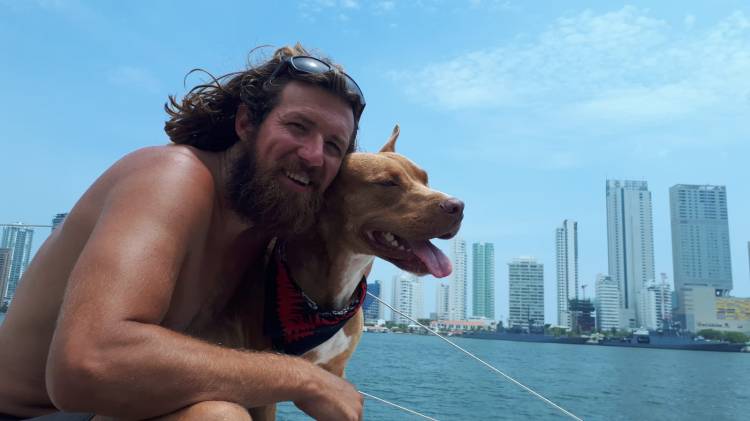
As soon as we made it to El Gitano del Mar, the catamaran, we were greeted by Nali, an old friend from Pachamama. Nali is a pit bull owned by the captain Elena and translates from the Kuna language as shark. Seeing as Nali lives on a boat, he has the ability to swim like a shark, hence the name. Also aboard the boat was Elena’s first mate, Luis and the chef, Rosie. We were given a briefing on what the plan was and what to expect by Elena and then we set off by motor towards the San Blas Islands. I wish I could remember the names of all the islands we visited, but they were all strange names that were translated into Spanish and then into English.

IMG-20180604-WA0060

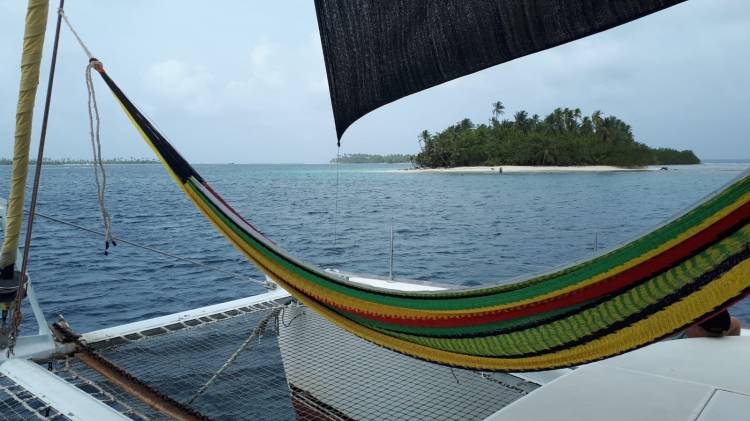
Generally, we drove around and then anchored up around certain islands that Elena knew or had deals with. When we parked up, there would almost always be Kuna people arriving in wooden kayaks carved from trees trying to sell some of the artisanal products or lobsters. We would then take a little dinghy from El Gitano to the island and do what we had to do. If it was daytime we could snorkel over the reefs and swim to the islands. You could walk around the islands and some had volleyball courts that you could use. Some islands had bars and houses, others were uninhabited. There was a huge variation in all the islands although they were basically the same deserted paradise islands.

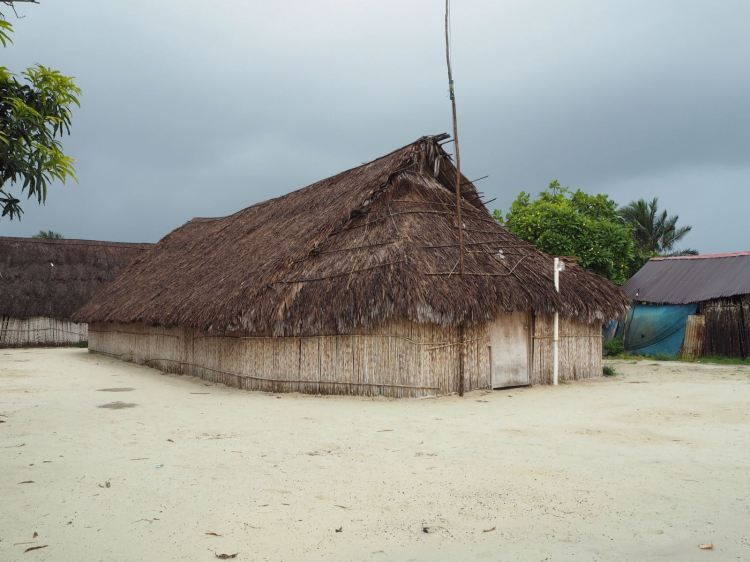
One rule on the islands is that you can’t help yourself to coconuts even though there are a plethora of them everywhere. This is because this is one of the main sources of income for the Kuna folk. Saying that, it’s still a nice feeling to climb a palm tree, catch your own coconut, cut her open and put some rum inside. So that’s what I did but I didn’t have any money on me. Rather than steal the coconut, which would have been very easy, I went to the family on the island to speak to them. I found two young guys and asked them but they sent me to their mum/gran. It seems the eldest female makes the decisions on the islands. The lady was in a wheelchair, very old and frail looking. She was sat under a plastic tarpaulin with enough room for her and her husband. It seemed as if they spent the day there relaxing and listening to a radio. The young guys would do the required work on the island which involved farming of foods and assisting the tourists.

I had made a flower out of a palm leaf, whilst relaxing on the beach earlier, so I offered this in return for the coconut. The lady smiled with joy when she saw the flower and agreed straight away. I stayed for a bit to talk to them before the young guys came over to see the flower. I was surprised that they didn’t know how to make anything from palm leaves seeing as they were surrounded by them and pretty much only them. So I showed the guys how to make the flower so maybe in the future they could make them and use them to pick up gringo girls. I mean make them and use them to sell to tourists who came to their island. I hope they remember how to make the flower because they did seem a tad drunk when I showed them.

IMG-20180604-WA0066

During the evening we would return to El Gitano to have dinner on the boat apart from one night where the crew cooked on a fire on the beach. We would always return to the islands after dinner to party at a bar with the locals and other boats that might be in the vicinity. It seems as the Kuna’s living on the islands like to drink and party and probably do it every time there is a boatload of tourists on their island. This could be a daily occurrence, especially during the busy season which it wasn’t whilst I was there. During the busy season there are probably more people daily, and much bigger parties happening.

When we decided to return to the boat to sleep, everyone would go off to their cabins whilst I would stay outside and sleep on a cushion somewhere. In the morning, I would wake up fresh as a daisy, whereas everyone else would be complaining about how hot and stuffy it was. And when it rained they had to close their windows and it became unbearable. Fortunately, I had found a little corner with enough protection from the wind and rain to sleep like a log every night. On the third night, the captain woke up at 5am and we started the two day trip for Colombia, leaving the San Blas Islands behind.

Once we left the islands behind, we headed northeast and it was just pure ocean until we reached Cartagena in Colombia. There was potential for very rough seas and a very rocky crossing. One girl had been seasick from just floating around the Islands so it could prove to be very interesting. Fortunately for us, the seas were very calm according to the crew but the waves were still fairly large and there was a lot of movement in the boat. Lots of drugs were taken by everyone to counteract the sea sickness but I didn’t have any. I tried to fight it for a day but completely lost my appetite and eventually took someone’s pills to ease my stomach. Ironically the girl who was sick before, was in the best shape she had been the whole trip and it was her boyfriend who was chundering over the edge of the boat. In total only 2 people were sick so it was a successful crossing in that sense.

IMG-20180605-WA0011

I had been helping the crew out with a lot of the sailing chores including putting up and taking down the two sails. Seeing as we sailed from 5am until midday the following day, the crew needed to work and sleep in shifts. That meant they needed help sometimes and especially when we entered the culo de pollo or the chicken’s butt. The chicken’s butt is the name of a windy storm that comes out of nowhere. Try to imagine what the fronds look like at the top of a palm tree in a very strong wind, similar to that of the feathers on a chickens butt. That’s where the name comes from.

Anyway, when the culo de pollo arrived no one wanted to help out so it was down to me again. That involved trying to take the mainsail down very quickly before the wind caught it and capsized us. This was good fun seeing as I struggled to navigate myself around the boat normally, let alone in strong winds, torrential rains and bouncing over larger waves. It only took two minutes to take the sail down and bag it up but it wouldn’t matter if it took ten. Within the first ten seconds I was wetter than an otter’s pocket. I saw this as an opportunity for a free shower, which they didn’t have on the boat other than a hose to rinse off the salt water.

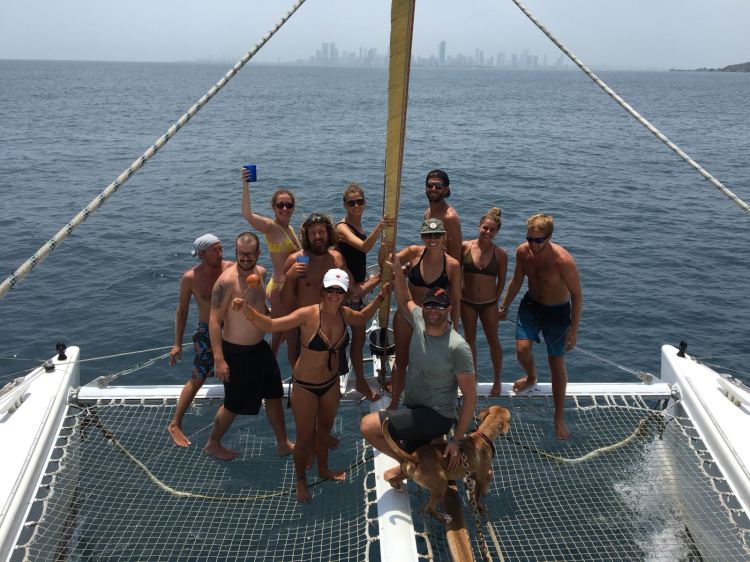
That was about as much action as we had for the whole crossing and the storm only lasted about 15 minutes. Other than that, most of the time was spent in the netting at the front of the catamaran between the two hulls. It was a perfect spot to chill, relax and look out for dolphins. The following morning I woke up just before sunrise and had the pleasure of seeing the sunrise from the horizon. As the morning drew on, some islands came into view and then so did the mainland. Once Cartagena became visible, I have to admit I was disappointed. It was a skyline of high rise buildings and skyscrapers and it wasn’t what I was expecting.

IMG-20180604-WA0042

Arriving at Cartagena, we parked the boat up amongst many other boats and started to unload ourselves and our belongings onto the mainland via the dinghy. Via various taxis, we all made our way to the same hostal where we would wait for our passports whilst the captain took them to immigration. During my time in Cartagena I suffered some bad luck. Within minutes of arriving the main shoulder strap from my backpack had snapped off at the point of no fixing. I lost my bank card when staying in the first hostal I went too and remembered putting it in the locker. And thirdly, I fell down and open drain hole.

Firstly, my backpack was in near perfect condition and I liked it a lot. But it was a little small and a squeeze everytime I moved from place to place. So a blessing in disguise, I found a decent new one with a little more space and slightly better features. Secondly, after searching the locker 5 times and completely emptying my backpack, I searched the locker one last time. My card had fallen from the top locker, down the back and into the empty bottom locker. And thirdly, I fell down a drain hole, I should have watched where I was going. Mainly just bruised pride and a couple of scratches so no big deal.

Cartagena’s a bit of a nothing city, it has a lot of history but is not very exciting or a place you would want to spend more than a couple of days. The group from the boat therefore dispersed fairly quickly as people headed for different locations. I decided to head up the coast, past Santa Marta, with an American dude from the boat. He was heading to the number 2 hostel in Latin America and number 1 in Colombia. The way he described it sounded good so I thought I would join him.

el rio rio

El Rio is the hostal and it is situated in a small town called Buritaca. All the towns along this coast generally form around the river and its mouth. It is a small town with what you need and not a lot more. There is no internet or Wifi, and the shops have limited everything. Up from the main road and away from the coast, the land turns to mountainous jungle. This is where you can find El Rio hostal, on the side of the River Buritaca that winds through the hills. The hostal does everything very well and has only been there for a year and a half. The daytime is generally chilled and relaxed and then at night the atmosphere is more that of a party. Activities are available during the day, and games are played at night in the bar. You can organise hikes, tours, trips and excursions via the hostal too.

The first night I spent in a dorm room because there wasn’t sufficient light to put my hammock up. The second night I put it up just up the river in a secluded spot. Unfortunately, the second night was a pub quiz night which involved two winners, one for knowledge and one for the most drinks consumed. Our team won both prizes courtesy of my drinking efforts and a few random guesses that I made. The outcome was that I ended sleeping on the beach next to the river and didn’t make it to my hammock in the end. In fact, with the rains up the mountain, the river rose and I had to make an escape for the communal hammocks in the hostal.

The third night I called it a night at around 3am and made my way to my hammock. It was dark because of my secluded location but I couldn’t find it even though I was sure I was looking in the right place. I went back for a light and then went looking again. I was looking in the right place but my hammock was gone. It wasn’t an easy task to remove either. The person had to take down the mosquito net and the hammock and it’s hardly small and inconspicuous. Either way I was left bedless again and had to use the communal hammocks for another night.

DSC06302

I was planning to stay here for three nights but ended up staying for a fourth. On the afternoon of the day of departure, I was waiting for a friend who had my valuables in his locker. I had to wait for an hour then I would leave and head up the coast a bit more. In this hour, I was talking to one of the workers and she was saying how they need to find a volunteer in the next 2 days. For some reason I offered and since then I have been volunteering at El Rio. I will be mostly working in the bar but once a week I have to work a meal time shift. The food here is very good with a couple of English classics on the menu. All the food is homemade including all the breads and even the salmon and bacon is home-smoked.

El Rio is a very English hostal in the sense that it has two English owners and the guests sometimes make you feel like you on a private school holiday. There are other nationalities here but a huge majority are English. This means it will be a good spot to watch the world cup as it will feel like being back in the UK. Apart from the tropical heat and jungle surrounding me, but the atmosphere will be similar. So far, I have made an amazing choice and have enjoyed watching most of the games. The best was the last 16 match between Colombia and England. Fifty percent of the crowd was English and the fifty percent weren’t, which means they were supporting Colombia. With well over 100 people crammed around the big screen, the game was amazing to watch.

I will have to work 6 hours a day, 5 days a week and in return, I will be provided with 3 meals a day and a place to sleep. With its location being so good, I will be able to explore the area on my days off. I also get free hostals in other areas courtesy of El Rio and discounts, if not free, on hikes and tours around the area. So far I have done a few of these but would like to explore more. I did a 12 hour excursion of which 8 hours was hiking and a lot of that was uphill. The destination for this hike was an indigenous village in the jungle. We passed a thermal spring for a hot shower and a school on top of a mountain, but when we arrived I wasn’t expecting what I saw. The Argentina vs Nigeria game in a café/shop with pool tables and Smirnoff Ice for sale.

DSC06311

There were lots of indigenous people walking around but it was a very western world they were living in. We met the chief of the village who took us to the real indigenous village that had stuck to its cultures. It was 5 minutes up the river and was built on land given back to the people by the government. They had the wooden built cabins scattered across the hills and gardens in designated areas. There was plenty of food growing and they were growing spices to go with it. Some of the plants, the women were not allowed to touch. The people had a lot of strange cultures which split men from women and stopped women from doing certain things. It was interesting to see these cultures and learn about them but because of the distance we had walked, we had to head back to El Rio fairly sharpish.

I am hoping to do some more hikes in the future and explore the deserts that are further north in La Guajira or Punta Gallinas. But at the moment I will stay at El Rio for the rest of the world cup and then head on afterward. So far Colombia has been a country of nice people and partying. I am yet to head to the main cities too so I look forward to what they have to offer. I have a friend from London who will be joining me in Colombia in August too, so hopefully we will get the opportunity to meet up somewhere. But as for now, I will say cheerio.

Mum and Dad in Panama!

Having had the amazing pleasure of seeing Mum and Dad over the New Year period, I thought it was only fair that you can get a perspective of Panama from someone else. Plus I am relatively lazy so I asked Mum to send me what she had written up about her trip.

Before we get to that time, I will fill you in quickly on what has happened leading up to that point. I was surfing in Playa Venao and was running out of Visa. I managed to sell my surfboard to a French dude who was living on the beach. I got $10 more than I paid for it and a free palm leaf hat. I then had to head to Costa Rica and try to renew my Visa, a task that could have numerous different outcomes. If I was unable to return to Panama, I would be stuck in Costa Rica, which is ridiculously expensive for everything!

Fortunately, when I passed across the border to Costa Rica, without any problems, I had some friends who were house-sitting not too far from the border in Ojochal. Not only were they house-sitting, but they were house-sitting in a really nice cabin way up on the jungle mountainside. The wooden cabin built onto the hillside and has a delightful view down to the sea in the distance. The house had lots of space and lots of comforts that I had come unaccustomed to. It had hot water and a toilet you could put the used paper in. It also had a bathtub in my en-suite bathroom with Jacuzzi buttons. On top of the cabin, it was good to see, and relax with Jaime and Cami too.

I stayed there for just over a week knowing that more time out of Panama would help my case when returning. When I got on the bus to return to the border, I bumped into a couple and their baby girl that I had spent some time with at Playa Venao. As nice as it was to see them, they soon got off the bus and I headed to the border. Having all my details, information and arguments ready, the migration guy just stamped my passport and sent me on my way. I was a little bit disappointed to be honest, I was ready with my new and improved Spanish to plead my case. But anyway, importantly I made it through without any problems.

I headed back to Panama City and then made my way to Hernan’s farm where I was due to be working for a few months before heading to Colombia. After 1 week of being there, I managed to cut my leg with a machete which involved a 1km walk back to the house and then a 2.5km walk to the Guna Yala Police control. Once I got there, I got the police to help me get a ride to the hospital. The guys actually dropped me off at the junction where I was able to get a bus to the nearest hospital. I got 2 stitches and it cost me a $1 tip for the service. Unfortunately, I had to wait too long and couldn’t return to the farm as the road was closed, so I headed to the city for the night.

With all this happening, I decided to leave the farm and head back to the city to look for other work. A few things were looking promising but nothing came from a month’s worth of searching so I contacted a volunteering gig I found online. It said it paid a little so I went to Jungle Land Panama and had a day tour to see what it was like and to speak to the boss Carl. It all seemed good so I returned there on 12th December to start training and await Mum and Dads visit.

Over to you Mum………

Jungleland swing

Panama adventures – a holiday with a difference.

After a lovely Christmas hosted by Dean and Hollie (relaxing for us if not for them and hilarious watching Terry on Dean’s PS4 – virtual reality), on Boxing Day we turned our thoughts to packing for the trip to Panama – it’s now been over 14 months since Matthew left England on his travels. We were so excited but there was a short and very anxious time when we realised we needed an ESTA (electronic system for travel authorisation) for our connecting flights through Houston. How we missed this we do not know but fortunately the electronic system for checking worked and approximately 40 mins later, with authorisation received, our plans were back on track. By 5.30am on Wednesday 27 December we were leaving sleet and snow behind in Denmead and heading for warmer, if not drier, climes.

We arrived at Tocumen Airport Panama City just before 1am (local time). We eventually picked up the car (a Hyundai 4×4) and made our way to the Marriott Executive Apartments, Finisterre, our base for the next 15 days. Unfortunately, Calle Colombia seemed to extend across the whole of Panama City and despite using satnav, police assistance (I think we were in a less desirable area at one time) and further directions from another Marriott Hotel nearby, we got very lost. We eventually arrived at our destination at about 3.45am and settled into apartment 702 – this was lovely and spacious. We unpacked and collapsed in bed about 4.30am after over 28 hours travelling – tired but happy to have arrived.

Whilst the main purpose of our trip was to spend some time with Matt, we also hoped to learn more about Panama, its sights, people and culture. Panama is a deceptively large and diverse country so planning where to go in the time available (whilst building in some relaxing/recovery time for the old folks) was critical. Here is a flavour of our amazing adventure – in the city, the jungle and on the beach.

Thursday 28 December – our first day in Panama and a taste of city life. The views of Panama City from the apartment are brilliant. Panama City is a very modern city with many skyscrapers, particularly in the business and financial area around our apartment, but look in the other direction and properties are less attractive and in poor condition. After a cup of tea and coffee, our first priority was a shopping trip to the local supermarket to get some milk for a ‘proper’ cup of tea (made with Tetley T bags brought for Matt). We decided to walk as the store was only 6 mins away. Matthew did warn us to be careful as paths are very uneven and hazardous, much like those in the Caribbean where steep cambers and drainage ditches at the kerb await unsuspecting tourists looking at the sights. You also need to watch the low hanging electric cabling – clearly H&S regulations are more “relaxed” here.

As always we ended up buying a few more essential items – champagne, white wine, G&T with nibbles and lunch. We purchased a variety of empanadas (the local ‘pasties’) to try with bread and cheese. It was at this point we remembered that we were walking but at least the carrier bags are still free. A kettle for the apartment was requested as although we got the milk in anticipation of a lovely cuppa, we hadn’t spotted that there was only a coffee filter machine. Unfortunately, this is not a tea drinking nation so kettles are not provided but the gas was turned on so that we could use a saucepan to boil some water. Lazy afternoon reading up on Panama (must buy Terry a new hat!) and awaiting Matt’s arrival after work – Matt currently works at Jungle Land, a floating lodge from which you can enjoy activities in the jungle and on the canal.
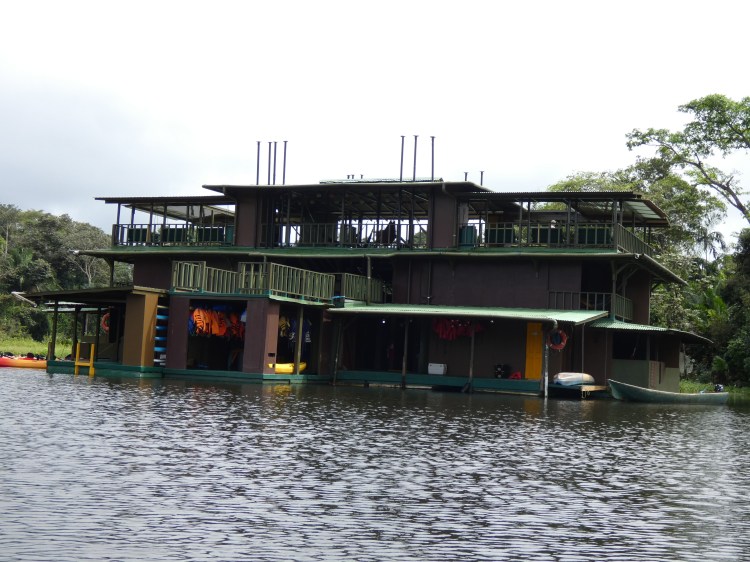
Jungleland
Matt surprised us by arriving early – it was so lovely to see him and give him hugs from everyone. Matt looks really well and is enjoying his new job. We returned to the apartment to hear all the news and to see what Santa had brought – Matt loved his presents and we were pleased everything fitted. The jars of Marmite soon disappeared, safely stowed in his rucksack for his return to Jungle Land. We received some lovely locally made presents from Matthew as well as some mosquito repelling items for our trip to Jungle Land – we hope we won’t need them but shall certainly be prepared! We had a lovely evening whilst enjoying a celebratory bottle of fizz and G&Ts before dinner in the hotel restaurant. Great news – Matt has given up smoking. Well done Matt.

Our first breakfast at the hotel – there was a wide buffet selection to choose from, with eggs, omelettes and waffles being cooked to order. I always like to try the local fare so chicken fajitas with sautéed vegetables and a corn tortilla/cake for me – so good I had to have seconds! Despite this I’d finished before Terry got his breakfast – with the help of the translation app and hand signals, Terry had requested 2 softly poached eggs.  Over 10 mins later Terry received two boiled eggs (peeled), fortunately with slightly soft yolks. We really should have learnt some Spanish.

We took the City Sightseeing (hop-on/hop-off) tour to see the main sights and get our bearings of the city, sitting at the back on the top deck to get the best views and for Terry to use his new camera. Any thoughts about getting off along the way were scuppered by torrential rain and we got drenched when the rain came through the canopy roof and the open sides of the bus. We’ve both realised our waterproof rain jackets are not waterproof! We completed the city tour and after two cups of coffee braved the walk home, trying to avoid flooded roads and hidden potholes. We arrived back at the apartment absolutely drenched. We packed for our overnight trip to Jungle Land – we were not too sure what to expect except that it would be very active and out of my comfort zone. We did know that rain was expected and activities would go ahead regardless – I guess we’ll be getting wet again!
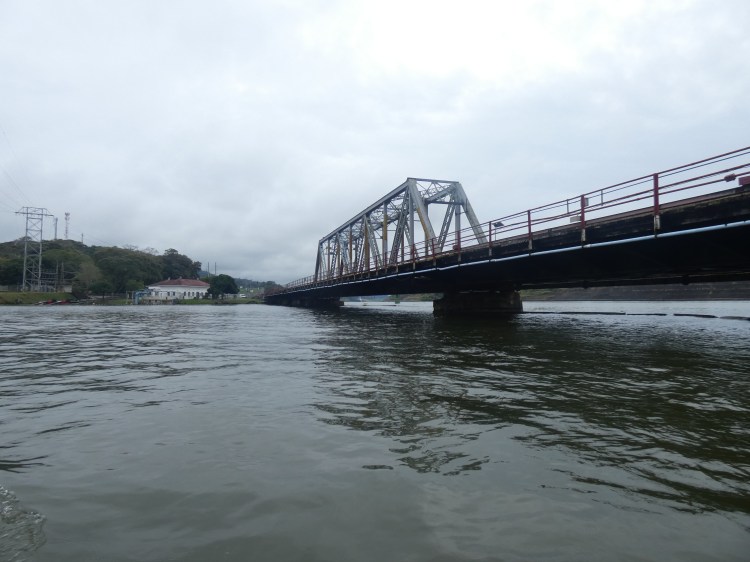
Old Gamboa Bridge

Eduardo, our driver arrived at 8.15am on Saturday 30 December for our journey to Jungle Land, where we will spend two days at the lodge. Following a couple of more pickups from other hotels (generally much younger and fitter guests), we arrived at Gamboa dock at about 9.30am. Matt and other colleagues were there to greet us and so our adventure on the Panama Canal began.

We had an excellent tour guide – very welcoming, informative, confident and witty. I may be a little biased but no one would have guessed it was Matt’s first tour. The tour lasted about 2 hours along the canal and waterways through the jungle. We saw a variety of birds (particularly snail kites), fed capuchin monkeys with peanuts and heard the howler monkeys – these are not aggressive animals but make this loud noise to deter any predators. We travelled onto Lake Gatun, learning a lot about the local trees and plants as we made our way to the Floating Lodge. The sounds and sights of the jungle are amazing and it is incredible how our guides spot the range of creatures camouflaged in the trees.
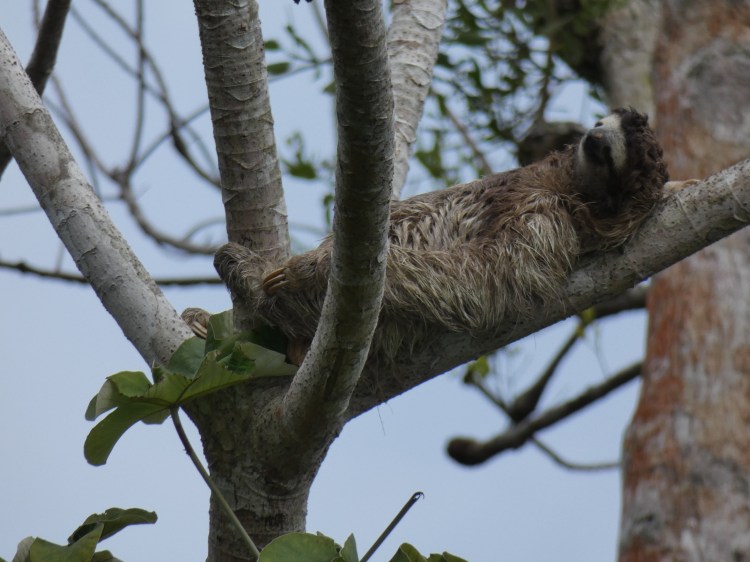
3 toed sloth

To reach the Floating Lodge, you sail through a low, narrow tunnel of trees and vines and then across an open expanse of lake, thickly covered with vegetation on which many jacana birds walk. After feeding a family of tamarin monkeys who live on the island just behind the lodge, we moored at the lodge, an extended barge, our home for the next two days. Our room was spacious, with a large double bed and 4 hanging beds which can be lowered on chains if required, and en-suite facilities. A delicious traditional Panamanian lunch followed – a selection of dishes of beef, chicken, vegetable rice, coleslaw and chicken tamale (cooked and served on the bijao leaf).
After lunch we were introduced to Fluffy, not as cuddly as you might think. With a fixed smile on my face we had our picture taken with Fluffy – a python. I’m not sure who was more shocked, Terry or me. Then it was activity time – fishing for Terry whilst I enjoyed the ride in some lovely sunshine initially, before thunder and torrential rain arrived. Drenched again but at least Terry did catch one fish – an Oscar (a local fish, not an award!). Kayaking next – a daunting prospect as the last time for me was on the Dordogne and over 20 years ago! We had a private tour along a narrow, reed-lined waterway to the waterfall with Matt leading the way as our guide and Terry and I following in another kayak. We did surprisingly well – it must be like riding a bike.

The waterfall was beautiful, really gushing but muddy from the significant rainfall –  thankfully too much water to climb and jump off for a swim as would usually be suggested to guests! However we did walk from the kayaks to the waterfall – I’m so glad we invested in our water shoes and don’t know how Matt goes barefoot. On our return further guests had arrived. After some time relaxing, dinner followed and then we were off on the night tour led by James and Emily, two British biologists carrying out a 6 month research project. We looked for crocodiles, the torch reflecting on their eyes on the surface of the water but sadly no close encounters for us this time. We sailed onto the Panama Canal in darkness (lights are not allowed for navigational reasons), and something that very few people do. We then returned to the lodge for a night-cap (help yourself!) and to meet Mia, a night monkey, that lives on the lodge. We retired to bed about 11pm after a busy day, tired but not aching yet!

The next morning I decided to join other guests on the hike in the jungle before breakfast so up at 6am (even forgot the make-up!) to set sail to another island. We hiked for just over an hour, most of it fine though I nearly slipped and twisted my knee going across a stream. Fortunately with help I managed to stay on my feet with no lasting injuries or hurt pride. Apart from the terrain, we had to keep an eye out for venomous snakes and ensure not to hold onto the trunks of the Black Palm tree which has long spikes on it to stop any creatures climbing and destroying it. We saw lots of flora and fauna, including an endangered flower which traps and kills creatures, then benefitting from the nutrients. Following a very welcome breakfast of bacon, scrambled eggs and pancakes we went on the monkey tour, seeing a range of animals, including Pablo (an old and lonely capuchin monkey who had been exiled because of aggressive behaviour), a sloth and many birds. We returned to the lodge for another delicious Panamanian lunch – they certainly feed you well and all drinks, including alcohol, are free for resident guests.
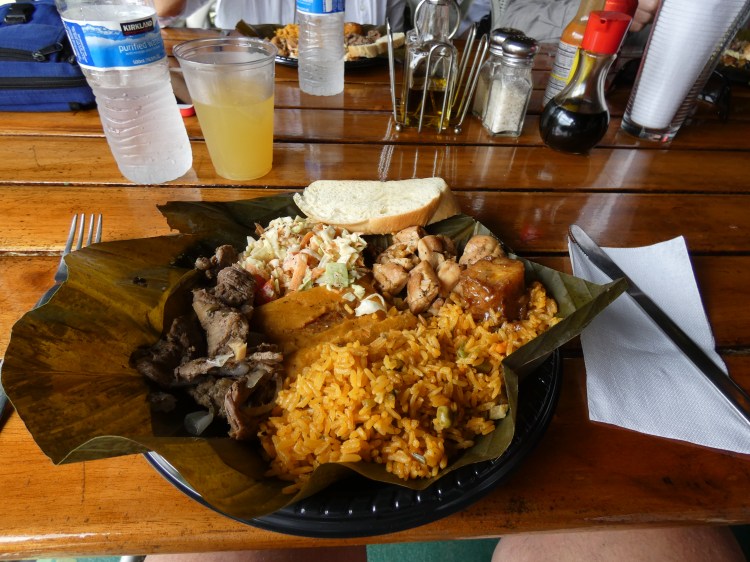
Food

Carl, the owner arrived with another group of day guests. Carl is an interesting and out-going character – a self-confessed “red neck from Missouri” although thought to be originally from Canada. He’s had a variety of careers, including working on ships and scuba diving before setting up the lodge approximately 16 years ago, following a heavy session one weekend and watching a programme on TV (Carl’s words). The business started as a barge offering day tours on the canal and once established, Carl moored the barge in its current location, clearing some of the jungle and gradually extending its facilities. Still further developments are planned to enable 80+ day guests at a time. Our 3.15pm departure soon came round and we set sail for Gamboa docks and our return to the city. Matt had the rest of the holiday with us to explore Panama – brilliant.

1 January 2018 – happy new year to all family and friends. After robust negotiations from $18 down to $8, we jumped into a taxi to take us to Casco Viejo – the old town. To our surprise and amusement the taxi driver then got out to jump start the car! We arrived safely at Casco Viejo and enjoyed meandering through the narrow, quiet streets of the old town – quite a mixture of affluence and poverty, typical of an up-and-coming tourist area with some very elegant houses/apartments and others in a state of disrepair and no roofs. Inside the Iglesia de San Jose (Church of St Joseph) is the famous Golden Altar, which is made of carved wood and covered in gold flake. When English pirate Henry Morgan attacked the city, the Jesuits painted the altar black to hide the gold. The pirates left it alone, thinking it was worthless. In addition we were delighted to see a huge and amazing model depicting the different events of the nativity story – a hidden gem in a side area.

Given Matt’s hunger pangs, Terry researched somewhere that was open for a late breakfast/lunch – as with any city there is a wide range of food to choose from but surprisingly few traditional Panamanian restaurants. During our stay we have enjoyed a variety of food including fajitas and ribs, ceviche corvina (raw bass cured with lime juice), sancocho (a Panamanian chicken based soup with coriander and yuca), Italian food and of course, a curry at Sabor de la India (Flavour of India) just 400 metres up the road.
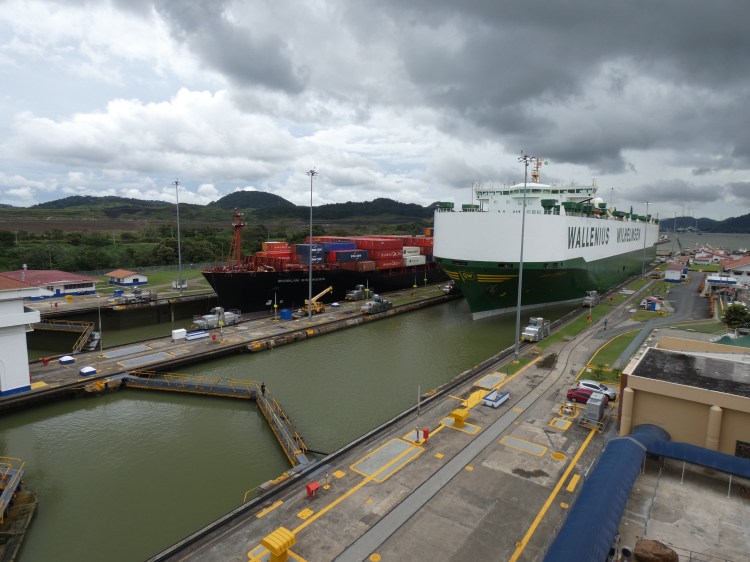
Miraflores

Having sailed on the Panama Canal and surrounding waterways in the small Jungle Land boat, our next trip was to the Miraflores Lock and Panama Canal Museum. This tour with introductory film and exhibition was excellent and the transit of two ships through the canal was fascinating to watch – a must for any tourist. Unfortunately each afternoon it seems to rain in Panama City flooding the roads again, but it is really warm and everyone wears shorts and T shirts. I decided to try and find a waterproof jacket that I could pack into my bag. Unbelievably, and despite the torrential rain experienced, there were none to be found except in a specialist outdoor store. However I was not prepared to pay £80+ even if this was with 50% off. So another holiday umbrella was purchased, useful as it was raining again!

Up at 6.30 for an early breakfast before a day trip to Isla Taboga on the 9.30am Taboga Express ferry. The fast ferry across was really comfortable, with beer and soft drinks available. As it was low tide on arrival the ramp from the dock to the pier was very steep and a daunting prospect but fortunately quite easy to climb.

Taboga is a laid back, unspoilt island. Taxis to hotels are 4×4 trucks eg Mitsubishi camionetas with kids and luggage loaded into the back, or golf carts. We wandered down to the next beach and then made our way into the town in search of a coffee whilst Matt negotiated a tour of the island. The taxi, a Toyota truck, picked us up for a trip to the top of the island (about 5km each way). We now understand why the taxis are all 4×4 trucks as the road was just a very rugged track – Matt standing in the back held on tight! The view was brilliant and it was certainly worth the money. Our visit ended with a meal at Calaloo, a local cafe before returning on the 5pm ferry.
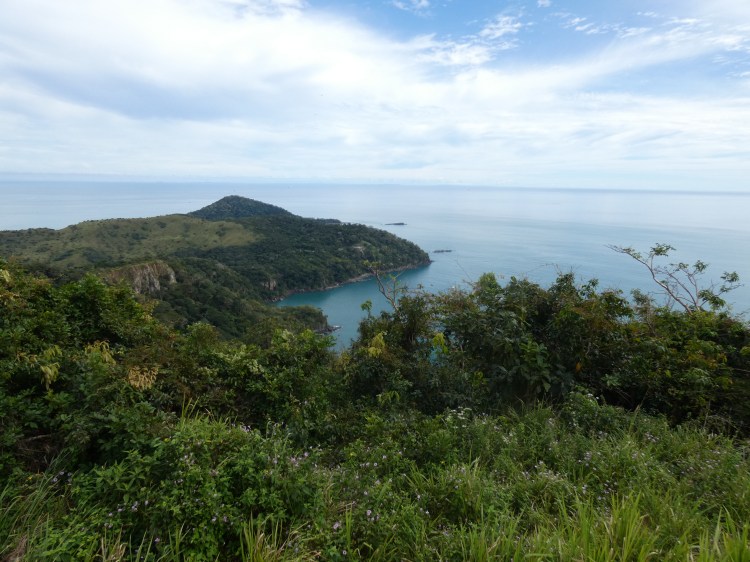
taboga view

The next day we enjoyed a hearty breakfast (omelettes really good with extras from the hot selection) before leaving via the ‘post office’ for El Valle de Anton, a town nestled in the crater of a volcano. There are no post boxes in Panama and any letters/parcels are ‘posted’ at an office where stamps and delivery can be purchased.

We arrived at El Valle, a busy and deceptively large town around the main ‘high street’. We stayed for two nights at Villa Sarahlouna in a very cosy ‘bungalow’ (one room) with private bathroom across the path! Matt stayed at the Bodhi hostel, only 50 metres away and next door to the pizzeria also owned by Villa Sarahlouna. Once settled into our accommodation we wandered into town, checked out the market and enjoyed a few beers whilst watching local life and taking bets when a power-cut might end. Although expected at 4pm, Panama time can be very different – it was eventually nearer 6 pm and Matt won the bet. It was interesting to see the Police presence which we understand from Matt is usual in tourist areas to give reassurance rather than because of any problems. However the officers on motorbikes, in their black gear and carrying guns, did look very sinister. Supper followed – pizza of course cooked by Ricci, our French landlord!

Following an interesting night with unwanted ‘guests’ in our room and trips to the bathroom, we woke to a grey, misty but dry morning. After a cup of questionable tea and coffee in a local cafe, we drove up to see Chorro El Macho. To reach this waterfall we walked across suspension bridges through the rainforest. This was a beautiful walk and the waterfall was full given the torrential rain overnight. We travelled on to the viewpoint but unfortunately there was no prospect of any view. On the way back Matt and I did walk (despite the rain) to see the Piedra Pintada (painted rock). This meaning of the pre-Columbian petroglyph (more a rock face) can’t be decoded yet – some locals say it is a map for traders, other say it is a map of caves connecting the mountain range.

Such tourist sights appear family-run (possibly by the families who live in the dwellings nearby), although formal hand-written records are kept with your name and nationality, and as noted at the information centre. After chatting in Spanish to a young boy for a few minutes Matt was asked for a tip – that cut the conversation short. Then as we returned to the car another older lad (possibly the boy’s brother) asked for a tip for watching the car for us. He didn’t know which was our car or that Terry was in it – no tip for him today!
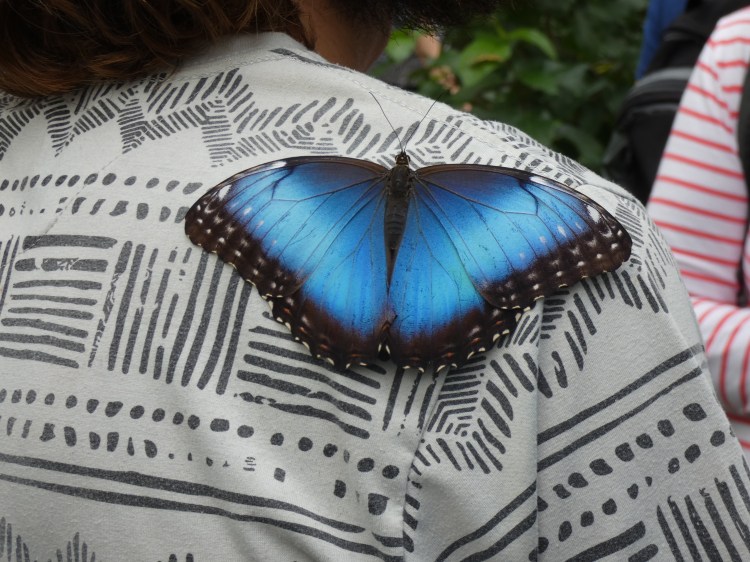
Morpho azul.JPG

Following lunch in Bruschetta restaurant (the majority of restaurants in El Valle are Italian or Chinese but serve a variety of food) we visited the butterfly haven – there were over 200+ butterflies in the enclosure, many different species, colours and sizes which often alighted on you and certainly seemed to like Matt. All really fascinating, informative and enjoyable. Next a trip to the Orchid centre – this is run by a non-profit organisation which dedicates itself to the task of cultivating and conserving endangered local and regional orchids. Our guide showed us a few miniature orchids and then we explored the gardens. Although according to their information 147 different kinds of orchids can be seen, it must be the wrong time of year to visit as unfortunately we saw only a few in bloom.

Next morning all showered, packed and ready to go by 9am but first stop, Bruschetta for coffee – a lovely cappuccino for me and café negra (our Spanish is improving) for Terry and Matt. Matt and I then visited the museum – very interesting history of the area with many ceramic, religious and cooking artefacts as well as mineral stones and fossils. The adjacent Church of San Jose had another beautiful altar and nativity scene though much smaller than the one seen previously. We wandered through the town to meet Terry at the market. After making a few purchases we decided to have breakfast at Dona Nella, a Peruvian and Panamanian restaurant – this turned out to be more like lunch with a selection of rice, lentils and meats. This was such good value – $4.50 for mine and Matt’s, and Terry’s a little more! We then walked on via more local shops – all prices are the same which in some ways is good but no bartering for Terry even though he tried.

Now 7th January and back in the city, our time in Panama is going so quickly. Following breakfast for Matt and I (beef fajitas with tortilla asado (small maize pancakes) and sautéed vegetables), and just coffee for Terry, we drove along the Amador Causeway to Isla Flamenco resort and marina. This is still under development and very much for tourists with overpriced gift shops and a duty-free shop for cruise passengers. We returned to the apartment via the supermarket with supplies to make sandwiches for our trip to Sans Blas islands – no breakfast as another early start.

San Blas Island.JPG

Our transport arrived at 5.40am for the day trip to Sans Blas islands. After the driver’s initial shock at the size of Terry, Matt and I got right into the back of the 4×4 and Terry squeezed in with 2 girls, the front seat was already taken by another tourist. We made good time to Carti, travelling past Pachamama Gypsy Lodge and the farm where Matt worked – both these are remote places on a very poor road. Terry was really glad not to be driving – he could take pictures of the amazing scenery whilst also ‘enjoying’ the bumpy ride! We arrived at the port of Carti, having passed through the police control where passports had to be shown into Guna Yala. At the port we had to pay ‘the Boss’ in cash for the trip and then the Port tax ($2 each). Once paid we went through the gate where passport details were noted down and embarked on Kuna Sea Xpress, an open sided motor launch to the islands.

There are over 365 islands, varying in sizes and facilities, and many not developed at all. Following a brief stop at an island to pick up supplies of ice and coke, we moored at Isla Pelicano, a small, beautiful island with white sand, palm trees and wooden shacks – a stereotypical paradise island.  The water was not as warm as I expected and the waves were surprisingly strong. So having declined Matt’s help, I was knocked over by the waves and made a dramatic entrance into the water on my bum. After our swim, there was free rum and coke available with tortillas and salsa dip. We stayed there for approx. 2 hours before going to a natural lake – standing in this shallow pool in the middle of the sea is just such a bizarre, but lovely experience. However as I’m not a water baby it was not easy for me to get into the lake from the boat, and even harder (and totally inelegant) trying to get back into the boat – Matt swam under me so I was sitting on his shoulders and then able to clamber into the boat. Whilst in the natural lake Terry and Matt held a starfish, such a beautiful sight and a vivid orange in colour in the water.

Once all guests had returned to the boat, we moved onto Isla Diablo for lunch – a whole fish with rice and salad. I managed to eat this, although not as much of it as Matt, who even tried the head and eyes. This was followed by coco loco – a fresh coconut with rum added through a hole in the top. Fun to try and the fresh coconut was delicious. Last stop Isla Wailidup where Terry and Matt went swimming again and saw another starfish, the suckers sticking to Matt’s hand. We finally set sail for Carti and then homeward bound, Terry in the front seat this time. Although very briefly and at a distance, it was so good to see some of the places where Matt has worked on his journey through Central America. This was a brilliant day – beautiful scenery, lots of warm sunshine and rounded off with a curry. Happy days.
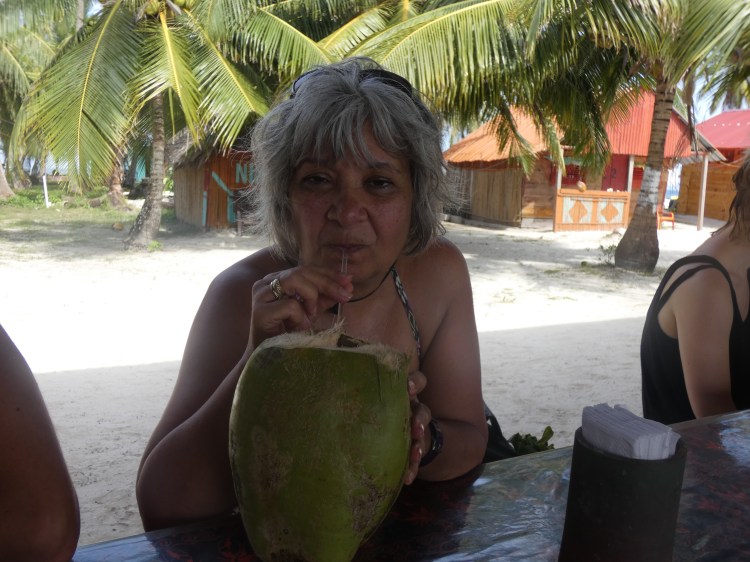
Coco Loco.JPG

Martyrs’ Day, a Panamanian Day of national mourning, is on 9 January and commemorates the 1964 riots over sovereignty of the Panama Canal Zone. The riot started after a Panamanian flag was torn and led to 22 Panamanian students and four U.S. soldiers being killed during a conflict with Canal Zone Police officers and Canal Zone residents. The incident is thought to be a significant factor in the U.S. decision to transfer control of the Canal Zone to Panama through the 1977 Torrijos-Carter Treaties, and finally completed in 1999.

After breakfast we visited the artisans market where Matt bought Terry a Panama hat that fits him! Also after much searching and negotiating I have a woven bag for the beach – a good price in the end but hard work for Matt. Refreshments needed so mojitos and a pina colada bought from a stall outside the market – certainly beats our burger vans. On return to the apartment, my bag was christened when we took supplies with us to relax by the pool and watch the sunset. We took our first drinks with us in the lift and were advised by other guests that no alcohol is on sale today, not even in restaurants – we are allowed to drink though! It was lovely sitting there in the fresh air with a very different view of residential buildings (though some derelict) rather than city skyscrapers, and looking west towards Ancon Hill where the Panamanian flag flew at half-mast. Following dinner in the restaurant we enjoyed our last evening together with Matt – bubbles and gin all gone by the end of the evening.

10 January – our last day with Matt. After another trip to the Artisans market to purchase a ‘supplies’ bag for Terry, we took the scenic route back along the causeway for the last time. There were 3 more cruise ships, Azamara and 2 other smaller ships, anchored in the bay, with tenders back and forth from the ships. It is such a lovely view across the bay to see the skyline of Panama City and it was certainly busy in the restaurants and bars. On our return to the apartment we decided to walk to two nearby restaurants for lunch, both of which had excellent reviews. Tinajas restaurant, a Panamanian restaurant was surprisingly large and plush inside and as the menu looked good we decided to go for it. It was a lovely meal and a fitting end to our time with Matt.

Sadly it was time to pack, particularly the case with Matt’s present for Dean which was secured with luggage belts and cling film on the outside. Matt completed his packing – it’s amazing how much can be squeezed into a rucksack, albeit a large one, and his hammock bag. Matt’s hammock (made to order in Rastafarian colours in Mexico) is absolutely beautiful. However his new mosquito net with 5 ft poles proved a little tricky to pack, but I’m sure Matt will work something out for the future.
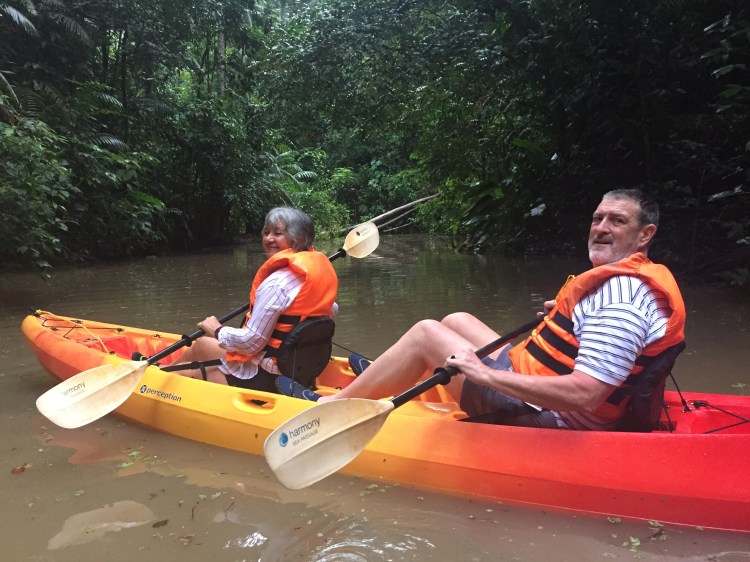
Kayak.jpg

Time to say goodbye – this was so hard. Matt will return to Jungle Land and plans to stay there probably until April, at which time he hopes to get his transport by boat to Colombia, as agreed whilst working at Pachamama. Then Matt will make his way through Ecuador to Chile (where he hopes to work and snowboard), and on to Patagonia (this bridges Chile and Argentina). A long way to go and who knows where next……..

Following our 4.30am alarm, our journey to the airport took less than 30 mins, even with one detour. However check-in for our 7.40am flight to Houston was not so straightforward as our clever wrapping of Dean’s present was not acceptable for hold luggage and had to be removed. Fortunately there were no problems through security and it was allowed as additional hand luggage. On arrival at Houston, we revisited Ruby’s Diner for a burger and chilli cheese fries. Sadly that’s when our difficulties began leading to long delays due to thunderstorms affecting the incoming flights. Having eventually boarded our plane, we left Houston nearly 8 hours later, facing a 9 hour flight but pleased to be on our way at last.

Our thanks to Matt for an amazing adventure and for his patience with the old folks when the spirit was willing but the body struggled – I still can’t believe what we have done and seen in this short holiday with him. Panama is a beautiful and diverse country with much to offer as a holiday destination. It has been really special to share this time with Matt with many memories to cherish until we meet again.

Matt, we are so proud of you and love you so very much. Farewell intrepid explorer – stay safe, follow your dreams and be happy.


Thanks Mum for saving me lots of writing. Now the olds have gone, I have returned to Jungle Land to continue working. My day, if fully booked and busy can consist of this:

Up at 6am to organise guests for a hike through the jungle from one side of an island to the other. Then the day tour begins which involves a boat journey along the Panama Canal and past all the dredging machinery and boats. Then the boat heads to lots of small islands that inhabit 3 different types of monkeys, sloths, iguanas, crocodile, lots of birds of many forms and many other animals on top of that. These are just the ones you can almost guarantee seeing on a daily basis. After Lunch, I can go kayaking and jump of a small water into normally crystal clean spring water. In the afternoon I may have to SUP around some of the islands or could go fishing with guests. After dinner, we go on the night surfari and try to spot animals at night, including caiman and crocodiles. The other day I caught my first one and brought it onto the boat for the customers to see before throwing it back. To catch them you have to be quick and don’t hesitate otherwise it could take off a finger with one bite. It was about 80cm long so only a baby, but even at that size, it still has a lot of strength throughout its body.

If we do not have any customers then it is a pretty nice place to relax. We are fed very well and the rooms are nice too. On top of that, it is a free bar every day for staff and Carl has no qualms about you indulging in a few too many every now and then. So this is where I will be for the rest of the busy season or until the end of April. That is unless I get eaten by a croc or get fired, but hopefully neither of them happen.
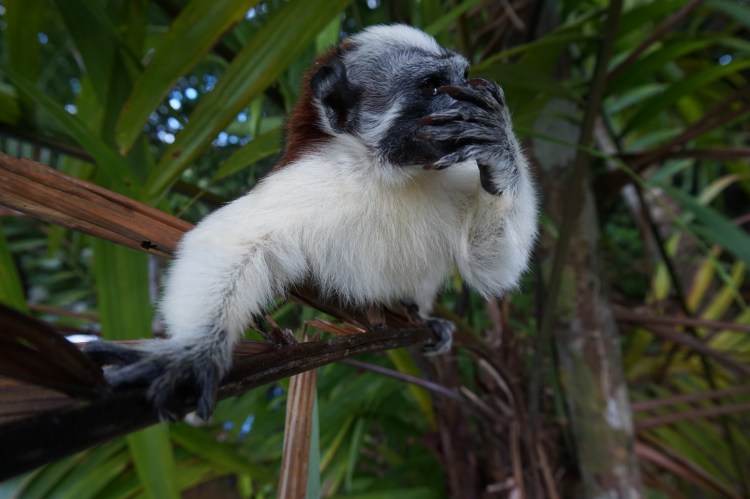
Tamarin.JPG

Thank you once again Mum for writing your piece and thank you Dad for the photo accompanying it. Miss you guys already, as well as everyone else back home. Hope all is well and I will speak to you again soon. Hasta luego
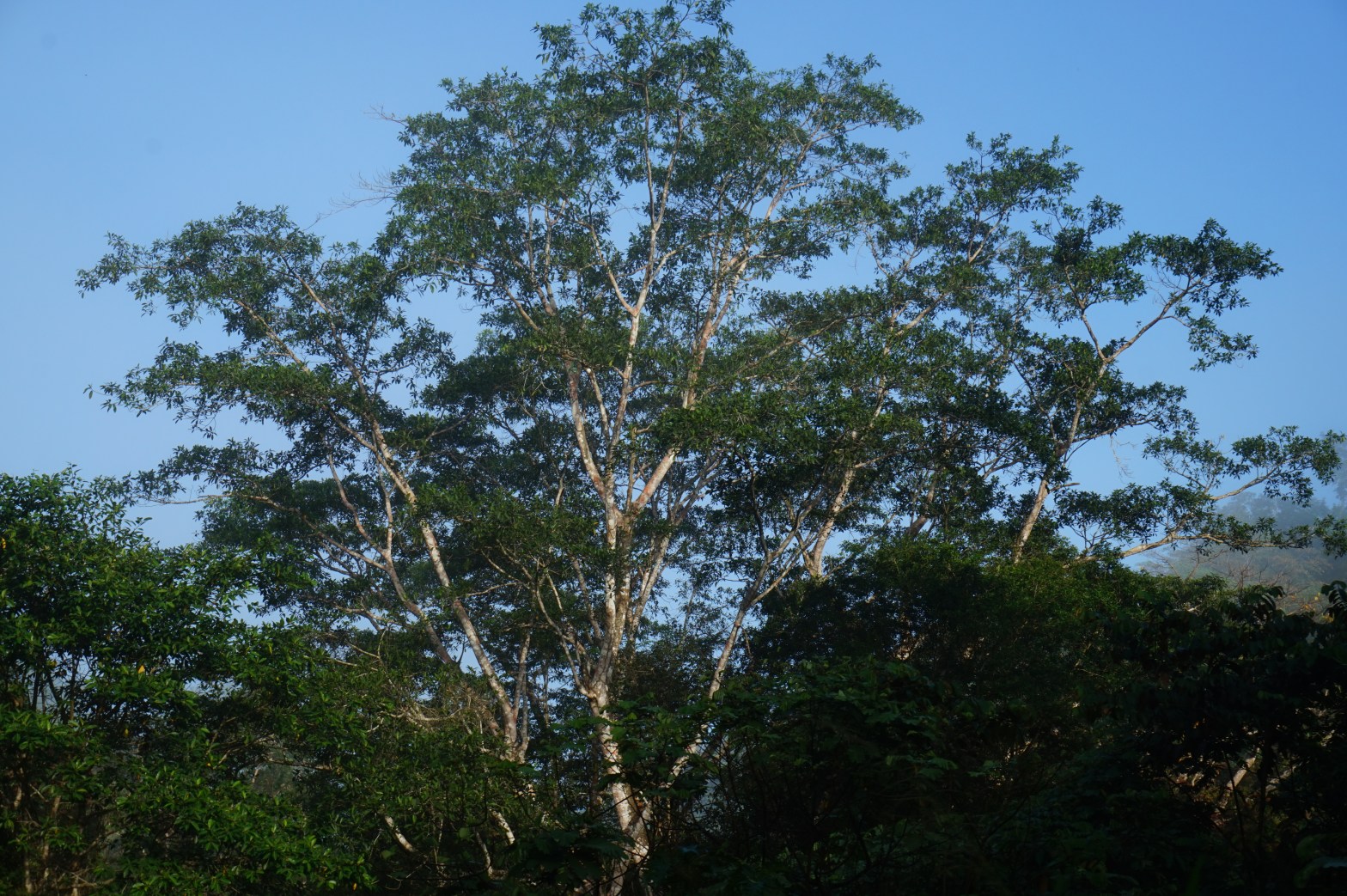
Un Año Hoy!

It has been a long time since the last time I wrote something but I feel now is a suitable moment to write something. One year ago today, I left England for Mexico with a girlfriend and a backpack full of things I didn’t need. One year later and I am waiting in Panama for a boat to Colombia, now travelling solo, but still with a backpack full of stuff I don’t need. Over that year, Central America and Mexico have introduced me to many friends from many different countries and shown me many a sight to see. I have visited many places that simply take your breath away, I have been graced with the company of many exotic and sometimes bizarre animals and I have had the pleasure of watching nature’s great performances on multiple occasions.

The year has been amazing and to bring you to this point in time, I need to go back 6 months and back to Nicaragua. I was staying at Chocolate beach and I continued to stay there a little while longer. In fact, I overstayed my Visa by a week with the risk of a small fine, but they didn’t even notice at the border. Getting into Costa Rica is not the easiest of tasks to complete. They want to see proof of an exit ticket so they know that you will be leaving their country. There are a lot of people who don’t know when they will leave the country and will leave the country by foot so a ticket is an unnecessary purchase.

This is where my problems with Costa Rica began. It would cost me $25 dollars, as the cheapest option, to buy an exit ticket at the border. Even though I will never use it, there was no other option there and then so I had to pay the money. Costa Rica is a country that is based on tourism and because of this, you have to pay entrance fees to lots of areas of outstanding natural beauty. It is a country out of my budget and therefore I didn’t want to spend too much time there.

I did find a cheap hostal at a beach called Playa Avellenas, a reasonably quiet location with decent waves. The hostal was cheap to stay but there was only one shop nearby and that was overpriced. This meant it was hard to eat even basic food cheaply and my daily expenditure was way too much. But the location was beautiful. The hostal itself was not on the beach, but about a 5 minute walk away. You had to pass through an American resort and once you passed the area with buildings, you entered onto a wooden walkway that passed through a forest of dead trees in a shallow lake. Once you came out the other side of the creepy tree cemetery, you were on the beach and waves were there.

Avellenas walk.JPG

I had one of my most beautiful surf sessions on this beach, try to imagine if you can. It was a perfect day for waves, the correct size to function well for this beach and a good size for me to improve on. I was surfing with the guys from the hostal and everyone was catching lots of good waves. The sun was beginning to set in the distance over the horizon of the Pacific Ocean. The sunset painted the sky with a variety of reds, yellows, pinks, oranges and many more. The clouds that were forming helped make the sky, and the distorted reflection on the almost glassy ocean a sight to see by itself. But if you turned your head the other way, and looked over the land, an almighty storm was taking place. As the light began to fade the constant lightning strikes illuminated the sky with colours of blue, purple, green and many other shades. With the storm mixing with the colours of the sunset, it was one of those moments where you just have to stop and say wow.

After spending a bit of time here surfing, I headed to the Costa Rican border with Panama. I spent the whole day travelling and was ready to cross into Panama the following day. I saw the majority of Costa Rica through a bus window so maybe I will return one day when I have a bit more cash to burn. I was heading towards Boca’s del Toro to meet up with Alex who was already there. But first I had to cross the border which was just as hard as the previous one. I need proof of a follow-on journey, which I didn’t have again and spent a long time arguing with migration. After convincing them that I would leave the country eventually, they requested to see proof of funds in my bank account. This meant I had to find internet nearby, pay for it and access my bank account to take a picture. Eventually, they let me pass and I was on my way.

Boca’s Del Toro is a province in Panama in the north of its Atlantic coast that is known more for its vast selection of beautiful islands. I went there to speak with Alex but I had ruined any chance of us getting back together. It was a good idea for me to leave Boca’s fairly soon as Alex was looking to find some work there. I have spoken to her recently and she managed to get commissioned to paint 25 paintings for a new hotel. The money she will earn is good enough to help her continue to travel for a bit longer and that is all she ever wanted.

Las Lajas.JPG

So I left Boca’s and headed across the country to the Pacific coast to search for more waves. I first went to Las Lajas, a remote beach with empty American resorts and one cheap hostal. I stayed there for a little bit but spent most of the time eating, surfing or waiting to surf. I took the opportunity of having spare time and started to look at ways to earn some money whilst travelling. There is a site which is a platform for finding work whilst on the move and you only need a laptop. I looked originally for the jobs without skills like data entry but the pay was stupidly low. I then came across writing jobs for web pages and blogs. Only having experience with this here, I didn’t really know what I was doing.

Within a few days, I had an offer to write a test article for someone and for some absurd reason, they liked it. After that, I wrote 3 articles regarding HVAC (Heating, Ventilation and Air Conditioning) averaging 500 words each and got paid $10 for the set. I also got a decent review and continued to write for this person but away from the website. With the review, I was able to get other work offered to me and eventually I had too many articles to write and not enough time or desire to write them. Apart from writing 60 plus different articles regarding the same HVAC Company, in the 15th worst city in America, I have also had a variety of topics with other people. These range from leg work out exercises to exotic kitten breeds, and from Catholic wedding presents to low protein dog diets.

As easy as it became, it also became too time-consuming and was affecting the freedom I had through travelling. Rather than stop, I attempted to find people who would do all the work for me. I was trying to employ writers to write my articles and I would pay them considerably less than I was being paid. That was my problem I think, the standard of writing was poor and it was often plagiarised, sometimes from my articles! I did manage to get a few test articles from other people which I could alter and use so it wasn’t all in vain. By now I had left Las Lajas behind and had moved on to Playa Venao, where I stayed for over a month.

VC Cueva

Playa Venao is a sheltered cove that probably takes about an hour to walk from one headland to the other. There are 4-5 spots where you can get waves depending on the conditions of the day. The view from the beach is beautiful wherever you look and behind the beach is a little bit of jungle. There are monkeys living here too and a walk in the jungle meant we were able to say hello. I had the pleasure of chilling with 30-40, maybe more, monkeys as they came to see what we were doing. I don’t know if it is my face but yet again, a monkey showed me his balls on purpose and then proceeded to throw fruit at me. There is also wildlife prevalent in the ocean too with huge tuna often joining in on the fun whilst you are taking a wave.

Playa Venao is an up and coming beach with lots of investment into it. It is busy sometimes but it is also a little remote and therefore it has only one shop. Yet again, when there is only one shop, they can capitalise on this and charge extortionate prices. Fortunately, there is a fruit and veg truck 3 times a week that comes to the hostal and that is very cheap. I kept trying to leave Venao but every week a new set of waves were due to arrive meaning that I had to stay a bit longer. I was also lucky in the fact that a friend was leaving for a few weeks before returning so I could use his surfboard and save the money I would have spent on renting one.

VC wave

This beach was another place where I had one of my best surf sessions too. A group of us were walking back from a party hostal at 3am from the other end of the beach. All of us were ‘slightly’ drunk and that is when I suggested it would be a good idea to go for a surf. The sky was relatively clear, the moon was at its fullest and the tide was at the optimum level for good wave. A few were easy to convince, others waited to see what happened first but eventually joined in. Whilst in the water, it was bright enough to see a black wall coming towards you and when it got closer you had to decide quickly if you wanted to take it. I did this 5 times in a row and had 5 of the best rides I have had. The sea was like glass and the waves were consistently perfect for me. After 5 waves in 5 attempts without 5 seconds rest, things slowed down a little bit. This enabled time to play with the plankton. Because the moon was full, the plankton was a little bit harder to see, but whilst you were swimming through the water, a trail of blue flickers was left in your wake. The experience as a whole was possibly enhanced by the alcohol but was incredible to witness.

Having spent its course, it was time to move on from the beach and hit the jungle. I had found a place to volunteer, Pachamama, a jungle community of travellers and volunteers. Located on the road that leads to the San Blas, it is surrounded by jungle and nature. The San Blas Islands are the main passing point for people who don’t wish to take a plane between Panama and Colombia. You pay something like $550 for the 5-day boat journey to Cartegena, Colombia, from Panama and that is too much money for me. So that is why I am currently where I am. Pachamama’s owner has a boat that does the journey to Cartegena and can arrange your journey if there is space on the boat. If you volunteer with them for 7 weeks and put in a suitable amount of effort, this journey is then free of charge.


The volunteering here is the same format as most of the other places, especially the places that are in remote locations and far from any shops. They provide you with a bed to sleep in, or a hammock if you desire. Food for breakfast, lunch and dinner is supplied every day, and cooked by the volunteers. There are about 12 of us here in total, sometimes more, so you nominate yourself if you want to cook. The food is fairly basic but always really nice. Fruit and veg is used from the garden and pasta, rice and lentils are bought in. There are a lot of fruits here so most dishes are something revolving around whatever fruit there is an abundance of for that week. I am certainly having to broaden my tastes otherwise I would have to go hungry, or be a monumental pain in the arse.

Waterfall Mystica

Of all of the volunteers here when I arrived, there is 1 Englishman (me), a French dude, a Polish girl, an Italian girl and I think the rest are Argentinian. Some people have been here for well over 6 months and everybody is like a family, to which I have been welcomed. It is a really happy atmosphere all the time and even the work is relaxed and slow. You have breakfast in the morning, chill for a bit then work 3 hours at a leisurely pace. This is now time for lunch which is followed by more relaxing time for an hour or so, and then back to work for maybe 3 hours. There are jobs that need doing every day and you nominate yourself for these. These consist of feeding the pigs, ducks and dogs, cleaning and recycling, and all the cooking duties. If you don’t have one of the necessary duties, then you may have another random task given to you or you can work on your personal project. The good thing about the majority of the people here being Argentinian is that everything is in Spanish. My Spanish has got worse lately so I need to improve it. Here is perfect for that and I can also help the others with their English.

After a couple of days at Pachamama, the owner needed lots of volunteers to help at his other property on Lago Bayano. The majority of us headed off to the lake the next day which involves driving 30 mins to the port where the boat arrives. Then you wind your way through the islands that inhabit the lake for about 40 mins and you arrive at the property, situated on a big Island. The place is basically 4-5 hectares of very fertile land and a house. The house has solar panels which provide power for lights, and power to a USB port so you can charge your phone. That is the only electric that is here so the place is very remote and cut off from the world. The idea is that the lake property will be a food bank for the other property because the soil is so fertile.

PachaLago


The lake is huge and has many dead trees scattered across it. These trees are slowly rotting and therefore providing nutrients into the surrounding land. It also means that the water is not the cleanest to swim in and can cause infections because of the bacteria. The view from the property was amazing. You could see the lake in front with the mountains in the distance on the other side of the lake. Pretty much every night, there would be a thunderstorm above these mountains creating a spectacular visual effect. I slept in my hammock under the roof in front of the house and would wake up with the sun every morning. It was also nice to take a kayak out into the lake and witness the sunrise from there.

As everyone started to head back to the other property, I wanted to stay at the lake. Most volunteers stay at the lake for only a week as it is not an easy life. You have to find your food and if the trees and plants are not providing, then you may have to catch your food from the lake. There was nowhere to buy food and the boat was only available for transport to and from the port, and for fishing. There was a copious amount of Tilapia living in the near the banks of the lake and this was the fish we wanted. On a good day, we could cast the net and when we returned later there could be 6 or 7 Tilapia. I learned to fish with the two brothers who worked there as well as learning many other things. Nelson, 22, and Nestor, 17, were brothers of Juan who worked at Pachamama before it even existed and he helped build the place. They are from the remote parts of Chiriquí and although they are from Panama, they are from a tribe called Ngobe-Bugle and speak a different language completely.

These guys work hard and with power, especially when using their tool for everything, the machete. A lot of the work at the lake involved cutting grass but with no electricity, there is no mechanical aid. The grass was also too tough for machinery to cut so it had to be chopped with a machete. Once you cut it, it grows back within 2-3 weeks because of the soil’s fertility, so it is a continuous process. The work generally involves physical labour and a machete but it is not too strenuous. It is very hot and hard to work in that heat so you tend to take a lot of water breaks and work very relaxed. In the evening, you generally are pretty tired and there is not a lot to do other than prepare food.

Nestor Machete

If the food is a little scarce and the Tilapia aren’t swimming into the net, you can go hunt Cayman in the lake. I am not sure if they are actually Cayman Crocodiles or it is just what they call it here. The technique is to go in pairs in the double kayak. It has to be at night as they are more active then, and it is easier to spot them. With a head torch, you look out for the reflection of the red eyes of the Cayman. After practice, I can more or less tell the size of the Cayman by the reflection of the light in their eyes, but it is not exact. When we find one big enough to supply meat for us all, but not too big to have wasted meat, the person at the back paddles and directs the kayak towards the Cayman. Very slowly you approach the Cayman and then stop paddling and just drift towards it. If the Cayman does not submerge or decide to leave, you can drift right next to it. This is what you want and when you are next to it, you can see its full size and know if it’s good enough to kill. If all is good, then the person at the front swings the machete with force to the back of the Caymans head and kills it.

I tried 3 or 4 times but was unable to catch one. I swung for one but either didn’t have enough force or it submerged before I could make contact, and then it was gone. The French dude I was with was certifiably nuts. He thought it might be below the water, injured or dead, so he decided to jump in and look for it. When we couldn’t find it we went looking for more. I saw a gargantuan Cayman running across the land in front of us, so we went to look a little closer. Pierre the crazy French man thought it was a good idea to leave the kayak and with the machete, go looking for it on the land. This Cayman was huge and it ran into 3-4 metre high grass, but that didn’t deter Pierre. He went in to look for the Caymans house and unfortunately (or fortunately) only came back with all his limbs intact. Since I left, Nestor managed to catch one and they sent me the photo’s to rub it in.


I had to leave the lake after a couple of weeks to recover from a zombie-making, flesh-eating bacteria that was going around. I had to go to the capital to find medication as all natural remedies had failed. The city was horrible and hell compared to the lake, the complete opposite in fact. I returned to Pachamama to recover whilst I was unable to walk for a week. At the next opportunity I headed back to the lake because although Pachamama is nice, it is a business that has volunteers as clients. They push the party vibe a bit to get people drinking and spending more, which I would rather not do. So I headed back to the tranquil paradise of Lago Bayano. I loved it so much there that I decided to stay on a few more months, possibly until the New Year.

Pachango

I asked if I could work there rather than volunteer as I was going to be there longer. The owner said no originally but then in the following days, he offered me some work. This was where my paradise turned into a hell. I had to return to Pachamama and would work as the manager, helping out the girlfriend of the owner whilst he was away for 3 months. Sparing the details and being bitchy, the mood and atmosphere of the place changed and I was no longer made to feel welcome there. I also found out more things which I morally didn’t agree with and with that, the paradise was no more. I think I lasted a week working there and left one evening because I couldn’t bear to be there anymore. It was a very sad moment as it was a place that meant so much to me and I was heartbroken and left feeling sick. I had been such a happy person and for reasons I don’t know, I was left miserable and angry.


I needed to be happy again so I walked almost 3km down the road before a car gave me a lift. I was heading to a farm in the same jungle just further down the road. This farm was owned by a Panamanian with one worker, another Ngobe-Bugle from Chiriqui. There are 300 hectares of jungle in this farm and he only uses 30 hectares of it for his cows and horses. The farm has no electricity and is very basic. This may sound bad but it is exactly what I want. For me, there is no point being in the jungle if you are surrounded by technology and mechanical noises. It takes away the good things that a jungle provides like the orchestra of animals and insects throughout the day and night.

Albrook

I helped him out for a couple of days and then got a ride to the city so I could surf again. I needed to be relaxing again before I started to work a bit. So I returned to Playa Venao because I have friends there and know the place and waves well. I also managed to buy my first surfboard, which happened to be the same one I was using before. The friend who lent me his board before sold it to a surf shop. I went to the surf shop knowing how much they bought it for and every detail necessary to barter myself a good price, which I got. I started at $70 and she wanted $100, and $100 is cheap for this board. I managed to get it for $75 and will probably be able to sell it for $100 when I don’t need it anymore. So that is where I am now, relaxing and surfing and much happier than before. In a few weeks, I will head back to Costa Rica for a couple of days to renew my Visa for Panama. After that, I will return to the farm in the jungle to work for a few months and then eventually get my boat trip to Colombia, but in the New Year.

Other than a few hiccups along the way and recent events, the year on the road has been an amazing year. I have learned so much in that time and I am keen to keep on learning. Whether it be new skills, life hacks or things about myself, I am constantly learning every day. I look forward to the next year and what it has to offer me. The only plan I have is to see all of the countries in South America and get to Patagonia. Other than that, I take every day as it comes. Hopefully, I will be able to reach Patagonia but I will need to find ways to make some dollar along the way. Maybe street performing with card tricks or other skills I am learning, maybe selling food in the street or maybe something else will come up. It is not something that bothers me as I feel that when I desperately need to find some cash, something will turn up. Worrying only causes you stress and then you are not happy. Here’s a little song I wrote, you might want to sing it note for note. Don’t worry, be happy. In every life we have some trouble, when you worry you make it double. Don’t worry, be happy. Ok so that was actually the lyrics to a Bobby McFerrin song but it makes perfect sense and is how my mind works.

If I continue to write, it will no longer be a year travelling today, it will be yesterday. So with that a bid you farewell and apologise for taking so long to keep you updated with what’s been happening. You also probably won’t hear from me until the New Year as I will head back to the jungle to live without electricity. So Merry Christmas, Happy New Year and lots of love to you all x


Seeing more of Nicaragua

Bags packed and ready to move onto Playa San Diego, I awaited the arrival of the captain of the boat to arrive. The meet time was 10am but, as with the whole of Central America, it was bound to be a bit later than that. When he arrived, I said my goodbyes to everyone and helped get the boat off the beach and into the water. The waves were coming in fairly big, reasonably fast and in an unavoidable line, but this didn’t stop the local fisherman. He aimed for a nice part of the wave and gave it some wellie. We flew of the top of the wave and attacked the second one coming in. Once we were clear of the waves, he sped off out to sea.

Clear of the coast and heading south towards Playa San Diego, the captain slows the engine and comes to a stop. Suddenly he says it is too far to go for the money he is paid and asks for $20 more money. After 20 minutes of discussions about why he wants to change the deal now, we refuse to pay the extra money and he refuses to move the boat. The only other option is for him to take me back to where we came from and this was what ended up happening. We headed back to El Transito and he dropped me off back on the beach. With all the time wasted going out to sea and back, it was too late for me to catch public transport to my next destination so I stayed one more night.

The next day, after much convincing and a little bribe, Niko gave me a lift halfway to Playa San Diego. This made my journey much easier due to the irregularity of the buses and multiple changes I would have to make. I arrived at the hostel approximately 6 months after I had originally planned to arrive as a volunteer. When I arrived there were people everywhere and I couldn’t believe how busy this remote place was. I found out later that night that there were 3 owners, a local family of 3 who worked there, about 9 volunteers and only 1 guest, an American dude called Jared. For as many people as there was there, the place was still very relaxed. If you wanted even more tranquillity, you could walk 10 minutes down the beach in either direction. There was a humungous, expensive, American resort and golf course 10 minutes away, but it wasn’t busy at all so there were miles of empty beaches to walk. There were surf spots in both directions too, some of which were close and others a maximum walk of 40 minutes away.

Playa San Diego Rock Pool
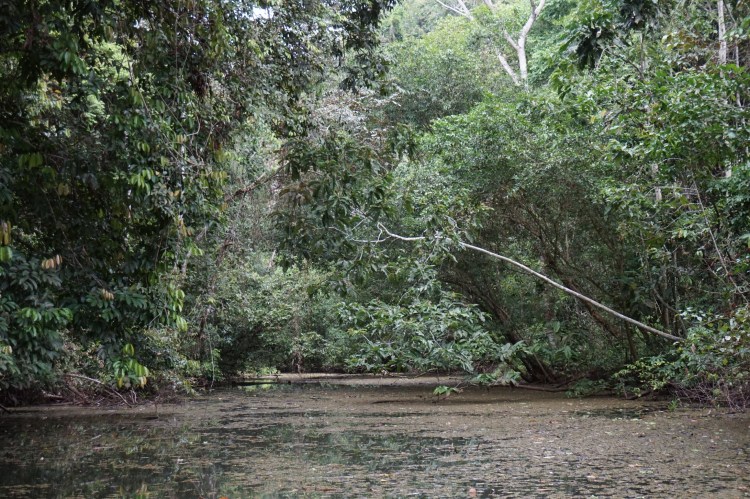
San Diego Rock Pool
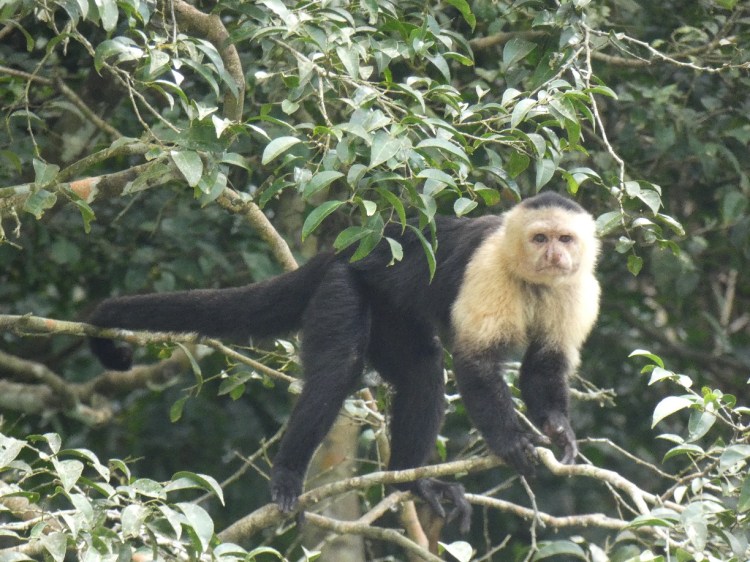
I put my hammock up over-looking the beach and rock pools and slept to the sounds of the ocean every night. During the day, there were waves to surf, which I did badly, and not a lot else to do other than eat, relax and play some cards. During my stay here, we entered into ‘Semana Santa’, a religious week for Easter involving everyone deserting the cities for the beaches to party and get drunk basically. As the week progressed, the beach got busier but it was still a relatively relaxing spot. By now a couple more guests had arrived, including a German girl called Debbie.
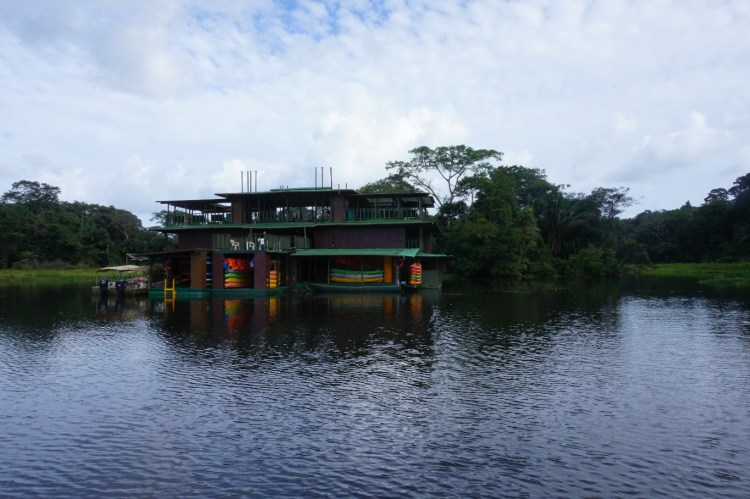
After staying there for about a week, I headed off towards a place called Masaya to visit the surrounding volcanoes and lakes, and Debbie followed not wanting to be the only guest left behind. Due to it being Semana Santa, the city was empty and Vulcan Masaya was closed for the next few days. We managed to catch one of the few modes of transport operating, a lorry with a cage on the back. It took us all the way to the Laguna Apoyo, a lake in the crater of an extinct volcano, with an approximate diameter of 6/7km at its widest point. It was a busy day there but we managed to walk a bit down the beach to find a quieter spot. I had a lovely encounter with a ridiculously drunk local guy called Raphael, who told me his name constantly and how he owned the lake. At one point, whilst he was probably telling me his named or that he owned the lake, Raphael picked up a piece of rock. Due to his proximity it was a reasonably tense moment as to what he was going to do with this rock. He fortunately put it down but then he drunkenly fell towards me and I think he went for a kiss. Whilst avoiding his affectionate lunge, I stood up, grabbed my stuff and thought it was time to move somewhere else. I think Raphael just fell asleep where we left him. We found one of the hostels on the beach and used their facilities and beach and even took a kayak out onto the lake.

Locals in Laguna Apoyo
Laguna Apoyo Crater Lake

As the sun went down, it was time to try and find a way to get back to Masaya and the place was a lot quieter than before. As we got onto the road heading out, the first car that went passed, stopped and a guy we had met earlier whilst out kayaking popped his head out of the window. They were down for the day from the capital city of Managua and offered us a ride home. It was a bit of a squeeze with one driver, someone sitting on someone’s lap in the front, and five of us in the back. The car wasn’t the biggest either but it was better than walking. They took us all the way to a junction just short of Masaya and we managed to get a bus from there back to where we were staying.

The next couple of days were spent perusing the town and checking out the local markets and an area where they make hammocks in their houses. We were waiting for the volcano to re-open after the Easter break and when it did we went up to take a look. Vulcan Masaya is still active with visible lava in the crater, and because of this, you were restricted in how you could see the volcano. During the day it was 100 Cordoba’s ($3.50 roughly) but at night, when it was better to see, it was $10 (300 Cordoba’s). You had to have a car to see it or be on a bus as part as a tour. The tours were fairly expensive and we managed to get a taxi driver to take us for half the price of the tour. His car was a hilariously pimped up Hyundai made to look like it was really fast but in fact it struggled to make it up the volcano. We had to wait up to 1 hour in a queue of cars before they let you inside where the held you again in a queue. They let a certain amount of cars through at a time, who drove up the last kilometre and parked up near the craters edge. You then had 15 minutes to take a look, take a selfie and try not to fall in before they blew a whistle and it was time to leave. I believe the 15 minute limit might be because of the high levels of sulphur in the air or maybe it’s just so everyone can get a chance to see it. The crater was about 20-30 metres deep with liquid magma bubbling at the bottom and a red mist rising into the dark sky. When the whistle blew, our 15 minutes was up and we had to try and find our taxi in the dark. Oh there it was, with the neon disco lights flashing all over the place.

Our Ride up Masaya Volcano

Masaya is fairly small and I had managed to see more or less all of it in the few days I had been there. So this time I followed Debbie to the beach at Popoyo as she only had a couple of days left before she flew home. Apart from the last bus dropping us in the wrong place, the relatively complicated, multiple bus journey went very smoothly and quickly. We countered the bus dropping us in the wrong spot by hitching 2 rides taking us directly to the camp site. We made it there around midday, leaving the afternoon available to check out what the waves are like. After the first wave, and same wave, my board managed to land on my head pretty hard and Debbie managed to cut her stomach with one of the fins on her board.

The campsite was really laid back with really nice owners and a good group of people coming and going. There was toilets, a shower, a basic communal kitchen, surf boards to rent and trees to hang my hammock in. There was also 2 dogs, 3 cats, a horse and a colossal pig. The pig spent most of the day rolling around in the mud or eating the organic waste from the kitchen, but at night, he was running around being a pain in the arse. He ate someone’s dirty washing one night and on another, he decided to roll around on my towel and other belongings covering them all in mud and whatever else he had been rolling in. We were trying to convince Omar, the campsite owner, that we should cook him on the BBQ. He was massive and could have fed us all for over a week, but he was having none of it.

After just under a week, I decided to leave Popoyo and head for the Ometepe, an island formed by two volcanoes joined together in Lake Nicaragua. There was an Italian guy, Dan, who was heading to Ometepe the same day, so we decided to travel together. Surprisingly again, the journey went very smoothly and we made good time getting to Rivas and then to the small port town of San Jorge. This was where we caught the slow, 1 hour ferry across to Ometepe and having made it on to the island, we then had to try and get to the other volcano part of the island which involved 3 buses. We got dropped off by the entrance to the place we had planned to camp and bought some food to cook later on. After walking 20 minutes up the side of the volcano, we made it to Finca Magdelena. They didn’t have a kitchen for communal use which would have made all the food we had bought redundant. Instead we headed off back down the hill to find somewhere else and ended up at what we heard was the only place with a kitchen to cook in.

DSC04355

The Lazy Crab was a Hostel painted the Reggae colours all over and a lot of volunteers again. But this time there were a lot of guests too. In fact it was full but after asking again, they managed to squeeze us in. The first night I struggled to sleep due to the amount of mosquitoes biting me constantly. Even with my mosquito net, which was a bit of a botch job, they just kept finding a way in or biting me through the net. The next day I wanted to find somewhere else where the mosquitoes can’t get me. I found a place called Chocolate Beach which was more relaxed and I could hang my hammock by the water’s edge. I was going to move that night but instead got side tracked by the finding out about the Lyrids meteor shower that was going to happen in the early hours of the next morning. The owner of the Lazy Crab had a farm on a bit of land that stuck out from the island, and he said we could camp there for the night. Due to its remoteness, the sky had less light pollution and it should be a better view.

We met a dutch guy and he joined Dan and I as we set off on the walk towards the farm thinking we should get there before sunset. The walk was much further than expected and we arrived close to the turning off the road just as the darkness started to set in. The directions we were given were  to just walk up this road until you get to a path off the road just after this place, then walk up this track and it’s here. We were lucky to find the track off the road but by the time we were halfway up this track, it was pitch black with no lights other than the stars. We decided to stop and try to find out more info on where it was and how to recognise his farm. It sounded like the place we had stopped by was his farm but in the darkness we were uncertain, so we headed in for a look. We made our way through the bushes and headed towards the trees at the bottom and the water on the other side. Having found a nice little beach, if not the correct one, we decided to sit down and make use of it. The Dutch guy had climbed the larger of the two volcanoes earlier in the day, so he was tired and fell asleep after a couple of hours of getting there. Dan managed to stay up a bit longer but not long enough to see many shooting stars. I saw a fair few of them and even saw the biggest one I had ever seen. We all slept on the beach but woke up fairly early under the heat of the sun and headed back to the hostel.

After breakfast I packed my stuff to head to Chocolate Beach. I went to settle up my bill and realised that I didn’t have to pay anything for the previous night as I didn’t stay there, which was nice. I walked the 30 minutes to Chocolate Beach, a small beach and a chocolate factory making raw organic chocolate with a plethora of flavours and mixtures. It is only small scale production but the place is only 4 months old and looking to grow and develop. For me, it has multiple hammocks and swings, play chilled music all day and is right on the water, so it was perfect.

I arrived at Chocolate Beach and put myself into a hammock to try and catch up on the sleep I missed from the previous night. I woke up just before sunset and watched the sun fall behind the large volcano on the other part of the island. I put my hammock up between the 2 trees closest to the shore, over the volcanic rocks of varying sizes that lead out into the water. The view from there is ridiculous. You are looking at volcanic rocks leading to water with locals fishing in it, a green jungle with monkeys howling, so many different species of birds flying everywhere, the sun setting and the clouded peak atop the silhouette of Vulcan Concepcion looming over the jungle canopy.

DSC04550

After the sunset I went up top with intentions of getting some food. Instead I got into a hammock and fell asleep until midnight. The next day I had planned to climb Vulcan Maderas, the smaller of the volcanoes, with Dan and needed to meet him at the lazy crab by 7am. I did manage to fall asleep again at about 3am and somehow I woke up at 6am ready to get going. We made it to the start of the trail, at Finca Magdelana, and set off around 8am. They encouraged you to take a guide but at a hefty price it was never going to happen. There was only one real path the whole way up and any path that lead off from the main path, joined back up with main path again soon. It wasn’t an easy hike and with the majority of it covered by jungle canopy, it was humid, hot and very sweaty. We made it to the top of the path in under 3 hours, which sat at about 1300 metres, 100 metres short of the peak on the other side of the crater lake. The view was another one out of the top drawer. Unfortunately it was a bit too misty on the other side, otherwise there was a viewpoint looking the other way that showed you Vulcan Concepcion in the distance.

After a bit of lunch and wait to see if the mist would settle we decided to head down. The walk down seemed to go on for a long time and although it was easier than going up, it still hurt the legs and made you sweat. We were in no rush so we took our time and we even bumped into some monkeys messing around in the trees above. Having made it out alive, we had a beer and gabbed some food before I headed back to put my feet up and rest my legs. Having been teased by the guys at Chocolate Beach already for sleeping so much, going back for a sleep didn’t help the matter. The next day my legs were a tad sore, so a day of rest was in order. And that brings me to this present moment in time, as I rest in the hammock, watching the sun set next to the silhouette of Vulcan Concepcion typing the final words of this instalment.

Next to Nicaragua

Five months after originally planning to arrive there, we were eventually on our way to Nicaragua. It was our initial first stop but due to Visa issues and costs, for a changeover in America, we decided to fly to Mexico instead. After spending a few more days in San Pedro La Laguna, we made the journey towards our next destination. We decided to take an 18hr minibus from Antigua, Guatemala to Leon, Nicaragua crossing two borders in the process. The minibus was picking us up at 2am from a hostel in town, driving through the night and we would arrive at Leon around 5-6pm. It would pass through El Salvador, dropping off and picking up new passengers at a popular surf spot, and then straight through Honduras and into Nicaragua.

What a horrifically long and painful journey that was. I was going to put the bags on the van, and Alex was going to grab us some seats so we could hopefully sit together and sleep on each other throughout the long journey. Another guy had cottoned on to this and made sure he got his bag on quick and grabbed the best seat, which happened to be next to Alex. I believe something was said to him, but he didn’t care. The joke was on him though as the seat he was in had no space and was fairly impossible to get a decent sleep. My seat was pretty bad too but Alex and I swapped seats because she had the leg room I wanted and I had the seat in front she wanted to rest her head on. I could see the annoying guy couldn’t sleep and he even offered to swap seats so “we could sit together”. I declined his offer as both Alex and I were comfortable and we could see he wasn’t. He also heard that the other people on that seat were getting off in El Salvador so he guessed he would have the seat to himself.

Even though we declined his generous offer, he rushed on the minibus again and took the seat anyway. We could be arsed with it and let him have the seat, but we enjoyed watching him, again, struggle to get comfortable. When the people got off in El Salvador, more people got on the minibus and it became even more crammed. Fortunately, crammed next to us was another couple who were very nice and interesting to talk to for the rest of the journey. We spent a night in Leon with this couple in a basic hostel and we both left the next day for separate destinations. We took the local bus that goes 20km to the nearest beach and surf location, Las Peñitas, they went towards the south pacific coast.


Not really knowing where we were going and what we were going to find, we got off the bus halfway down the road once it entered Las Peñitas. We had read that the more expensive lodgings were down the far end of town so we decided to get off before we had to walk back so far. Having asked a few places, we came across Rigo’s Guesthouse, a nice looking house on the beach. We walked in and as you walk through the house you walk into a garden and into a great view of the waves the other side of the back fence. We were instantly staying and we put our tent up almost straight away. Price wise, it was reasonably expensive compared to what we were used to, but very good for the area, and seeing as we could pitch a tent, it was much cheaper than the other options that were available.

DSC03911

Working at Rigo´s were a Antonio, a Nica guy who was managing the place for Rigo who had other places and business to attend to. Antonio had a Norwegian girlfriend, Synne, who helped with the running of the place. There was also another Nica guy, Melvin, who helped with stuff around the house and Nikolai, a cousin of Rigo’s Norwegian girlfriend, who’s only job was to surf, I mean get drinkable water for the house. He wasn’t very good at doing his only job, but it was funnier than it was annoying. I saw other people, including myself, go to get water more times than Niko.

Having been there for a few days, enjoying the extreme sunshine and beautiful sea on our doorstep, we bumped into Rigo on the beach. We spoke to him for a bit and stuff led to stuff and before we knew it, we were staying at his place for free. In exchange Alex would do some painting and myself, I had scraps of rotting wood to make something out of. I knew from the start that the painting aspect was the main selling point and he was just finding things for me to do, but I didn’t mind if he was willing to let me stay as well. The beach was beautiful, as was the sunsets, and the place was perfect for chilling throughout the day. The temperature was constantly in the 30’s and there wasn’t any rain for the month and a half I was there. The thought of doing any work during the day brought you out in a sweat and the local culture and lifestyle adapted to this.

Rigo is a very generous man and we were lucky to be able to stay at his house for so long. Among other things, he ran an exchange program with Norwegian students and was kept busy with all their problems and antics. The students were studying about the preservation and the effect we have on the environment and seeing how different cultures approach it and deal with it. Or that’s the impression I got from speaking to them. Rigo had connections with the local nature reserve, a 30 minute walk along the beach from his house, and was helping with the reforestation of the mangroves within it. I went with the students on a boat trip into the Juan Venado nature reserve, to help plant more mangroves and learn about the wildlife with a local ex fisherman turned conservationist and his family. I managed to witness crocodiles, racoons and variety of birds and crabs and then kayak my way back along the river through the nature reserve.

DSC04157

Rigo also took us to his house at the other end of the 20km long nature reserve where students could stay and study. It was a very remote place with exception to the massive salt fields that you passed through on the way in. We were meant to come here for a few weeks and build a fence, but it never materialised in the end. It was a shame as it would have been so relaxing being the only people there at that time.

During my stay at Rigo’s, my daily routine was fairly regular and it went a little something like this. Wake up and make a coffee whilst thinking about breakfast. Maybe after a bit I would make some breakfast or go to the shop and buy some stuff for breakfast. Then I would go into the sea for an attempt at a surf for at least an hour. After that I would do a bit of work, then chill for a bit and think about a bit of lunch. If I was lucky enough to have some food, I would make lunch, otherwise I would go to the shop or not have lunch. Then I would chill for a bit, maybe do a bit more work, play some chess or go for another surf, chill some more, play some volleyball, watch the sunset and think about dinner. After that I would try to make some dinner which was normally a garlicy form of pasta or some creamy rice. After that I chill a bit more, maybe played more chess and think about going to bed. Sometimes you would go out in the village or there would be a little party there, but that would depend on who the guests were. Quite often a fire was built on the beach to see the night away. Then I would sleep, wake up and repeat.

Thankfully, we had left the tent behind and were able to sleep in the rooms when they weren’t occupied by guests. The tent would be like an oven from 7am and completely unbearable by 8am. All three of the tent poles broke on the same windy day, and although the repair job left it standing, the damage was too much to keep taking it down and putting it up again. Fortunately for us, there was always a spare bed even though here was a constant flow of people passing through. Some people would stay for a few days, some a week and some even longer. I was lucky to meet some fun people throughout the time there and not even just the guests, the local guys from Las Peñitas were a laugh to.

The waves are pretty good right outside of Rigo’s, if you are a competent surfer. They were fairly large and came with a great amount of force, which made it hard and tiring to actually get out to where the waves were breaking. But if I got out there and picked out the smaller waves, then I managed to achieve some success. A lot of the time, I picked the wrong waves and I would spend large amounts of time in the foetal position covering up for my life. Even if my day wasn’t successful, I still saw it as a lot of fun and a good physical work out for the upper body. I feel much stronger and fitter now and can fight the waves for much longer than when I originally started. I have also done an incredible amount of sawing which I feel helped my arms out a little bit with the padling. Out of the scrap wood, I managed to build a bamboo reclining beach chair and a post box, made out of bamboo too. With the materials that were available, I feel quite chuffed with what I produced even if they end up on the fire, with the rest of the rotten wood, once I have gone.

DSC04234

There was a surf competition as part of a festival in memorial of someone who had died recently. Other activities were a football tournament and a volleyball completion too. Both of these were played half in the sand and half in the sea, as the tide was on its way in and it didn’t care what was happening. After all this, there was a concert and a party to end the night. For me it was a waste of time entering the surf competition as the local surfers are really good (and I’m useless), but the volleyball would be fun to enter. Unfortunately, come the time of our first match, four out of the six people in our team had disappeared or gone home. So no volleyball then. I was only really interested in making a video of the surf comp for the owner of the bar. I thought that I might be able to make some money off it and maybe use that as an income to allow me to travel further. Once I spoke to him and found out he already had a professional team filming it, I wasn’t going to make any money off it but still wanted to do it for the experience.

(You can watch the video here: https://www.youtube.com/watch?v=bL2HyomA-dA&t=37s)

After the festival and surf comp, I left Las Peñitas and spent a few nights in Leon to recover and to get rid of all the sand that had accumulated inside different parts of my body. After that, Niko came to pick me up with a few other guys, and we went on a little road trip down the coast to another surf spot called El Transito. Niko had bought a van off some guests that had stayed at Rigo’s and luckily he was willing to use it for little trips elsewhere. El Transito was similar to Las Peñitas but was completely different at the same time. It had its own little charms and a different atmosphere. The first night I got there, I had a chat with the captain of the fishing boat outside where we were staying, and managed to get a good price on him taking me 20km down the coast to my next location. The reason it was a good price was because there was two Swiss guys who wanted to go out fishing and we could combine the costs. With the deal sorted, we arranged to meet by his boat at 10am and he would take us out and me to my next location.

As much as a paradise as Las Peñitas and Rigo’s place was, the time was to move on. And here’s where it gets a little sad. I was going to be moving on by myself, due to Alex and I going our separate ways. We had originally set a goal of travelling together for at least 6 months and we had reached that goal, although with a different outcome than desired. Now our journeys will head off in different directions and maybe we will cross paths again in the future, maybe not. Only time will tell.

Flowaine’s Visit

We had arranged to meet Flo and Owaine (or Flowaine for short) at the airport at 10am, which we did, but we were unable to leave the airport until much later due to Flo’s bag being left in America by the airline company. It fortunately arrived when they said it did but we ended up leaving the airport at around 2pm in the end. The plan was to hire a car and drive north to our first destination, San Augustin Lanquin, to spend a day at Semuc Champey, a set of stunningly beautiful waterfalls and natural swimming pools. Having been delayed by the late arrival of Flo’s bag and then the palaver that followed whilst trying to hire a car, we were never going to make it there on the first day. The car hire company was charging $10 a day for each of us to hire a car, which made it worthwhile but when we arrived at the office, numerous extras where added on taking the total up to $17 a day each.

Having eventually agreed to the extra costs, I got in the driver’s seat and we set off on our way towards Semuc, on reasonably smooth and surprisingly decent roads. We were warned by the lady in the office and by numerous other people that it was not safe to drive too late at night with the risk of bandits and generally bad people lurking in the darkness. With this in mind, we decided to stop off in Coban where we found semi-cheap accommodation. The next day it was Flo’s turn to drive and it is safe to say that his roads were a lot less maintained than the ones I had driven the previous day. Once to you get to the turning to Semuc, you have to travel 13km on a dry and rocky dirt track, never getting out of 2nd gear, spending most of your time in 1st gear. We were fully covered on the car so it didn’t matter if we trashed it, but we needed it for another week at least, so a little caution had to be taken. By now though, there was an engine warning light on and the speedometer and odometer had both stoped working. When we got to Lanquin, 11km from Semuc and the furthest you could drive without a 4×4, we stopped at El Retiro, somewhere Alex had researched beforehand. We pitched our tents up right next to the river that ran through their grounds and went out to explore the village.

DSC03173

After some food, we decided to take a walk to the top of the nearest peak we could see, hoping to get a panoramic view of the area and maybe see Semuc in the distance. The hike was fairly intense with a path made of rocks jutting out from the mountain and the heat and humidity was energy sapping. Alex was struggling a little bit and at her speed, we were never going to make it to the top before dark let alone back down again. Fairly close to the top, but not quite there, Alex decided enough was enough and had to stop. Flo and I decided to wait with her as Owaine had pursued ahead by himself. Owaine wanted to get to the top so he continued off by himself and eventually made it. We didn’t have much time as the sun was setting, and in the jungle it can get dark quicker than normal. This was when we heard Owaine shouting with a hint of distress in his tone of voice. He had managed to lose his path on the way back and couldn’t find us. After throwing a few trees in the air, so he could locate us, he ploughed straight through the thick vegetation to make his way back to us. The vegetation was over head height and reasonably abrasive too. He followed the sound of us shouting and eventually appeared out the scrubs covered in cuts, scratches and random pieces of plants.

Having made it to safety, just as the light was disappearing, we grabbed a well-earned beer or two and headed back to El Retiro. Much to our joy, we found out they were doing an all you can eat BBQ buffet, which they do every night with varying food styles, for approximately $6-$7. There was so much food and the variety was amazing. Salads, vegetables, meats, breads and sauces, all in abundance and all really tasty. Some of us even went up for thirds, with a plate full each time. The owner of the bar also stated that it was one of his barman’s birthdays, so he duly handed out free tequila shots and cranked up the music. I personally think he was telling a lie and it was just a ploy to get people drinking, but it worked and we had few (too many) drinks and a little boogie.

The next day we woke up with a slight hangover and little energy but we had booked ourselves into the tour organised by El Retiro. This consisted of a candle lit cave tour with lots of swimming through caves and jumping off ledges in near blackout conditions. Alex managed to loose both her flip flops within seconds of swimming through the entrance passage of the first cave. She later found them on the feet of our tour guide after trouncing around bare foot for the best part of an hour. After the cave tour we paid a visit to a waterfall where you could swim for a bit and then ride back down the river on an inflatable donut. We got out of the river by the bridge that crossed it and were told we could jump off it if we wanted. At 12 metres up from the water’s surface, we all declined the jump apart from Flo, who climbed up to the highest possible point and took the leap of faith. Looking back now, I wish I had jumped off the bridge, but at the time, looking down from the bridge, there was no way I was going to jump.

After this, we walked to the entrance to Semuc where we had 30 mins to get some lunch before we went in to see Semuc Champey itself. First off we decided to walk all the way up the mountain side to a view point that looked over the waterfalls and pools. The view was pretty amazing but the place was heavily over-crowded so you were unable to peacefully enjoy the scenery. We made our way back down the mountain to the water and had a couple of hours to jump, swim and splash around in the waterfalls. We were then given a lift back to El Retiro where we decided it was in our best interests to eat the buffet again, which was Italian themed this time. The food was just as good and just as much was eaten again. When it’s all you can eat, you have to try to get your value for money.

The next day we set off for Tikal national park, right in the north of Guatemala. With thanks to Google maps, the shortest route was almost impossible to pass through, with roads that were only suitable for 4×4’s. We ended up in a small village that took us 2 hours to get through and back out the same way we came. There was a market blocking the road we needed to take, large lorries trying to get through narrow roads, a wedding passing through the village and tuk-tuks taking up whatever space was left over. Fortunately Flo was responsible for driving this leg of the journey, but I needed to take over afterwards due to the immense amount of stress he had just endured. With the time we lost going the wrong direction, we had to stop of in a small town called Sayaxche, with an extra warning light now present on the car’s dashboard. We ordered some food from a menu the guy from the hotel gave us. Being indecisive, I decided to take Flo’s word on the fact that the ‘chicken medallions’ would be good. He has them all time in France apparently and they are really nice. When my chicken nuggets turned up, it’s fair to say I was a little bit disappointed.

DSC03214

The next day we had plenty of time to do the last leg to Tikal National Park so it was possible to stop off for breakfast next to the huge lake. We even had time to take a swim in the warm but refreshing water and catch a bit of sun before heading further north. When we arrived at Tikal, we were told that we could pay after 3pm and our ticket would be valid the next day. We arrived just before 3pm so we took a walk through the surrounding jungle with hopes of spotting some wildlife. Other than a couple of monkeys in the distance, the only wildlife we encountered were mosquitos.

Once we got inside the national park, we found an area to camp and took a stroll around the ruins. The national park itself is massive and you need a few hours to see it all. We left the park after it was dark, walking through jungle paths and taking the odd shortcut. We made a fire and took an early night as we had planned to get up early the next morning to watch the sunrise from Temple IV, one or the larger structures. Somehow we all managed to get up at 5am and make it to the entrance by about 5:45am and luckily they let us in. It opened officially at 6am, without paying extra for early admission, but sunrise was minutes after that. I was really keen to see the sunrise so as soon as I was in the park, I sprinted off to try and reduce the 30 minute walk into 15 minutes maximum. I had planned my shortcut and knew exactly where I was heading apart from the fact that the maps are not accurate and the signage is often wrong. I managed to keep up a jog the majority of the way, even when I was heading off, deep into the jungle on the wrong path. Fortunately my instincts told me it was not the correct route, which was confirmed by the sign I saw on the way back out. It wasn’t all bad as I manage to hear howler monkeys above my head and some noise that I can’t even guess what it was apart from the fact that it sounded massive and scary, and probably hungry.

DSC03355

I eventually made it to Temple IV and was then faced by the temple itself which I needed to climb. I knew I could still make it in time for the sunrise due to the relative darkness that was still surrounding me, so I sprinted up the temple. As I reached the top, an absolute sweaty panting mess, I turned the corner to the east facing side. There were about 50-60 people already there (they would have booked a sunrise tour from Flores) and the sky above the canopy was full of mist. You could literally not see 10-20m in front of you let alone see the other temples and definitely not see the sun. It was one of the biggest let downs ever but I was far too tired to care, it was just nice to sit down for a bit and breathe. The rest of the guys soon joined me and commented on how great the view was, obviously with a touch of sarcasm. We headed off after a bit to check out the rest of the temples and ruins and managed to catch some monkeys, deers and other bits of wildlife too.

We left Tikal to head into Belize to spend a couple of days on the beach in Placencia. Crossing the border was a nightmare. We had to pay extra money for the car (tax and insurance), empty the car of all our belongings so it could be searched (very briefly), Alex was interviewed in a room just because she was Romanian and in total a couple of hours was wasted just trying to get into Belize. Once we had managed to get onto Belizean soil, the scenery on the drive was breathtakingly beautiful. We arrived in Placencia and even more time wasted trying to get money out of ATM’s. My card was the only one that worked and that was a one off lucky transaction. We had some dinner, as we were all starving, and went looking for somewhere to stay. Being around 9pm on a Friday night, this proved to be very difficult. All the owners were out or the receptions desks were closed. After trouncing around for far too long, we ended up pitching our tents on the beach and spent the night there.

DSC03536

We found a hostel to camp in for the next few nights and enjoyed relaxing on beautiful white sand beaches for the next few days. All of our cards were still unusable so I was paying for everyone with what I managed to get out on the first night. That money ran out fairly soon so we had to find an Italian Gelato shop that Alex managed to change some Euros in. Once that had run out, we had to pay with our cards, but that would involve a transaction fee each time we used them. On the last night, we went to a restaurant and found out at the end that they didn’t accept cards, or their machine was down or something. That was when we found out that you could go to the Chinese supermarket and get as much cashback as you wanted for a small fee. If we knew this earlier, it would have collectively saved us hundreds of Pounds with the lengthy calls we had to make to the banks back home.

Having enjoyed our beach days, it was now time to head back to Guatemala and drop the car back in the city. We drove towards 3 hours to get to the southern border between Belize and Guatemala. As we came close, there was a bridge with a sign saying that there was no access so we followed another sign that pointed towards a border. A very rocky drive later and we came to a dead end. One of the locals told us that it was a border crossing by foot only and that it was not possible for cars but we could head back to the bridge and cross there. So we headed back the way we came and when we arrived at the bridge, the military descended the high embankments either side of us and came for a chat. Fortunately they all found it funny that we had driven all this way to a border that wasn’t completed yet and sent us on our way.

So 3 hours back the same way we had come, passing Placencia, and another few hours to get to the border. Crossing the border was much smoother this time, other than a fee for washing our car as we passed through, but the time was still against us due to our Google Maps diversion again. So we stopped off in Flores and we went to the same place Alex and I had went previously, knowing there would be vacancies and it would be cheap. The next morning we got up as early as we could, around 6am, and got on our way. We had to get the car back to Guatemala City by 3pm and it was going to be rushed. We had made good time and were on schedule according to the sat nav’s ETA. All that was left, was to pass the mountainous area before entering the city. Halfway up the first long and steep ascent, the car started to play up. The engine kept losing power intermittently and caused the car to kangaroo its way up the mountain. It was like I was learning to drive and had no clutch control but it was purely the car, I swear.

Through my expert driving technique, feathering and pumping the throttle, we managed to make it up the first mountain where we thought it was best to rest the car for a bit. After a short break, the car was performing much better, until we had to go up the next mountain. Now it was much worse and becoming a slight danger with lorries and chicken buses whizzing past us on the winding mountain roads. We were never going to get the car back in time with all these problems so, without rushing, we managed to get the car up the second mountain and coast it down the other side. At this point it was necessary to stop at a mechanics to see if it would improve or be possible to get the car to the city. The guy at the mechanics had a quick look and did a quick clean of some engine parts before telling us that we had no chance making over the last mountain.

I called the car hire company and they told us that everything was covered and that we needed to wait an hour before we would get a tow truck and a ride back to the city. During the wait at the mechanics, Owaine managed to witness a local getting knocked off their bike by a massive lorry. Fortunately it was only a passing blow and the guy was drunk enough not to seriously injure himself. The tow truck arrived, scooped up our battered car and we got into the pick-up they sent for us as transport. The guy asked us where we were heading and we said the rental office, but then an idea came to mind. I phoned the car company and asked them if we needed to come with the car back to the office. Seeing as we were apparently fully covered, we didn’t need to be there for the vehicle checks. I also told him that we had missed our bus due to the delays caused by the broken car and that it’s only fair if we got a lift to our next destination, Antigua. He eventually agreed and we managed to get the 3 hour journey (with traffic) straight to Antigua, in a taxi, without having to pay a penny.

We stayed in Antigua for a couple of days so Flowaine could buy some souvenirs and we could all get some washing done. Then we headed to Lake Atitlan, a beautiful lake surrounded by 3 large volcanoes and lots of small villages. Some are more touristy than others but they all retain their local culture away from the tourist areas, which happen to be on the lake mainly. We got a bus to Panajachel, the main entrance ‘port’ on the lake, and then a boat to San Pedro La Laguna, a small village at the base of a 3000m high volcano. We climbed this volcano on one of the days with the help of a stray dog, who followed us all the way from town, and a random dude, and his dog, who offered us a discount on entry and his services as a guide. We had to climb the volcano at a fairly steady pace to make it to the top before the cloud had risen off the lake and surrounded the peak. The terrain itself wasn’t slopes of ash like you might be thinking, it was rocky paths and dusty tracks through forests. There were a couple of rope swings along the way too, one of which swung out far and high giving you a monumental view of everything. Alex told us to leave her behind on a few occasions but we pushed on through and all of us made it to the peak to marvel at the clear view of the surrounding lake, volcanoes, villages and all round epicness. Going down, after a spot of lunch, was a little bit easier but still a fair amount of effort. Even though the guide left us just before we got to the top, his dog and the stray followed us all the way back down keeping us company along the way.

DSC03642

On one of the nights, we went to get some food at the local party place, which we had been told descended into carnage later on. It started of quite lively but nothing too amazing, a few drunk people falling over and breaking glasses (I actually think it was the same guy) and a bit of live music. Then as the drinks started to flow, the music got much better and there was a good vibe going on. Towards the end we went to chill a bit next to the fire pit down by the lake side and some young kid was trying to show card tricks to people. I felt sorry for him as nobody was interested and he only had half a deck of cards, so I took his cards and showed him some tricks. We stayed down there until we were kicked out due the place was closing.

The next thing I know, we were walking through the village with a group of 30-40 people, trying to avoid the police, to find a dock where we got on a boat to go to a psy-trance rave on the other side of the lake. There wasn’t too many people there and the music was rubbish (unless you were on psychadelics) but the location and set up was really good. They had done a good job with the décor but unfortunately no matter how much you drank, the music wasn’t getting any better and the first boat home was 6am. After a few hours, there was a few people who want to head back, and where there is demand, the local captain duly supplied. This was where the fun began.

First off, we had to walk through the water to get onto the boat as there was no dock and the boat couldn’t get close enough to shore due to the risk of it getting stuck. Once everyone had got on the boat, the weight of all the people caused the boat to get stuck and it was unable to leave. The boat was quite cramped and although I could see they needed help to push the boat, I was unable to get past. After 5-10 minutes of a few guys struggling and the boat not moving, I forced my way past and jumped in the water to lend a hand. The water was over knee height and even with 5 of us pushing as hard as we could, we were still going nowhere. There were lots of people sat there, in the dry of the boat, moaning that they were not going to get home. It took Alex to jump in and help out before the rest of the guys on the boat realised they were being absolutely useless. Now with 10 or more people in the water and much less weight in the boat, we managed to rock the boat free and get it moving. This was when then panic set in as everyone had to get back in the boat before it drifted off. I was right at the bow of the boat with another guy who took a stumble and threw himself into the water whilst rushing to get back in. I managed to grab his hand as he fell, preventing him from fully submerging and help him out of the water and back on the boat. As if this wasn’t enough, the crossing on the way back was like the Bay of Biscay with, what felt like, the constant threat of capsizing and the risk of imminent death. But we made it back safe and sound in the end, if not a little bit wetter than when we started the night.

After a few days on Lake Atitlan, it was time for Flowaine to go home. During their visit, I had learned something new about both of them too. Flo, for some reason, always gets his food last out of all of us, even though we ordered together. Sometimes the three of us had finished our meals before Flo had received his plate, and ironically he is this slowest eater out of us all. I also learnt that Owaine has this inability to walk without shoes on his feet. It causes him to lose all his sense of balance and makes him look like a drunk 90 year old man doing an impression of someone from Monty Python’s Ministry of Silly Walks. If I had a video I would post it, but we were too busy rolling on the floor with laughter to do anything about it. Joking aside, it was amazing to see the guys out here, and a shame that they had to go so soon.

Now it is back to the two of us again, and having just seen how many words I have just written, that’s where I will take off from next time. Well done for making it this far and if you did it in one go, that’s extra points for you.

Biosphere of Montes Azules – Part Deux

Having eventually made it to Metzabok, we were dropped off at the ladies house who owned the Eco-Touristic Centre, the only accommodation available in the community we were told. She told us that, currently, the centre was not running so we asked if we could camp there. She let us know that there was no services (water, electricity etc) but she did have some rooms behind her house that we could stay in. She also told us a huge price too which we managed to get down a bit, but it was still expensive for what it was. Seeing as we were shattered from the day of walking, we accepted our fate and took the room.

We managed to get some food cooked for us which was pretty average and over-priced and had lots of things offered to us for this price and for that price. It was clear to see that this lady was interested in money and only money. The next morning we decided to look around the community for somewhere else to stay and it didn’t take too long. We went to a shop first to get water and asked the lady if there was anywhere else in the community to stay. She said she had 2 rooms we could choose from and at a sixth of the price of the other rooms, we took them straight away.

To go on the lake at Metzabok, you were required to get a guide due to the size of it and the similarities of the different coves. We had to speak with the guy at the community office (who happened to be the husband of the money grabbing lady we had the pleasure to meet before) and pay a fee for visiting the village first then wait for a guide to turn up. We were told the prices for different tours and were told to speak to the guide if we wanted to pay less. We waited for a bit then over the hill came a man, dressed in the traditional white mayan attire, with 2 wooden oars over his shoulder. Without a word or even a look, he just walked straight past us and continued towards the lake. We managed to catch up with him and tell him what we wanted to do and also managed to get him to drop the price a little.

dsc02955

Meet Juan, he didn’t say much and he didn’t seem to want to be there, but he willingly answered all our questions. Whether his answers were true or not, we don’t know. We asked him how old he was, he said 30. We asked him how long he had lived in Metzabok, he said 30. This didn’t add up considering the info we had found out from others and even  from Juan himself. We soon realised that Spanish was his second language and that he might not have had a full comprehension of the language. We also managed to find out that he had 2 wives back at home and maybe that was why he seemed like he didn’t want to be there and was in a hurry to leave.

Juan took us across the lake to some ancient paintings on a cliff wall that were next to a cave used by the locals for rituals for many a year. After that we paddled towards the mirador, the highest peak around the lake which gives you the best view of everything. We had to paddle the kayak through a small tree tunnel then walk through a little bit of jungle and up the mountain to the top. Once we arrived at the top, there was an old mayan house, semi-buried in the mountain, and a view across the whole of the lake. After chilling for a bit and taking in the scenery, we headed back home. Once we arrived back at the dock (river bank), Juan just upped and left. I think he was missing his wives or wanted to get back in time for the Eastenders omnibus or something.

top-of-metzabok-mirador

Later that night, the family we were staying with showed us a documentary about the community from 1994. It was produced by an American who had visited the community many a time and was trying to help preserve the area and the local culture. Interestingly, Juan was in this documentary, and he still looked older than 30 years old in that.

Having seen most of the area we left Metzabok to walk to our next destination, the community of Naha, 25 plus kilometres down the road. The walk was very much uphill again, but we managed to complete it in one day. All the places we came across on route have completely slipped my mind, possibly due to my laziness and leaving it so long in updating the blog. I don’t really think there was that much on the route, just long rural roads and a couple of villages. Anyway, we made it to Naha, which turned out to be completely different to Metzabok and different to what we were expecting. It was more of a hotel with one place to eat in town that was hungry for dollars and not for sharing their customs and culture. We took a walk through the surrounding jungle to try and get lost and find some wildlife but didn’t really manage to achieve either of them.

Being not too impressed with Naha, we decided to leave fairly early and head on with our journey. Alex was fed up with all this walking malarkey, to which I had agreed with from the start, so we decided to get a bus. This involved walked along way up a huge hill to get to a cross roads where we might be able to catch a collectivo to get us further down the road. The road we were travelling on now had been said by some to be a bit more dangerous than the previous roads. There were more Zapatistas occupying the area and depending on who you believe, they are dangerous people or really friendly people. Either way, a ride was much better than walking another 55km over the next 2 days for sure. The first collectivo took us 18km through the mountains until we got to a place called El Sibal, where we had to change for another bus.

We found some cheap and delicious lunch in El Sibal, at what I think was just someone’s house with a plastic table outside. They were very nice people and let us know that there was a beautiful hidden lake here with ruins in the middle of it. After lunch, we found the man we had to speak to about getting to this lake and he started making up big numbers in his head. Yet again, we were put off by the sums they were asking and decided to give it a miss. Instead we decided to walk up another huge mountain, rather than wait in the village for the next bus. After walking for what seemed like hours, we decided that the bus probably wasn’t coming and we should probably try and hitch a ride. Just as we thought it, a car stopped ahead of us and asked us if we wanted a lift and even better was that the car was a sweet little classic VW Beetle. He drove us quite some way and then dropped us off at a junction in the middle of nowhere and told us to go that way. So we did, and we walked again for what seemed like eternity until eventually a collectivo came past and gave us a ride for the rest of the journey.

our-chauffeur

We had arrived in Neuva Palestina, a small town that was close to some pretty special waterfalls. The next day we got to these waterfalls fairly early and, other than a few Mexicans coming and going, we had the whole place for ourselves. Multiple waterfalls of varying shapes and sizes with pools of water where you could swim and splash around. Alex even managed to swim against the current to a cave under one of the big falls. I was too scared because I was sure there would be a giant octopus, crocodile or some cave dwelling monster inside, but apparently it was really nice.

Having spent the day lounging in the sun and enjoying the water, we walked to the ‘main’ road and managed to hitch a ride on the back of some dudes pickup truck. He took us to the junction at the main main road where we caught a collectivo back to see our friend, Pablo, at Tres Lagunas where we had left some of our stuff. The next morning, we got up later than planned, as per usual, and packed all our stuff to make our way to the Guatemalan border.

Not really knowing where we were going to go, we head towards the border focusing solely on not getting ripped off. We got a couple of rides and made it to immigration where they asked for an exit fee. We knew this was not necessary as you pay this fee when you book your flights into Cancun. After a little bit of faffing around and wasting time, the immigration guy gave us back our Passports and sent us on our way without paying any fee. We took a small boat from one side of the river to the other and we were know in Guatemala. After planning to spend 2 weeks in Mexico, 3 months later and we had actually managed to leave. There was a bus about to leave for a place called Flores in the north of Guatemala, so we jumped on board, making sure the driver knew we needed to stop at the Guatemalan immigration department about 20 minutes down the road. Once we got to the immigration department, they demanded an entrance fee in either Dollars or Quetzals. This was illegal and was solely for themselves to put in their pockets. After arguing (politely) for a bit and telling them we had no money, they returned our passports and let us go without having to pay.

We had a long and hot bus journey to get to Flores, but made it there and managed to find a cheap bed after walking round the whole island twice. I couldn’t believe how many westerners there were in Flores, but seeing as it was a starting point for trips to the Tikal ruins and national park, I could understand why. We spent a few days here, catching up on internet things and wasting a bit of time. We then took a bus to spend a night in Rio Dulce. It sounds quite exotic, I know, but trust me, the area we stayed was not. It was a main route for 18 wheel lorries to drive, it wasn’t the biggest of roads, the road was lined with shops and there was people everywhere. We had to go there to get to Livingston the next day, otherwise we wouldn’t have bothered. Livingston is a small Garifuna fishing town with a huge cultural diversity. We spent a few nights there but there wasn’t really much going on and it was an hour walk to the nearest decent beach. We then headed to Guatemala city to await the arrival of Flo and Owaine, two friends from London who were coming out for 2 weeks of holidaying. We were going to hire a car and do a 2 week tour of Guatemala with a few days at the beach in Belize added in too.

We can save that for the next one but on a more important note, I would like to send my love to all my family at this moment in time. It was very sad to hear about Uncle Jim and he will be truly missed, not just by myself, but by everyone who has had the pleasure to know him. My thoughts are with you all.